1
ans
0
cmts
Question 228448
0
ans
0
cmts
m_− R
(R/m_− ) ⇔

0
ans
0
cmts
Question 226170
0
ans
0
cmts
Find Card{(A,B,C)∈P(E)^3 / AUBUC=E}

2
ans
0
cmts
Find ∫_0 ^∞ (((−1)^(E(x)) )/(E(−x)))dx

2
ans
0
cmts
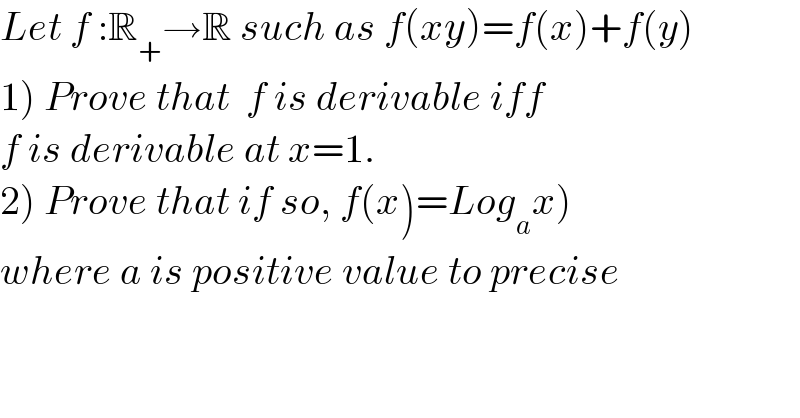
Let f :R_+ →R such as f(xy)=f(x)+f(y)
1) Prove that f is derivable iff
f is derivable at x=1.
2) Prove that if so, f(x)=Log_a x)
where a is positive value to precise
1
ans
1
cmts
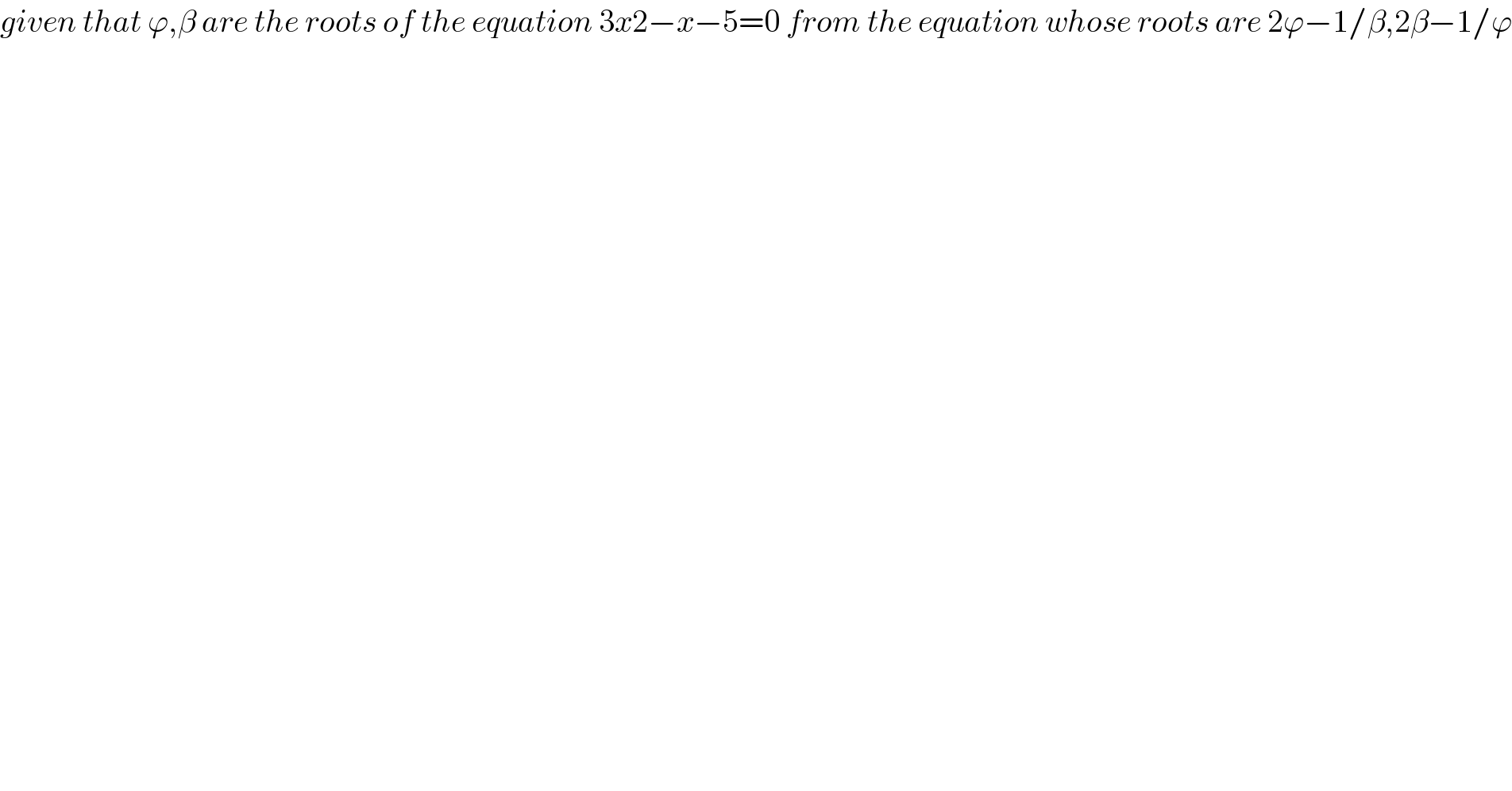
given that ϕ,β are the roots of the equation 3x2−x−5=0 from the equation whose roots are 2ϕ−1/β,2β−1/ϕ
0
ans
0
cmts
Question 215777
1
ans
0
cmts
Question 212974
0
ans
4
cmts
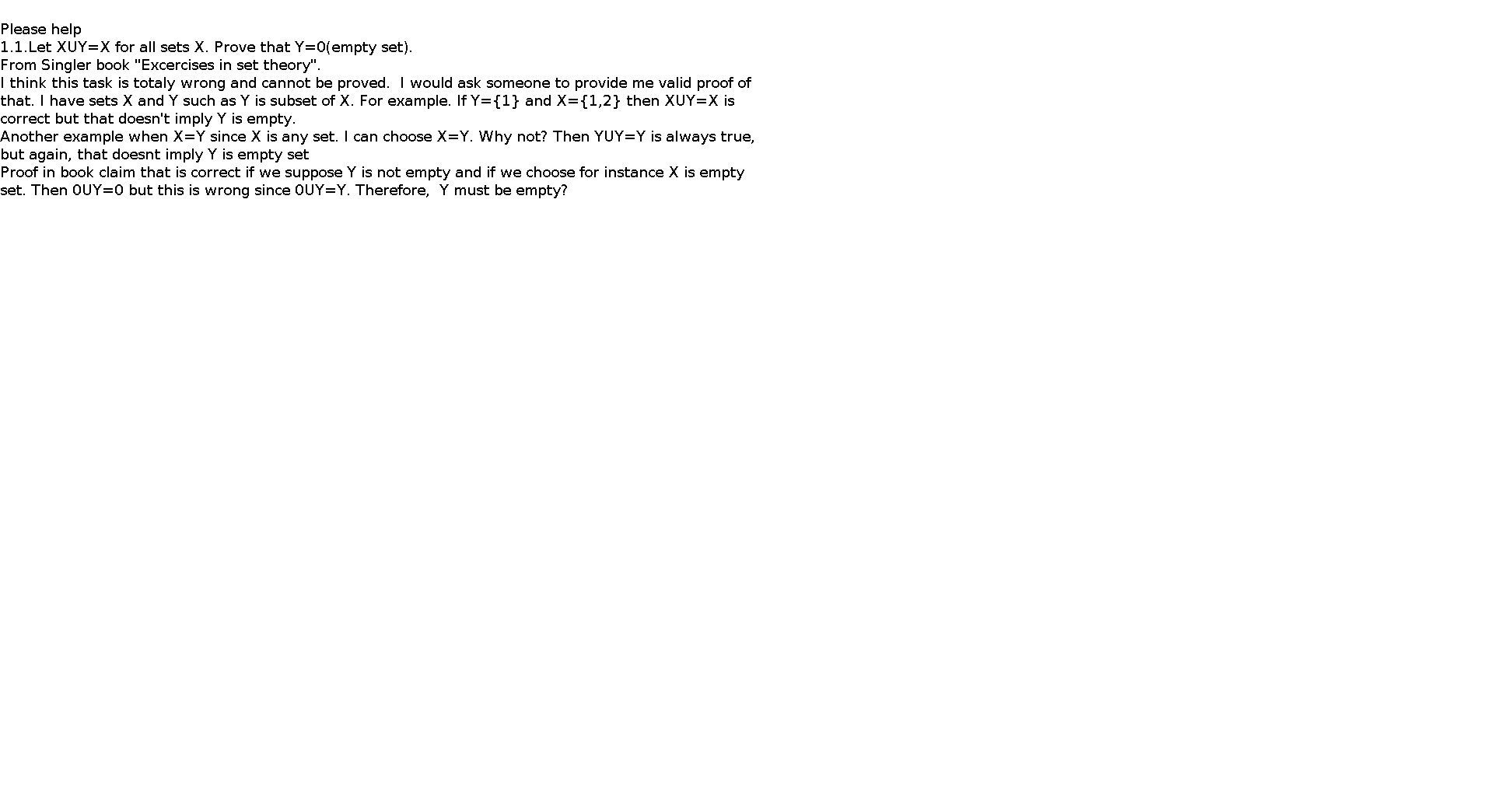
Please help
1.1.Let XUY=X for all sets X. Prove that Y=0(empty set).
From Singler book "Excercises in set theory".
I think this task is totaly wrong and cannot be proved. I would ask someone to provide me valid proof of that. I have sets X and Y such as Y is subset of X. For example. If Y={1} and X={1,2} then XUY=X is correct but that doesn't imply Y is empty.
Another example when X=Y since X is any set. I can choose X=Y. Why not? Then YUY=Y is always true, but again, that doesnt imply Y is empty set
Proof in book claim that is correct if we suppose Y is not empty and if we choose for instance X is empty set. Then 0UY=0 but this is wrong since 0UY=Y. Therefore, Y must be empty?
1
ans
0
cmts
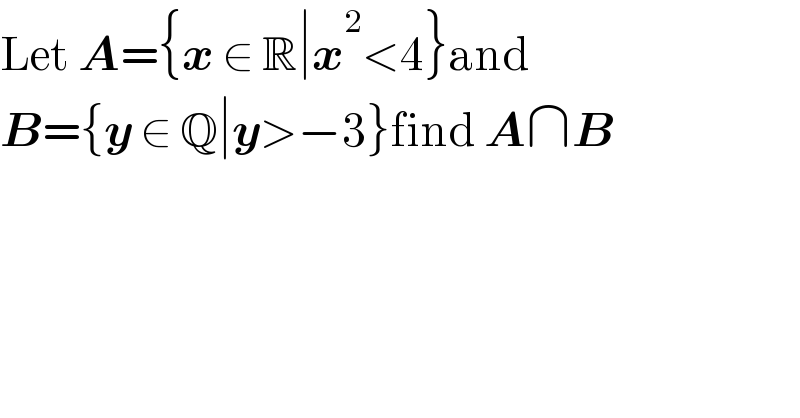
Let A={x ∈ R∣x^2 <4}and
B={y ∈ Q∣y>−3}find A∩B
1
ans
1
cmts
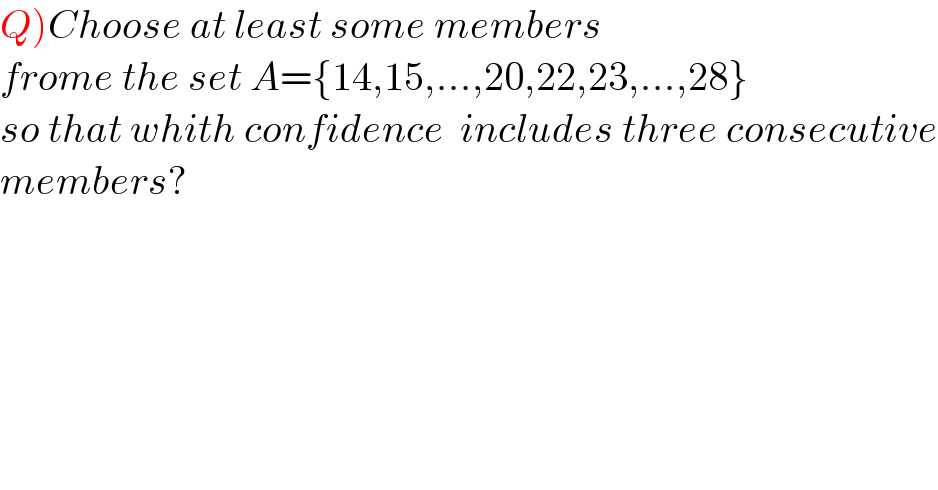
Q)Choose at least some members
frome the set A={14,15,...,20,22,23,...,28}
so that whith confidence includes three consecutive
members?
1
ans
0
cmts
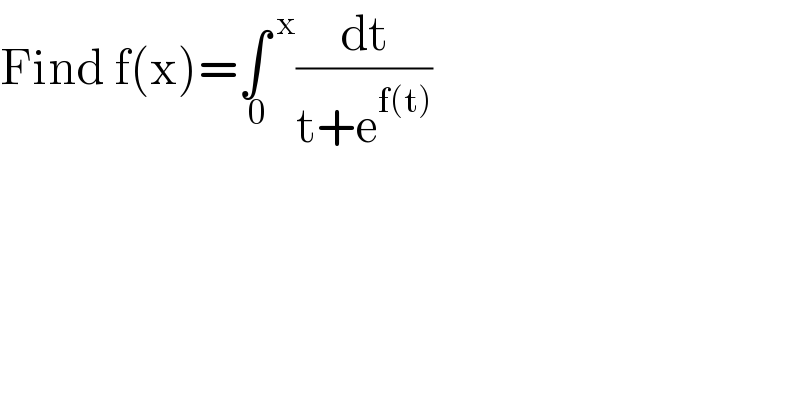
Find f(x)=∫^( x) _( 0) (dt/(t+e^(f(t)) ))
1
ans
0
cmts
2^(5m) 5^(2n)
2020^(2020)
n+2m

0
ans
6
cmts
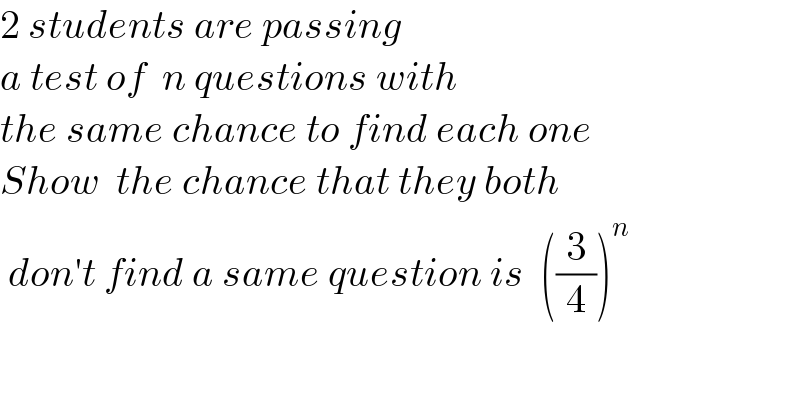
2 students are passing
a test of n questions with
the same chance to find each one
Show the chance that they both
don′t find a same question is ((3/4))^n
1
ans
0
cmts
Question 204141

0
ans
0
cmts
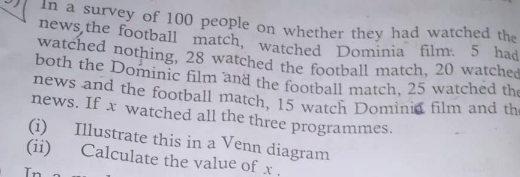
Question 203737
2
ans
0
cmts
a_1 <a_2 <a_3 <...<a_k
((2^(289) +1)/(2^(17) +1)) = 2^a_1 +2^a_2 +...+2^a_k

1
ans
0
cmts
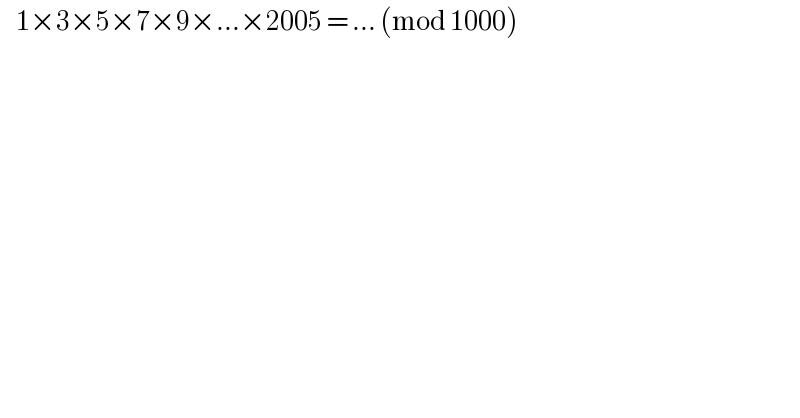
1×3×5×7×9×...×2005 = ... (mod 1000)
1
ans
0
cmts
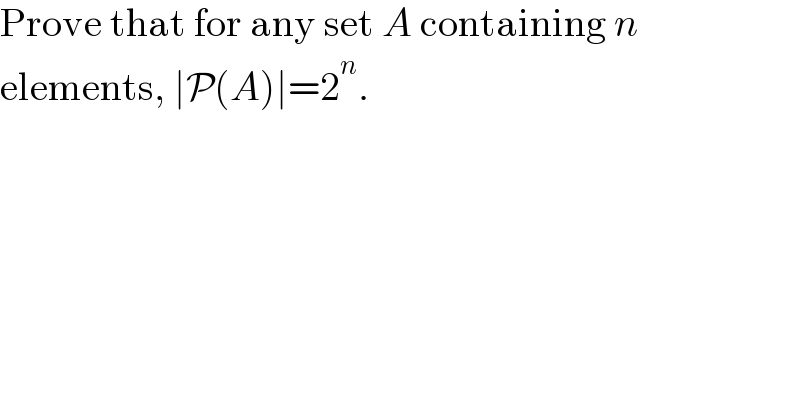
Prove that for any set A containing n
elements, ∣P(A)∣=2^n .
0
ans
1
cmts
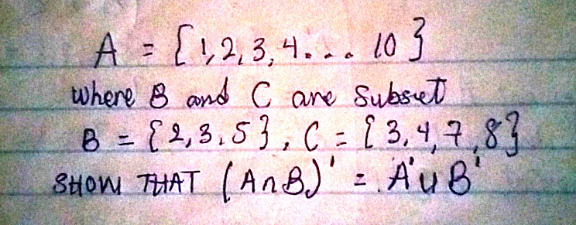
Question 199624
0
ans
2
cmts
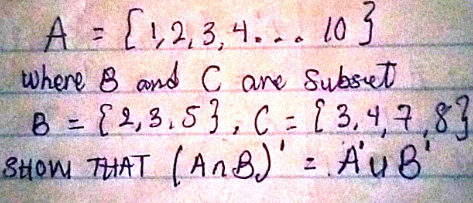
Question 198380
1
ans
0
cmts
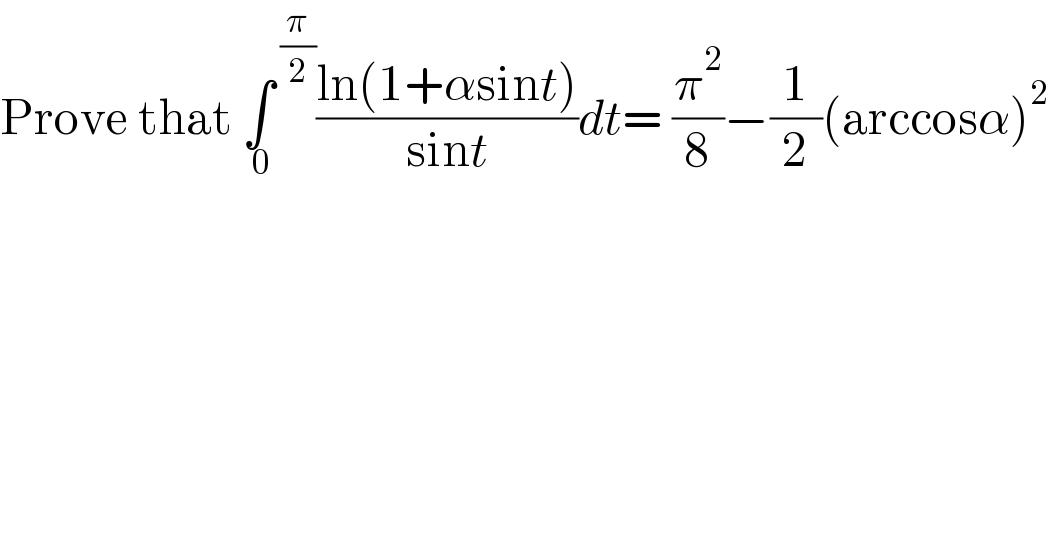
Prove that ∫^( (π/2)) _( 0) ((ln(1+αsint))/(sint))dt= (π^2 /8)−(1/2)(arccosα)^2
1
ans
0
cmts
prove that
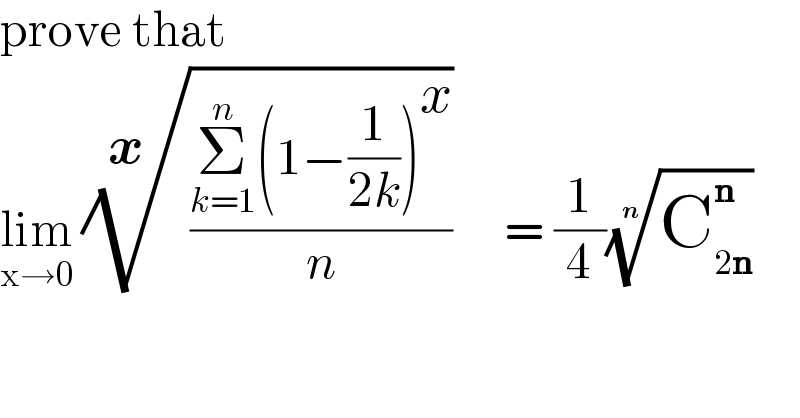
lim_(x→0) (((Σ_(k=1) ^n (1−(1/(2k)))^x )/n))^(1/( x )) = (1/4)(C_(2n) ^n )^(1/n)
1
ans
0
cmts
Prove that
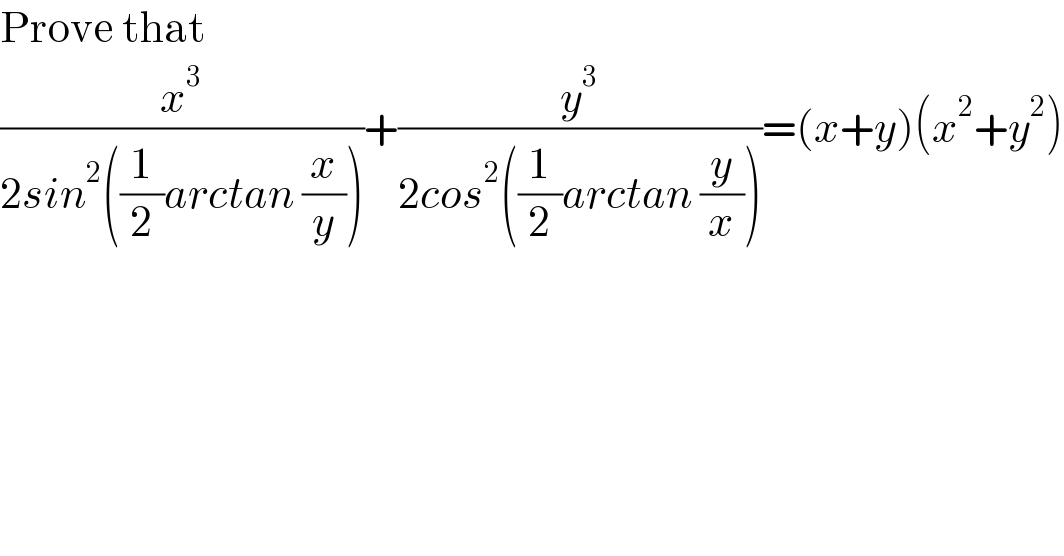
(x^3 /(2sin^2 ((1/2)arctan (x/y))))+(y^3 /(2cos^2 ((1/2)arctan (y/x))))=(x+y)(x^2 +y^2 )
1
ans
0
cmts
Prove that ∀n∈IN
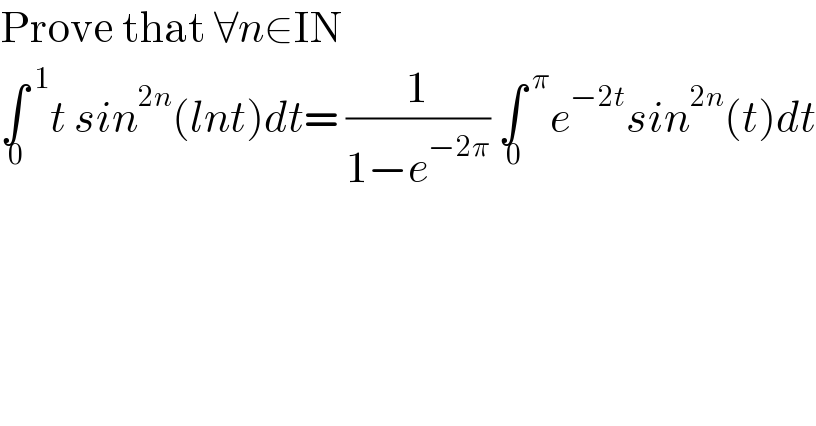
∫^( 1) _( 0) t sin^(2n) (lnt)dt= (1/(1−e^(−2π) )) ∫^( π) _( 0) e^(−2t) sin^(2n) (t)dt
0
ans
0
cmts
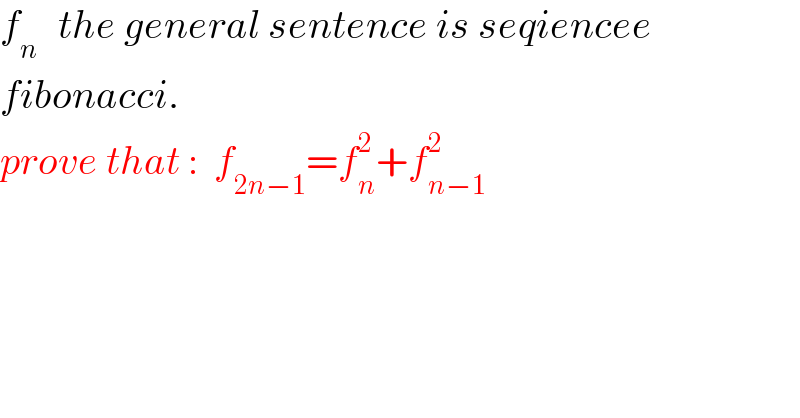
f_(n ) the general sentence is seqiencee
fibonacci.
prove that : f_(2n−1) =f_n ^2 +f_(n−1) ^2
1
ans
0
cmts
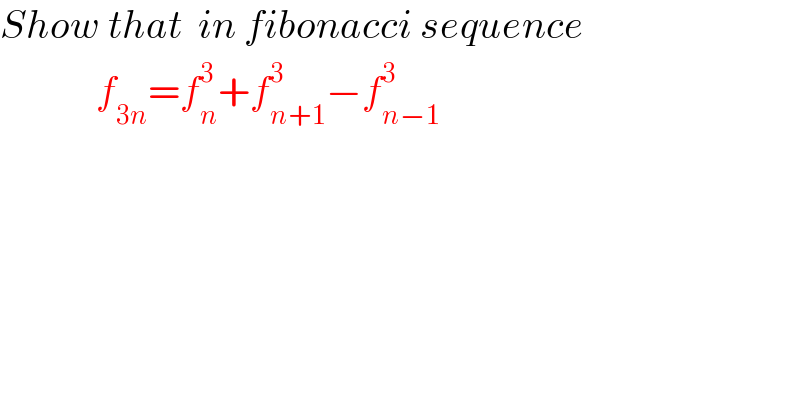
Show that in fibonacci sequence
f_(3n) =f_n ^3 +f_(n+1) ^3 −f_(n−1) ^3
1
ans
0
cmts
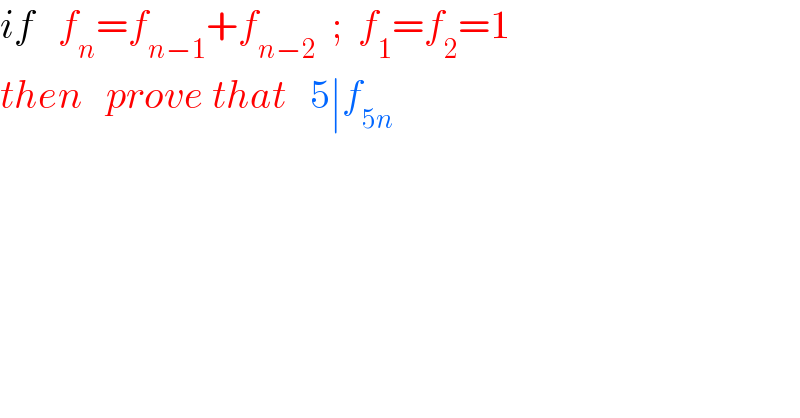
if f_n =f_(n−1) +f_(n−2) ; f_1 =f_2 =1
then prove that 5∣f_(5n)
0
ans
0
cmts
Question 194446
1
ans
0
cmts
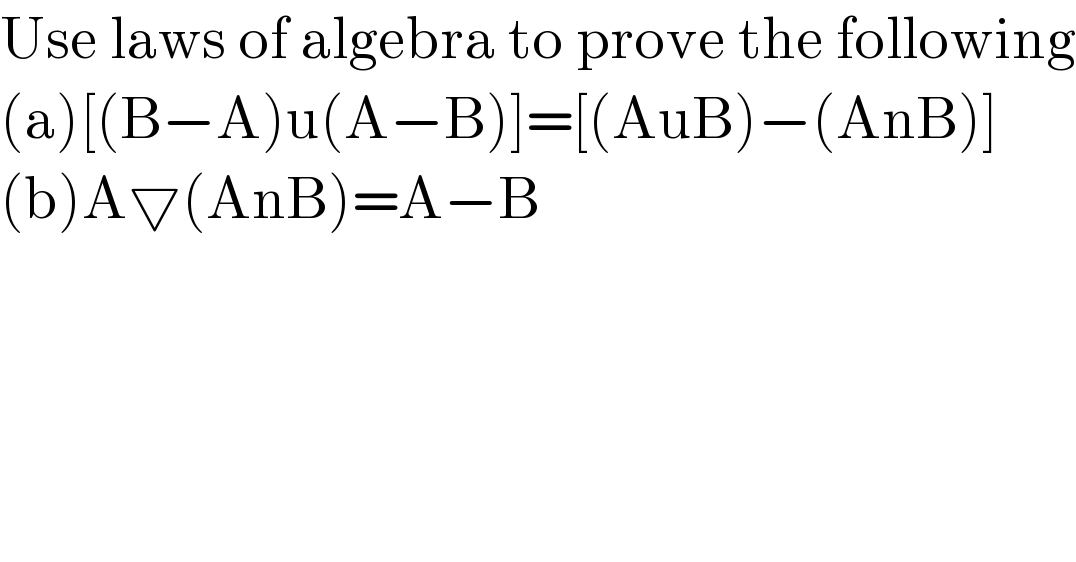
Use laws of algebra to prove the following
(a)[(B−A)u(A−B)]=[(AuB)−(AnB)]
(b)A▽(AnB)=A−B
1
ans
2
cmts
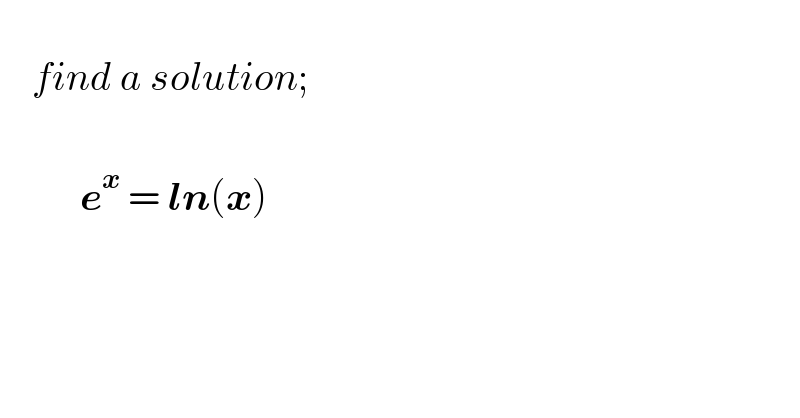
find a solution;
e^x = ln(x)
1
ans
3
cmts
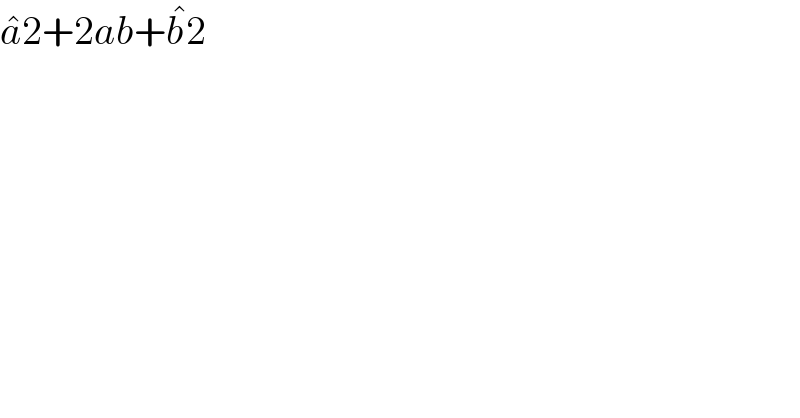
a^ 2+2ab+b^ 2
0
ans
2
cmts
Question 189672

1
ans
0
cmts
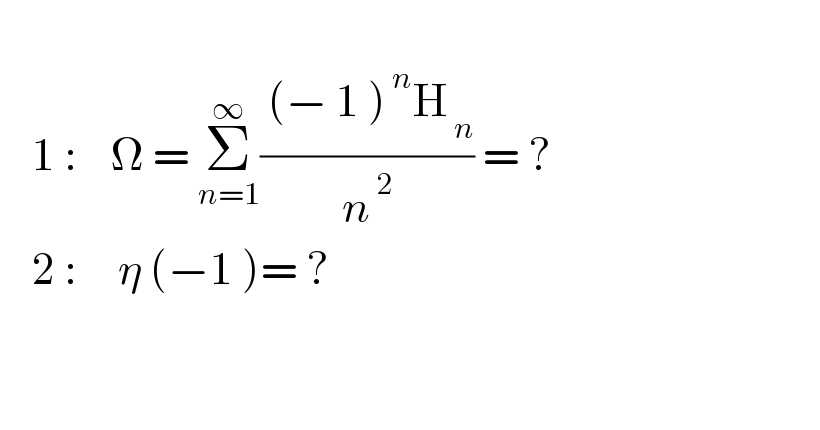
1 : Ω = Σ_(n=1) ^∞ (( (− 1 )^( n) H_( n) )/n^( 2) ) = ?
2 : η (−1 )= ?
1
ans
0
cmts
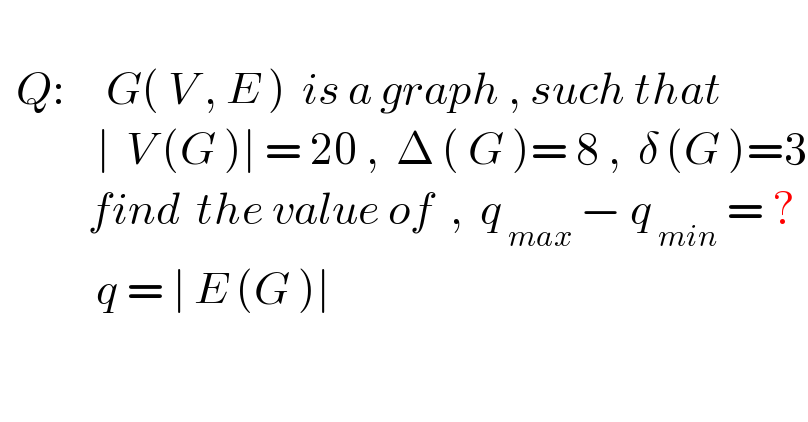
Q: G( V , E ) is a graph , such that
∣ V (G )∣ = 20 , Δ ( G )= 8 , δ (G )=3
find the value of , q_( max) − q_( min) = ?
q = ∣ E (G )∣
2
ans
4
cmts
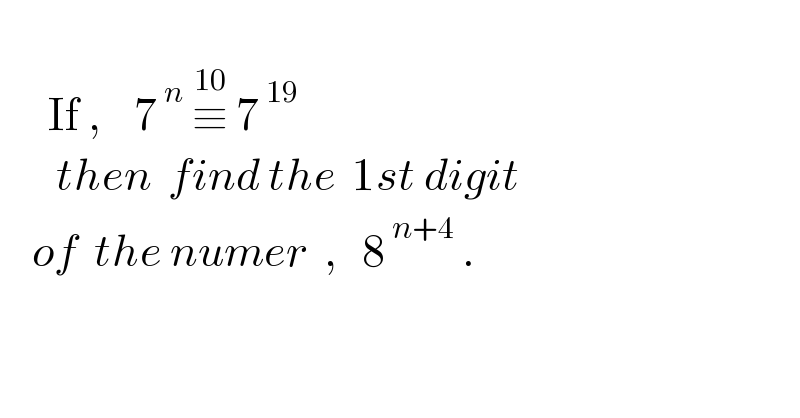
If , 7^( n) ≡^(10) 7^( 19)
then find the 1st digit
of the numer , 8^( n+4) .
0
ans
0
cmts
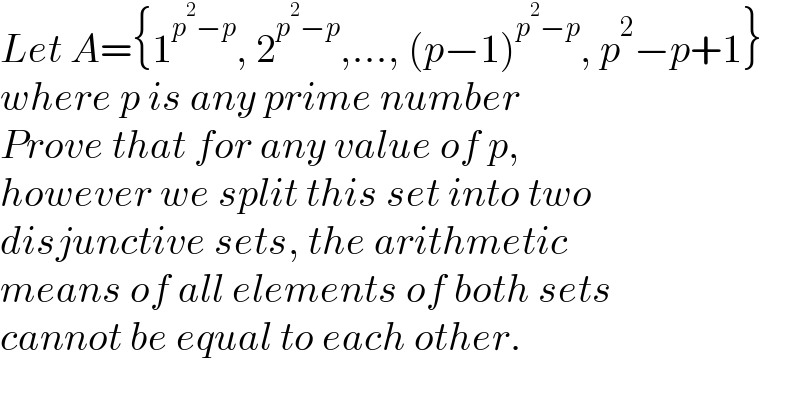
Let A={1^(p^2 −p) , 2^(p^2 −p) ,..., (p−1)^(p^2 −p) , p^2 −p+1}
where p is any prime number
Prove that for any value of p,
however we split this set into two
disjunctive sets, the arithmetic
means of all elements of both sets
cannot be equal to each other.
0
ans
0
cmts
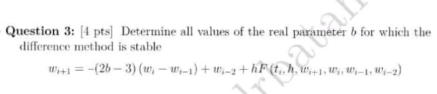
Question 182129
1
ans
0
cmts
Question 181280
1
ans
0
cmts
Question 180299
1
ans
0
cmts
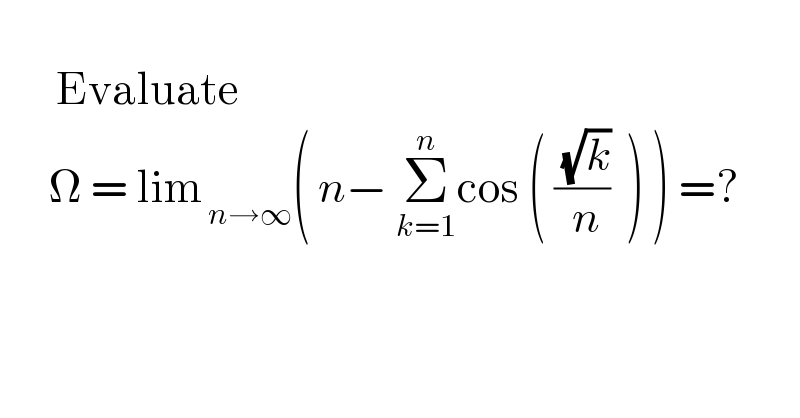
Evaluate
Ω = lim_( n→∞) ( n− Σ_(k=1) ^n cos ( (( (√k))/( n)) ) ) =?
1
ans
0
cmts
Question 179918
1
ans
0
cmts
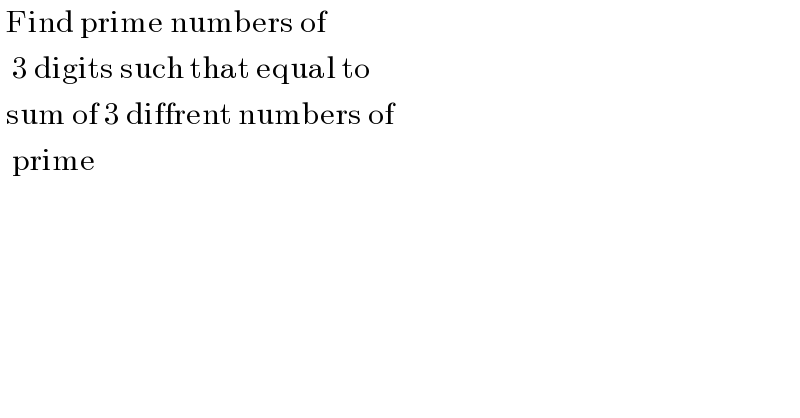
Find prime numbers of
3 digits such that equal to
sum of 3 diffrent numbers of
prime
1
ans
0
cmts
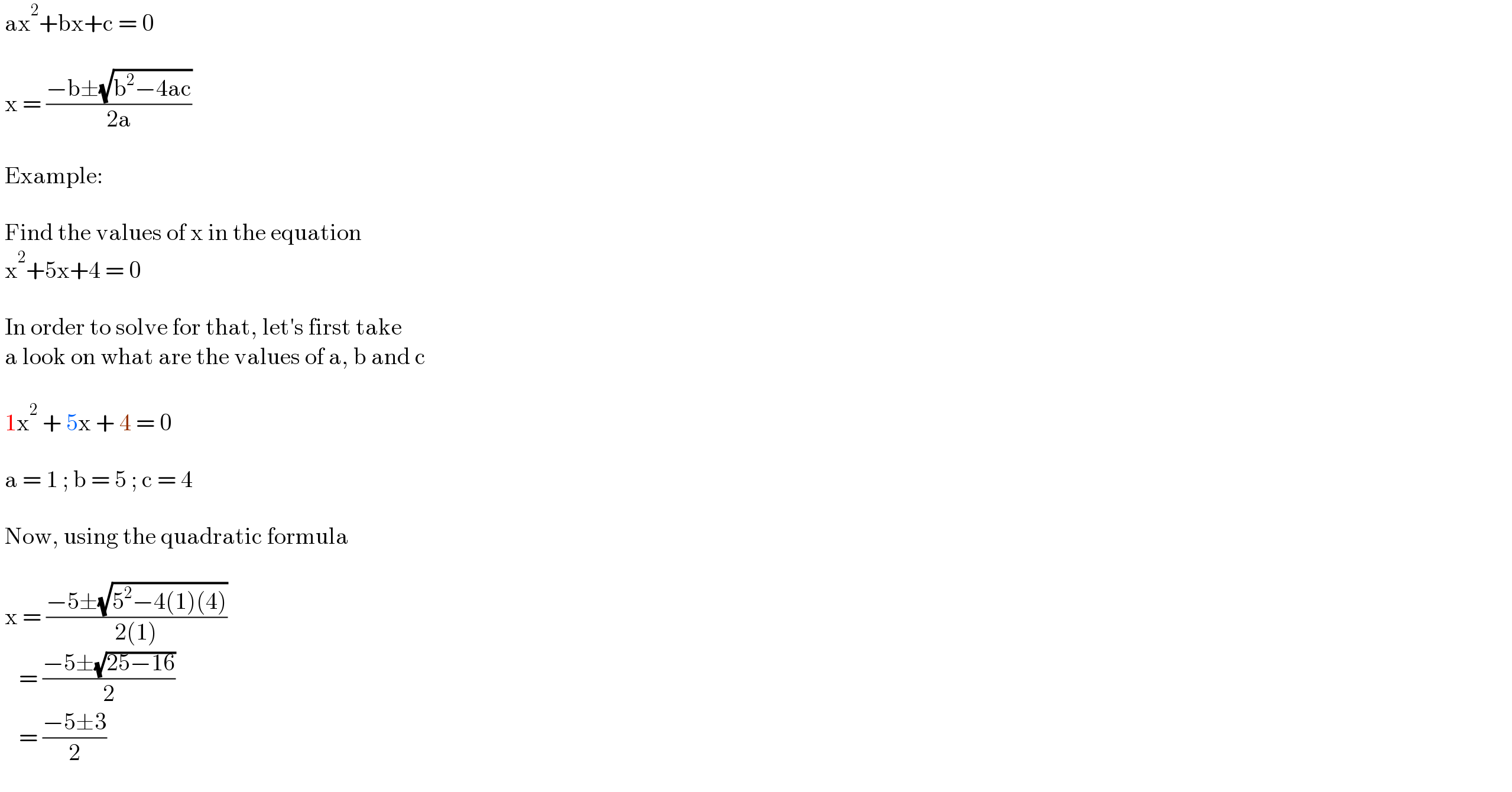
ax^2 +bx+c = 0
x = ((−b±(√(b^2 −4ac)))/(2a))
Example:
Find the values of x in the equation
x^2 +5x+4 = 0
In order to solve for that, let′s first take
a look on what are the values of a, b and c
1x^2 + 5x + 4 = 0
a = 1 ; b = 5 ; c = 4
Now, using the quadratic formula
x = ((−5±(√(5^2 −4(1)(4))))/(2(1)))
= ((−5±(√(25−16)))/2)
= ((−5±3)/2)
1
ans
3
cmts
Question 173065
0
ans
0
cmts
Question 170259
1
ans
4
cmts
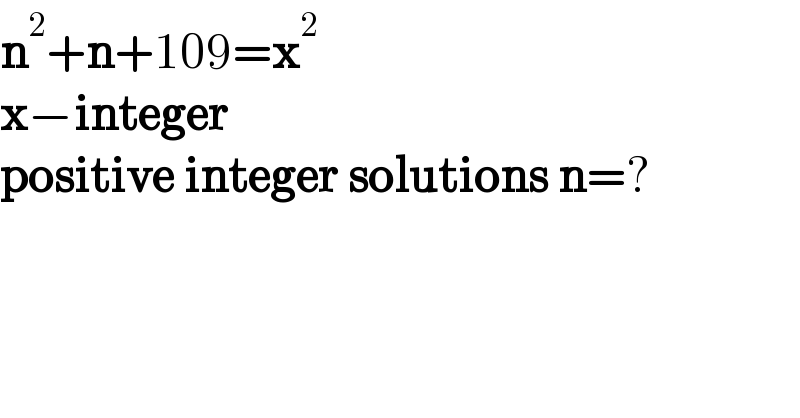
n^2 +n+109=x^2
x−integer
positive integer solutions n=?
0
ans
0
cmts
Question 168159
0
ans
0
cmts
Question 166258
