0
ans
0
cmts
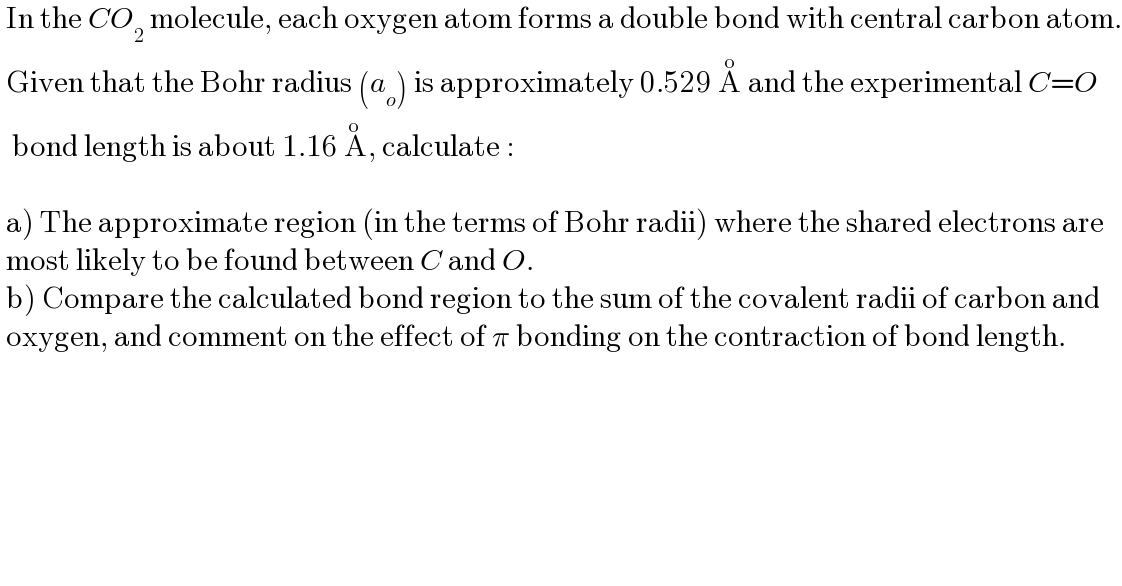
In the CO_2 molecule, each oxygen atom forms a double bond with central carbon atom.
Given that the Bohr radius (a_o ) is approximately 0.529 A^o and the experimental C=O
bond length is about 1.16 A^(o ) , calculate :
a) The approximate region (in the terms of Bohr radii) where the shared electrons are
most likely to be found between C and O.
b) Compare the calculated bond region to the sum of the covalent radii of carbon and
oxygen, and comment on the effect of π bonding on the contraction of bond length.
1
ans
0
cmts
Question 217589
0
ans
0
cmts
Question 217588
0
ans
3
cmts
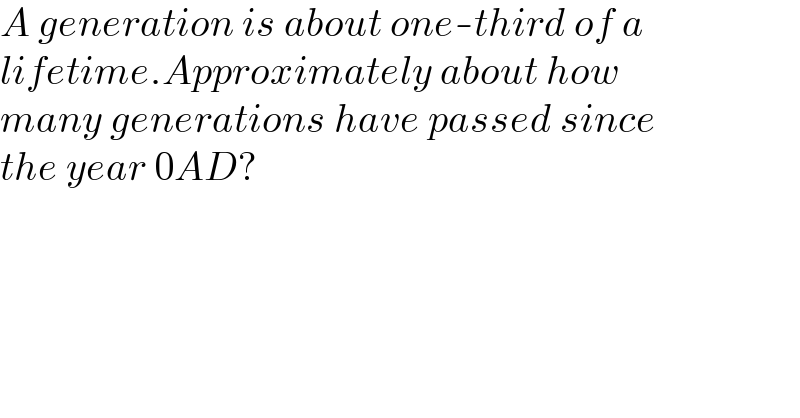
A generation is about one-third of a
lifetime.Approximately about how
many generations have passed since
the year 0AD?
0
ans
3
cmts
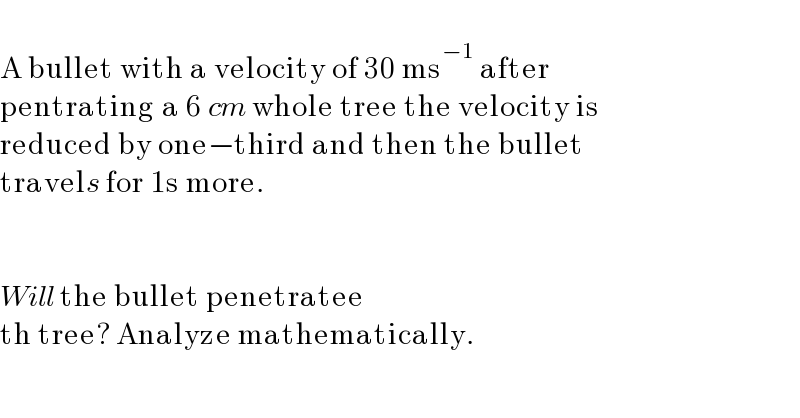
A bullet with a velocity of 30 ms^(−1) after
pentrating a 6 cm whole tree the velocity is
reduced by one−third and then the bullet
travels for 1s more.
Will the bullet penetratee
th tree? Analyze mathematically.
0
ans
1
cmts
Question 192248
0
ans
0
cmts
Question 189932

0
ans
5
cmts
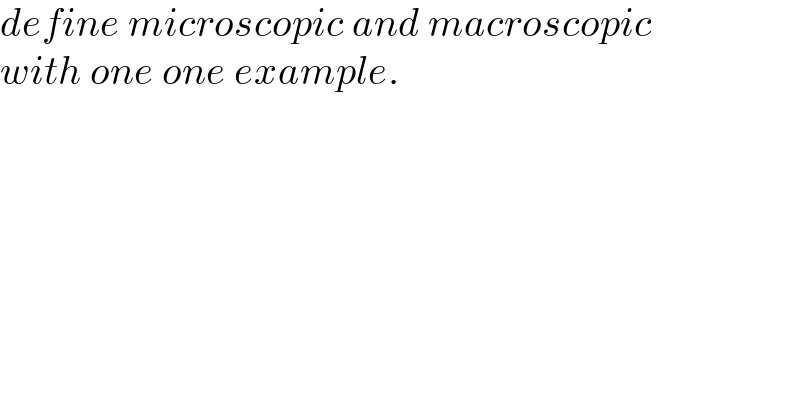
define microscopic and macroscopic
with one one example.
0
ans
0
cmts
Question 169972
0
ans
1
cmts
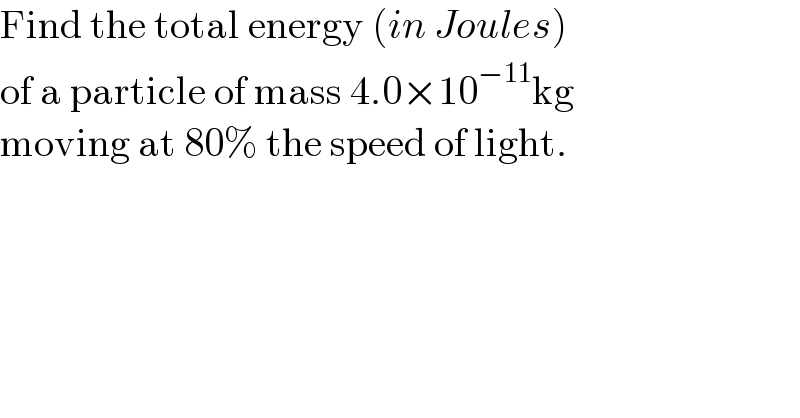
Find the total energy (in Joules)
of a particle of mass 4.0×10^(−11) kg
moving at 80% the speed of light.
0
ans
1
cmts
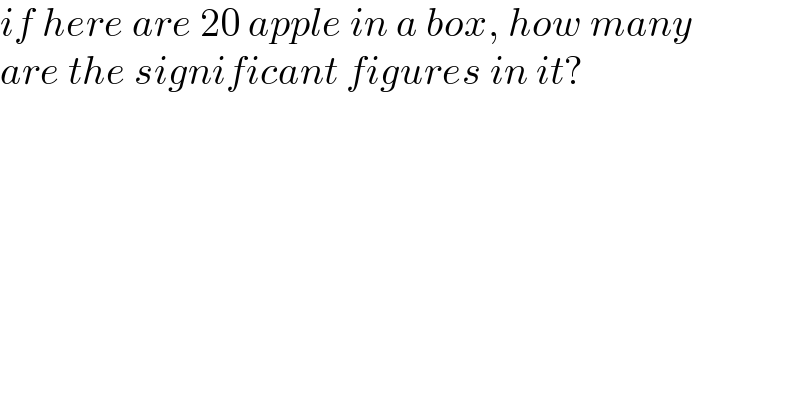
if here are 20 apple in a box, how many
are the significant figures in it?
0
ans
2
cmts
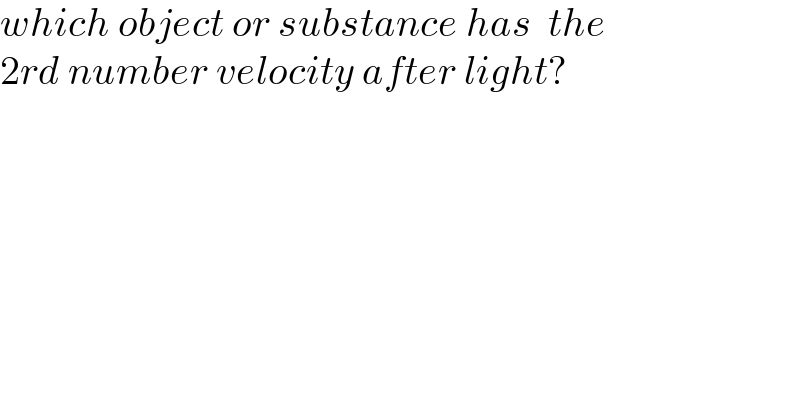
which object or substance has the
2rd number velocity after light?
0
ans
0
cmts
Question 158878
1
ans
0
cmts
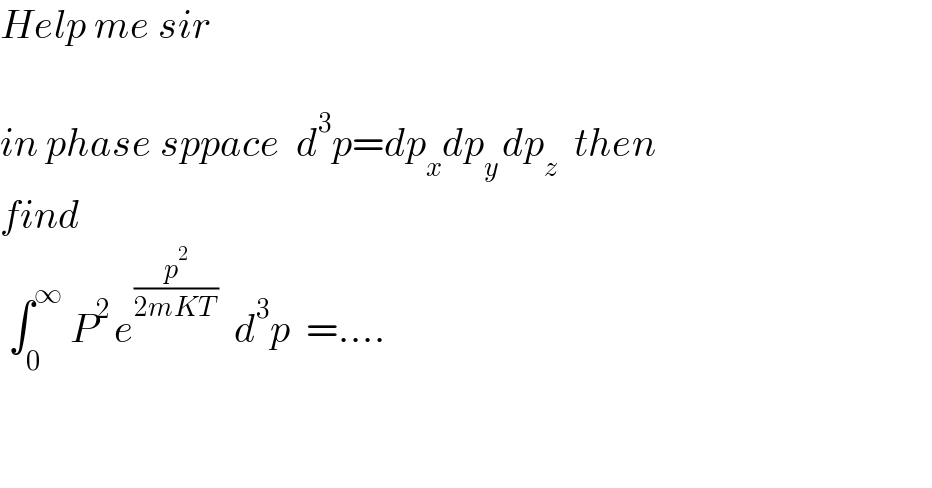
Help me sir
in phase sppace d^3 p=dp_x dp_(y ) dp_z then
find
∫_0 ^∞ P^(2 ) e^(p^2 /(2mKT )) d^3 p =....
0
ans
0
cmts
Question 156968
0
ans
0
cmts
Question 156660
2
ans
1
cmts
Question 154554
0
ans
1
cmts
Question 152652

0
ans
2
cmts
Question 141700
0
ans
0
cmts
Question 140938
0
ans
2
cmts
Question 139002

0
ans
4
cmts
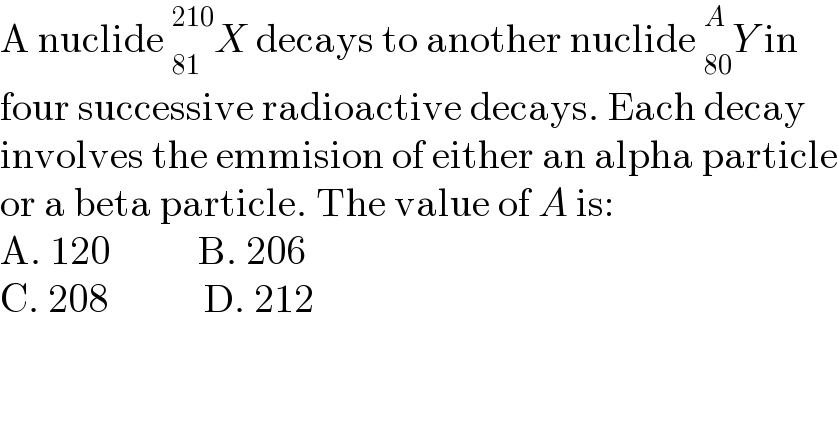
A nuclide _(81)^(210) X decays to another nuclide _(80)^A Y in
four successive radioactive decays. Each decay
involves the emmision of either an alpha particle
or a beta particle. The value of A is:
A. 120 B. 206
C. 208 D. 212
0
ans
0
cmts
Question 130180
0
ans
0
cmts
Question 121092
0
ans
0
cmts
Question 121082
0
ans
0
cmts
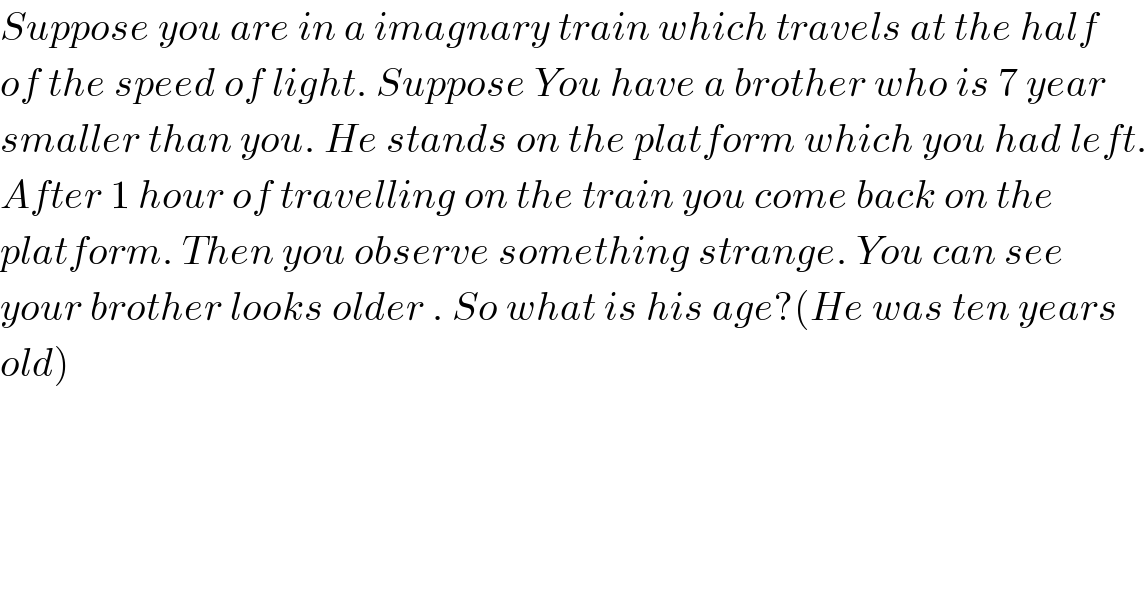
Suppose you are in a imagnary train which travels at the half
of the speed of light. Suppose You have a brother who is 7 year
smaller than you. He stands on the platform which you had left.
After 1 hour of travelling on the train you come back on the
platform. Then you observe something strange. You can see
your brother looks older . So what is his age?(He was ten years
old)
0
ans
2
cmts
(4.1) ψ_μ (x)≡⟨x,μ∣ψ⟩
(4.2) ψ_μ (x−a)=[1−a•(∂/∂x)+(1/(2!))(a•(∂/∂x))^2 −…]ψ_μ (x)
=exp(−a•(∂/∂x))ψ_μ (x)=⟨x,μ∣exp(−i((a•p)/h^ ))∣ψ⟩
(4.3) ∣ψ^′ ⟩≡U(a)∣ψ⟩ ; U(a)≡exp(−ia•p/h^ ) translation operator
(4.4) ψ_μ (x−a)=⟨x,μ∣U(a)∣ψ⟩=⟨x,μ∣ψ^′ ⟩=ψ_μ ^′ (x)
(4.5) ih^ ((∂∣ψ⟩)/∂a_x )=−ih^ ((∂∣ψ⟩)/∂x)=p_x ∣ψ⟩−−
Passive transformations
(1) ψ_μ (x;a+y)=exp(a•(∂/∂y))ψ_μ (x;y)
(2) ⟨x,μ;0∣U(−a)∣ψ⟩=ψ_μ (x+a;0)=ψ_μ (x;a)
(4.6) ∣x_0 ,μ⟩=∫d^3 p∣p,μ⟩⟨p,μ∣x_0 ,μ⟩=(1/h^(3/2) )∫d^3 pe^(−ix_0 •p/h^ ) ∣p,μ⟩
(4.7) U(a)∣x_0 ,μ⟩=(1/h^(3/2) )∫d^3 pe^(−ix_0 •p/h^ ) U(a)∣p,μ⟩
=(1/h^(3/2) )∫d^3 pe^(−i(x_0 +a)•p/h^ ) ∣p,μ⟩
=∣x_0 ,a⟩,μ⟩
Operators from expectation values
(1) ⟨ψ∣A∣ψ⟩=⟨ψ∣B∣ψ⟩
(2) λ(⟨∅∣A∣χ⟩−⟨∅∣B∣χ⟩)=λ^∗ (⟨χ∣B∣∅⟩−⟨χ∣A∣∅⟩)
(4.8) 1=⟨ψ^′ ∣ψ^′ ⟩=⟨ψ∣U^+ U∣ψ⟩
unitiry operator U^+ U=I ; U^+ =U^(−1)
(4.9) U(δθ)=I−iδθτ+O(δθ)^2
(4.10) I=U^+ (δθ)U(δθ)=I+iδθ((τ^+ −τ)+O(δθ)^2
(4.11) i((∂∣ψ^′ ⟩)/∂θ)=τ∣ψ^′ ⟩
(4.12) U(θ)≡lim_(N→∞) (1−i(θ/N)τ)^N =e^(−iθτ)
τ (hermition) = generator of U & the transformation
(4.13) U(𝛂)=exp(−i𝛂•J) ; J_i :angular-momentum operators
(4.14) i((∂∣ψ⟩)/∂α)=𝛂^ •J∣ψ⟩q
(4.15) parity transformation
P≡ (((−1),0,0),(0,(−1),0),(0,0,(−1)) ) ; Px=−x
(4.16) quantum parity operator P:
P ψ_μ ^′ (x)≡⟨x,μ∣P∣ψ⟩≡ψ_μ (Px)=ψ_μ (−x)=⟨−x,μ∣ψ⟩
(4.17) ψ_μ ^(′′) (x)=⟨x,μ∣P∣ψ^′ ⟩=⟨−x,μ∣ψ^′ ⟩
=⟨−x,μ∣P∣ψ⟩=⟨x,μ∣ψ⟩=ψ_μ (x)
(4.18) ⟨∅∣P∣ψ⟩^∗ =∫d^3 xΣ_μ (⟨∅⇂x,μ⟩⟨x,μ⇂P⇂ψ⟩)^∗
=∫d^3 xΣ_μ (⟨∅⇂x,μ⟩⟨−x,μ⇂ψ⟩)^∗
=∫d^3 xΣ_μ (⟨ψ⇂−x,μ⟩⟨x,μ⇂P^2 ⇂∅⟩)
=∫d^3 xΣ_μ (⟨ψ⇂−x,μ⟩⟨−x,μ⇂P⇂∅⟩)=⟨ψ∣P∣∅⟩
(4.19) Mirror operators
⟨x,y∣M∣ψ⟩=⟨y,x∣ψ⟩
(4.20) U^+ (a)xU(a)=x+a
(4.21) x+δa⋍(1+i((δa•p)/h^ ))x(1−i((δa•p)/h^ ))
=x−(i/h^ )[x,δa•p]+O(δa)^2
(4.22) [x_i ,p_j ]=ih^ δ_(ij)
(4.23) U^+ (a)xU(a)=U^+ (a)U(a)x+U^+ (a)[x,U(a)]=x+U^+ (a)[x,U(a)]
(4.24) U^+ (a)xU(a)=x−(i/h^ )U^+ (a)[x,a•p]U(a)=x+a
Rotations in ordinary space
R^T =R^(−1) ; det(R)=+1 ; R(𝛂)𝛂^ =𝛂^
TrR(𝛂)=1+2cos∣𝛂∣ ; v^′ =v+𝛂×v
(4.25) R(𝛂)⟨ψ∣x∣ψ⟩=⟨ψ^′ ∣x∣ψ^′ ⟩=⟨ψ∣U^+ (𝛂)xU(𝛂)∣ψ⟩
(4.26) R(𝛂)x=U^+ (𝛂)xU(𝛂)
(4.27) x+δ𝛂×x⋍(1+iδ𝛂•J)x(1−iδ𝛂•J)
=x+i[δ𝛂•J,x]+O(δ𝛂)^2
(4.28) (δ𝛂×x)_i =Σ_(ij) ε_(ijk) δα_j x_k
(4.29) Σ_(ij) ε_(ijk) δα_j x_k =iΣ_j δα_j [J_j ,x_i ]
(4.30) [J_i ,x_j ]=iΣ_k ε_(ijk) x_k
(4.31) [J_i ,v_j ]=iΣ_k ε_(ijk) v_k
(4.32) [J_i ,p_j ]=iΣ_k ε_(ijk) p_k
(4.33) [J_i ,J_j ]=iΣ_k ε_(ijk) J_k
(4.34) ⟨ψ^′ ∣S∣ψ^′ ⟩=⟨ψ∣U^+ (𝛂)SU(𝛂)∣ψ⟩=⟨ψ∣S∣ψ⟩
(4.35) S⋍(1+iδ𝛂•J)S(1−iδ𝛂•J)
=S+iδ𝛂•[J,S]+O(δ𝛂)^2
(4.36) [J,S]=0
(4.37) [J,J^2 ]=0
(4.38) The parity operator: x→Px=−x
−⟨ψ∣x∣ψ⟩=P⟨ψ∣x∣ψ⟩=⟨ψ^′ ∣x∣ψ^′ ⟩=⟨ψ∣P^+ xP∣ψ⟩
(4.39) {x,P}≡xP+Px=0
(4.40) {v,P}≡vP+Pv=0
(4.41) v⇂𝛚^′ ⟩=v(P⇂𝛚⟩)=−Pv⇂𝛚⟩=−𝛚P⇂𝛚⟩=−𝛚⇂𝛚^′ ⟩
(4.42) −⟨±∣v∣±⟩=P⟨±∣v∣±⟩=⟨±∣P^+ vP∣±⟩=(±)^2 ⟨±∣v∣±⟩
(4.43a) ⟨x∣PV∣ψ⟩=⟨−x∣V∣ψ⟩=V(−x)⟨−x∣ψ⟩=V(x)⟨−x∣ψ⟩
(4.43b) ⟨x∣VP∣ψ⟩=V(x)⟨x∣P∣ψ⟩=V(x)⟨−x∣ψ⟩
(4.44) p^2 P=Σ_k p_k p_k P=−Σ_k p_k Pp_k =Σ_k Pp_k p_k =Pp^2
⇒[p^2 ,P]=0
(4.45) {P,[v_i ,J_j ]}=iΣ_k ε_(ijk) {P,v_k }=0
(4.46) 0={P,[v_i ,J_j ]}=[{P,v_i },J_j ]−{[P,J_j ],v_i }=−{[P,J_j ],v_i }
(4.47) [P,J_j ]=λP
(4.48) ⟨ψ^′ ∣J∣ψ^′ ⟩=⟨ψ∣P^+ JP∣ψ⟩=⟨ψ∣J∣ψ⟩
(4.48) ⟨ψ∣M^+ xM∣ψ⟩=⟨ψ∣y∣ψ⟩ Mirror operators
(4.50) M^+ xM=y ⇒ xM=My
(4.51) ∣ψ,t⟩=e^(−iHt/h^ ) ∣ψ,0⟩
(4.52) U(t)=e^(−iHt/h^ ) time-evolution operator
(4.53) U(θ)U(t)∣ψ⟩=U(t)U(θ)∣ψ⟩
(4.54a) ⟨x∣VU(𝛂)∣ψ⟩=V(x)⟨x∣U(𝛂)∣ψ⟩=V(x)⟨R(𝛂)x∣ψ⟩
(4.54b) ⟨x∣U(𝛂)V∣ψ⟩=⟨R(𝛂)x∣V∣ψ⟩=V(R(𝛂)x)⟨R(𝛂)x∣ψ⟩
(4.55) H=Σ_(i=1) ^n (p_i ^2 /(2m_i ))+Σ_(i<j) V(x_i −x_j )
(4.56) ∣ψ,t⟩=U(t)∣ψ,0⟩
(4.57) Q_t ^∼ ≡U^+ (t)QU(t)
(4.58) ⟨Q⟩_t =⟨ψ,t∣Q∣ψ,t⟩=⟨ψ,0∣U^+ (t)QU(t)∣ψ,0⟩=⟨ψ,0∣Q_t ^∼ ∣ψ,0⟩
(4.59) ⟨∅,t⇂ψ,t⟩=⟨∅,0⇂ψ,0⟩ ; ∣∅,t⟩≡U(t)∣∅,0⟩
(4.60) (dQ_t ^∼ /dt)=(dU^+ /dt)QU+U^+ Q(dU/dt)
(4.61) (dU/dt)=−((iH)/h^ )U⇒(dU^+ /dt)=((iH)/h^ )U^+
(4.62) ih^ (dQ_t ^∽ /dt)=−HU^+ QU+U^+ QUH=[Q_t ^∽ ,H]
(4.63) exp(−i𝛂•J)≡R(𝛂)
(4.64) I=R^T (𝛂)R(𝛂)=exp(−i𝛂•J)^T exp(−i𝛂•J)
=exp(−i𝛂•J^T )exp(−i𝛂•J)
(4.65) 0=−in•J^T exp(−iθn•J^T )exp(−iθn•J)
+exp(−iθn•J^T )exp(−iθn•J)(−in•J)
−in•{J^T +J}
(4.66) {R^T (𝛂)R(𝛃)R(𝛂)}𝛃^′ =R^T (𝛂)R(𝛃)𝛃=R^T (𝛂)𝛃^′
(4.67) R^T (𝛂)R(𝛃)R(𝛂)=R(𝛃^′ )=R(R(−𝛂)𝛃)
(4.68) (1+i𝛂•J)(1+i𝛃•J)(1−i𝛂•J)⋍1−i(𝛃−𝛂×𝛃)•J
(4.69) α_i β_j [J_i ,J_j ]=iα_i β_j Σ_k ε_(ijk) J_k
(4.70) [J_i ,J_j ]=iΣ_k ε_(ijk) J_k
(4.71) Prob(at x⇂ψ)=Σ_μ ∣⟨x,μ⇂ψ⟩∣^2
(4.72) R(∅)= (((cos ∅),(−sin ∅),0),((sin ∅),(cos ∅),0),(0,0,1) )
(4.73) J_z ^′ =≡M•J_z •M^+
(4.74) S_x =(1/( (√2))) ((0,1,0),(1,0,1),(0,1,0) ) ; S_y =(1/( (√2))) ((0,(−i),0),(i,0,(−i)),(0,i,0) ) ; S_z = ((1,0,0),(0,0,0),(0,0,(−1)) )
(4.75) ⟨x∣p⟩=e^(ip•x/h^ )
(4.76) [{A,B},C]={A,[B,C]}+{[A,C],B}
(4.77) G≡(1/2)(1−P)
(4.78) S⟨ψ∣x∣ψ⟩=⟨ψ∣S^+ xS∣ψ⟩
(4.79) S_(ij) =δ_(ij) −2n_i n_j
(4.80) V(x)=f(R)+λxy ; R=(√(x^2 +y^2 ))

1
ans
0
cmts
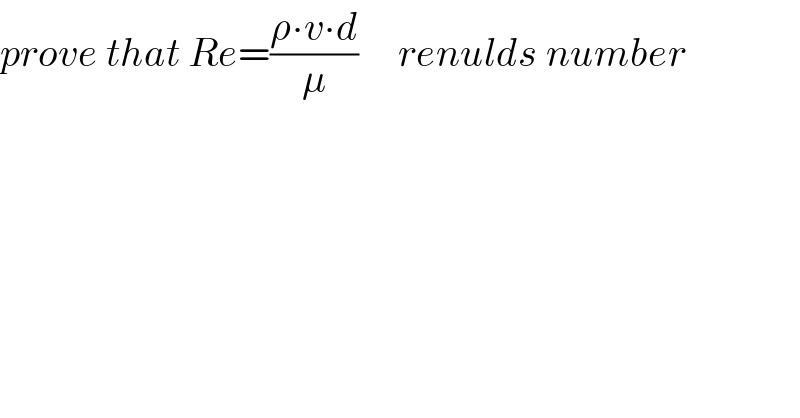
prove that Re=((ρ∙v∙d)/μ) renulds number
1
ans
0
cmts
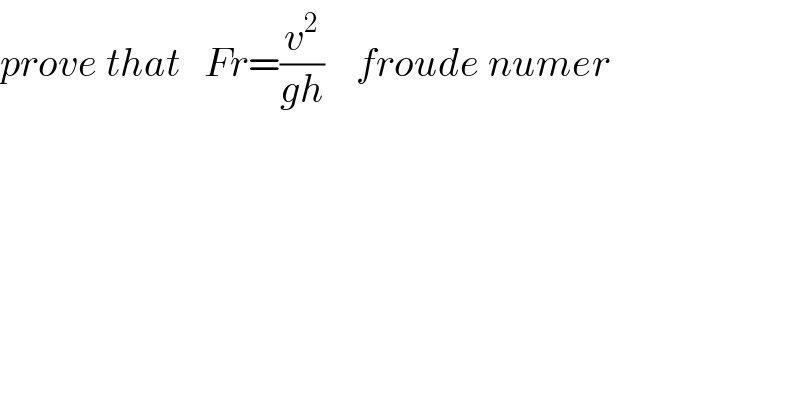
prove that Fr=(v^2 /(gh)) froude numer
0
ans
0
cmts
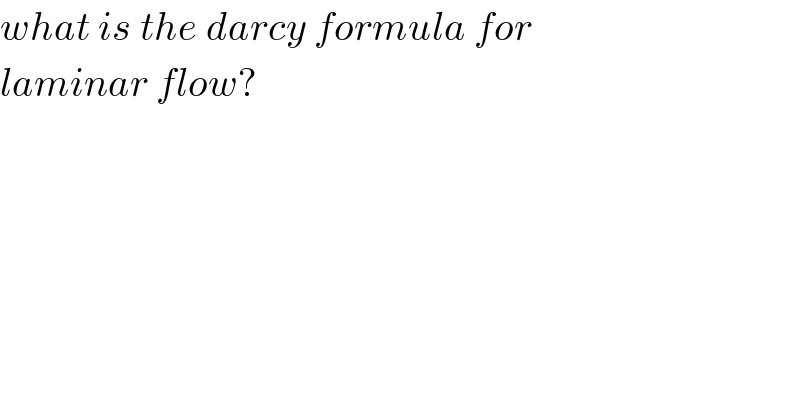
what is the darcy formula for
laminar flow?
0
ans
1
cmts
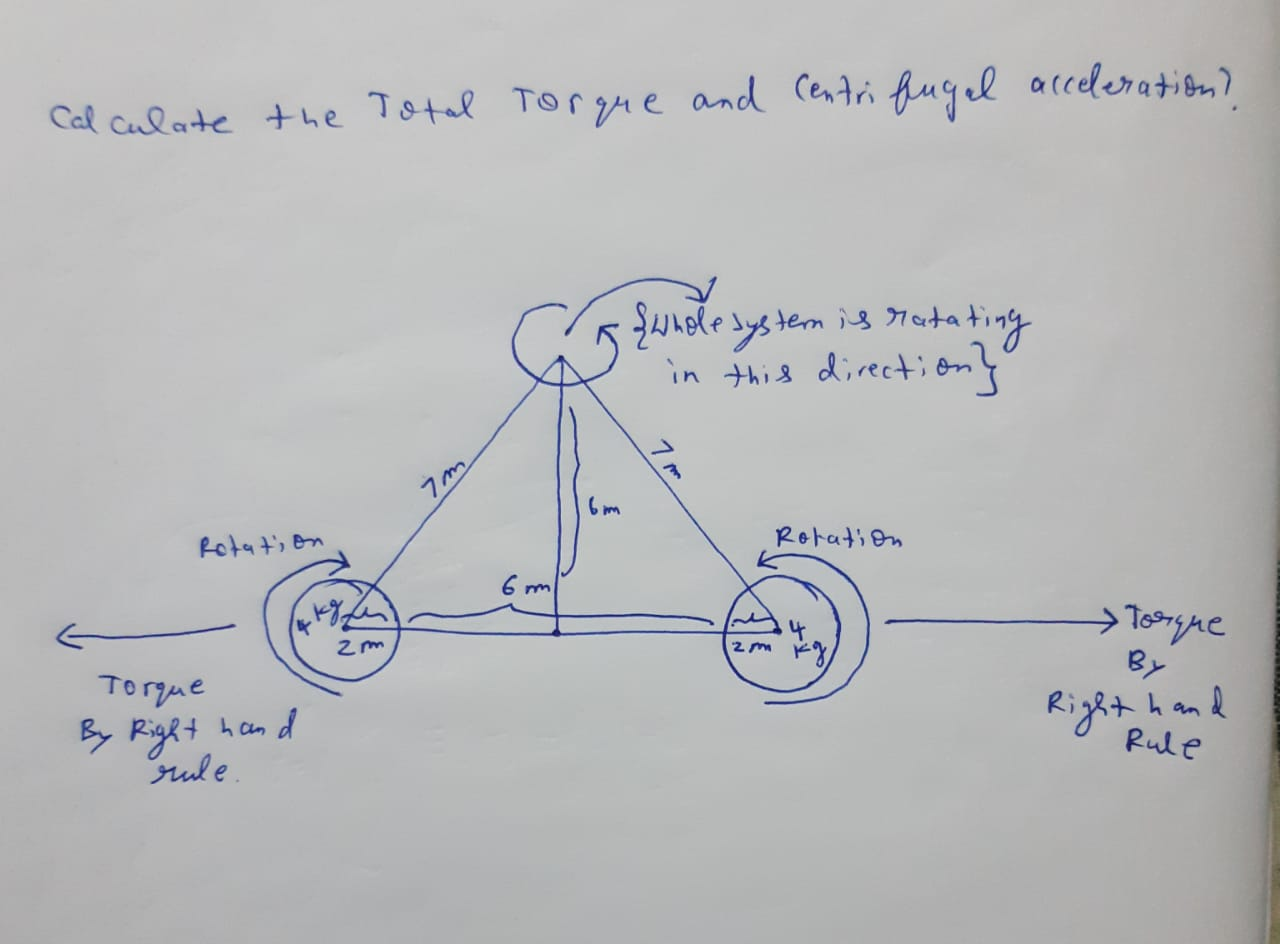
Question 80798
1
ans
0
cmts
In an electrolysis experiment, the ammeter
records a steady current of 1A. The mass
of copper deposited in 30minutes is 0.66g.
Calculate the error in the ammeter reading.
the electrical equivalent of cu is 3.3×10^(−4) g/C.

1
ans
0
cmts
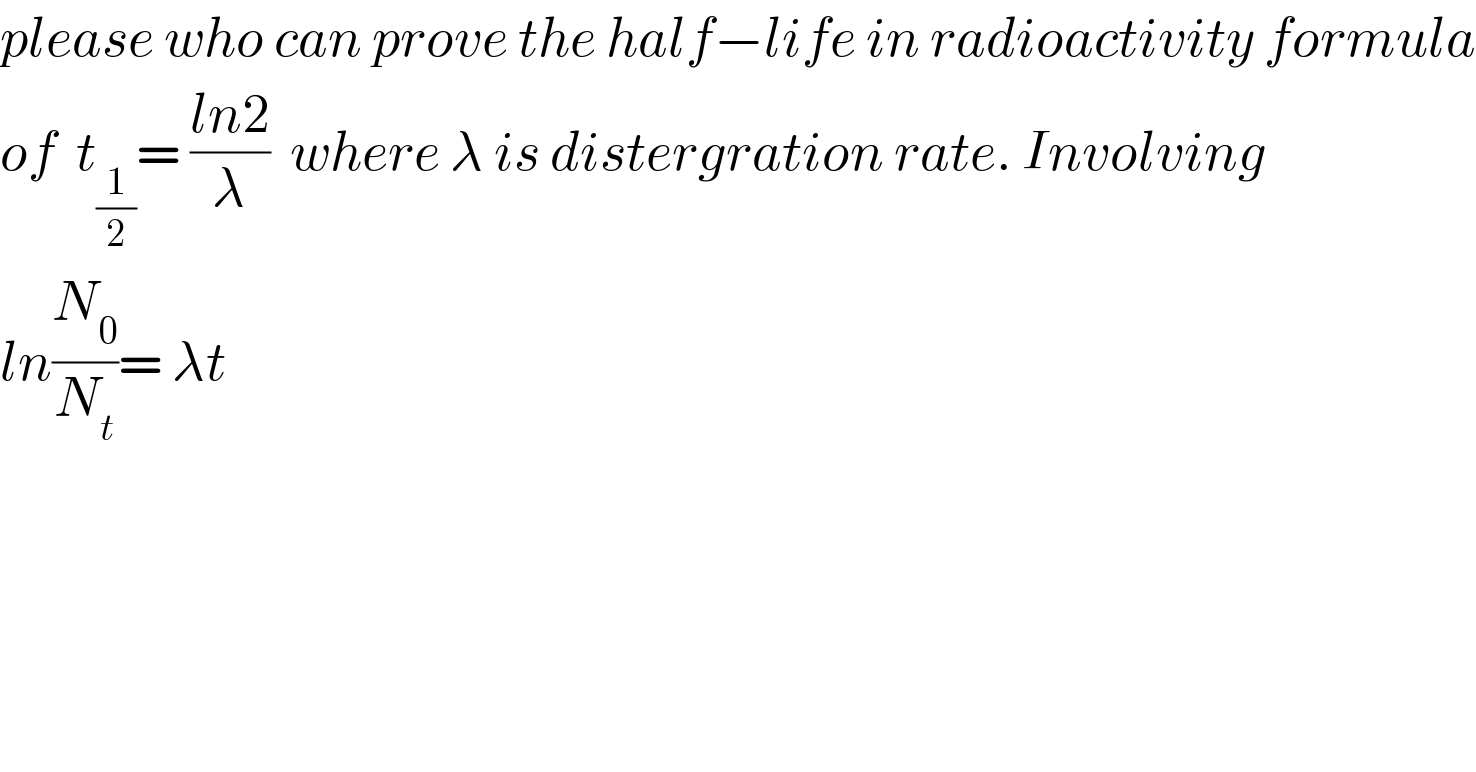
please who can prove the half−life in radioactivity formula
of t_(1/2) = ((ln2)/λ) where λ is distergration rate. Involving
ln(N_0 /N_t )= λt
1
ans
0
cmts
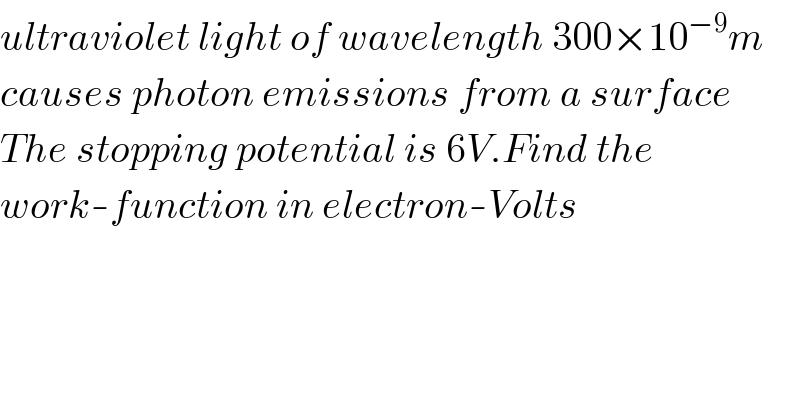
ultraviolet light of wavelength 300×10^(−9) m
causes photon emissions from a surface
The stopping potential is 6V.Find the
work-function in electron-Volts
0
ans
0
cmts
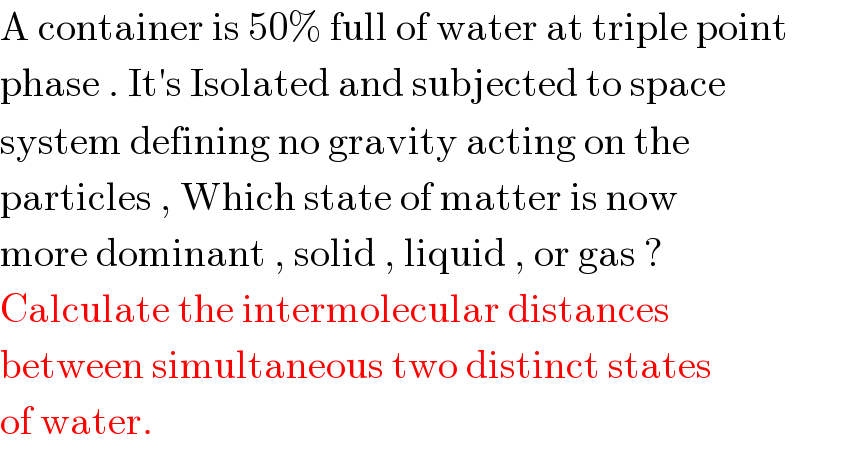
A container is 50% full of water at triple point
phase . It′s Isolated and subjected to space
system defining no gravity acting on the
particles , Which state of matter is now
more dominant , solid , liquid , or gas ?
Calculate the intermolecular distances
between simultaneous two distinct states
of water.
0
ans
1
cmts
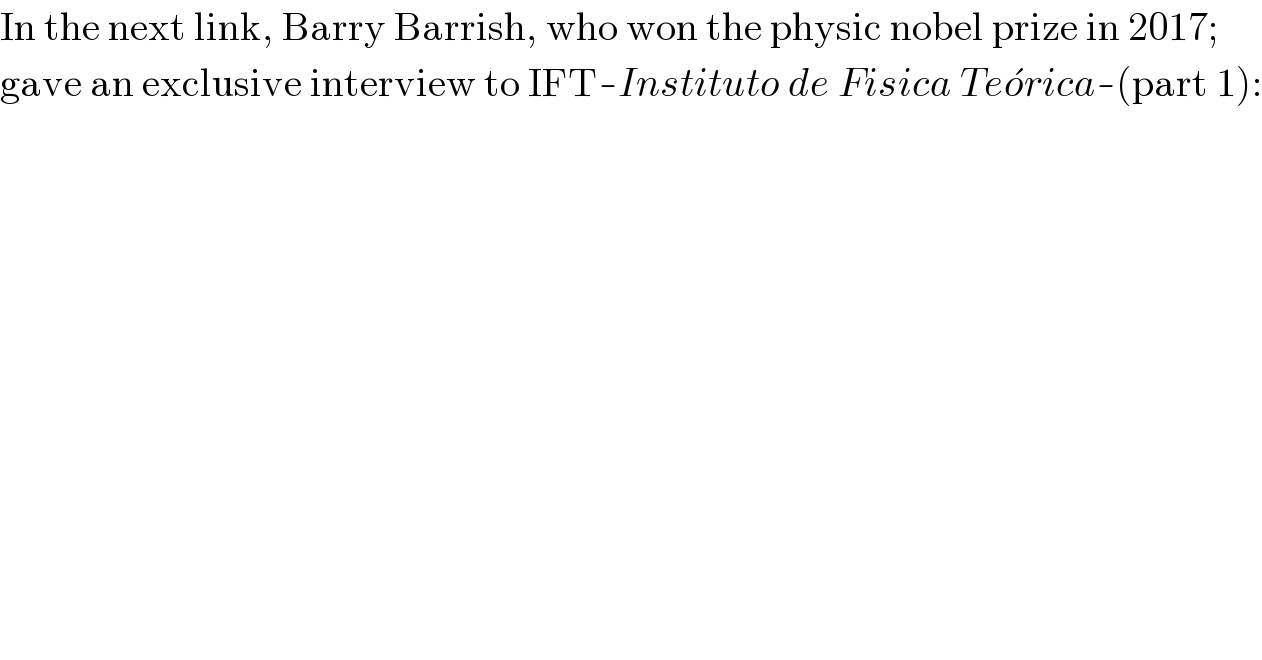
In the next link, Barry Barrish, who won the physic nobel prize in 2017;
gave an exclusive interview to IFT-Instituto de Fisica Teo^ rica-(part 1):
0
ans
0
cmts
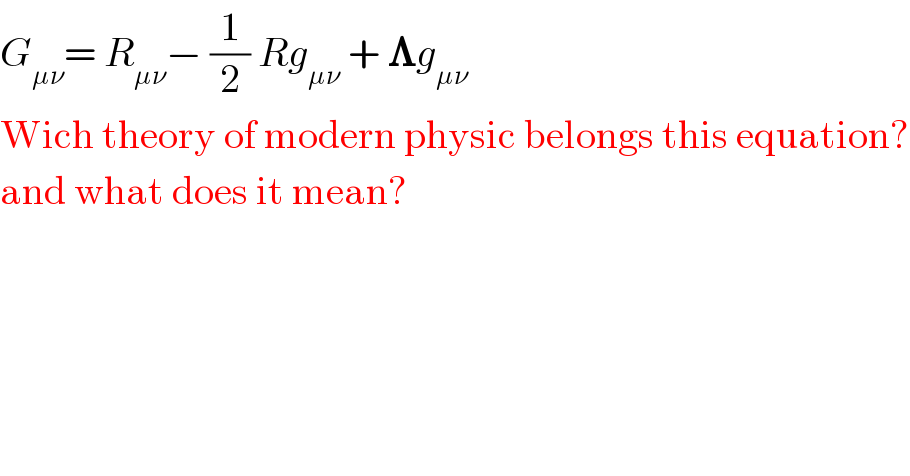
G_(μν) = R_(μν) − (1/2) Rg_(μν) + 𝚲g_(μν)
Wich theory of modern physic belongs this equation?
and what does it mean?
2
ans
0
cmts
Question 53165
1
ans
0
cmts
Question 52846
1
ans
0
cmts
Question 52845
1
ans
0
cmts
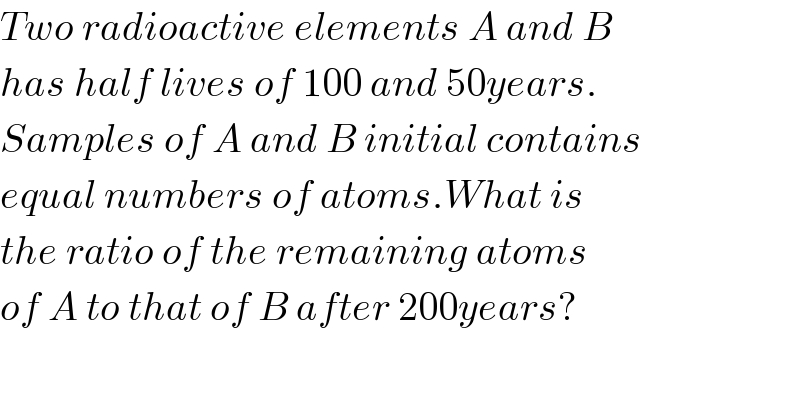
Two radioactive elements A and B
has half lives of 100 and 50years.
Samples of A and B initial contains
equal numbers of atoms.What is
the ratio of the remaining atoms
of A to that of B after 200years?
0
ans
1
cmts
Question 45748
1
ans
0
cmts
Question 45747
0
ans
1
cmts
Question 45746
0
ans
2
cmts
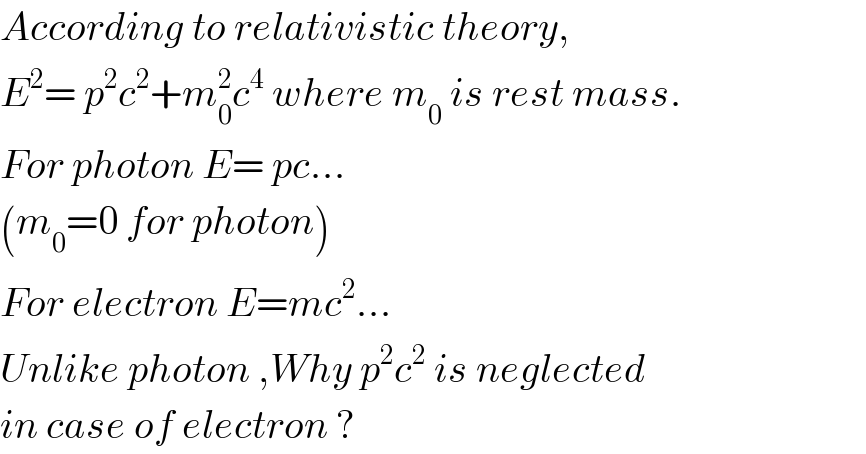
According to relativistic theory,
E^2 = p^2 c^2 +m_0 ^2 c^4 where m_0 is rest mass.
For photon E= pc...
(m_0 =0 for photon)
For electron E=mc^2 ...
Unlike photon ,Why p^2 c^2 is neglected
in case of electron ?
1
ans
2
cmts
Question 45539
0
ans
0
cmts
Question 44005

0
ans
1
cmts
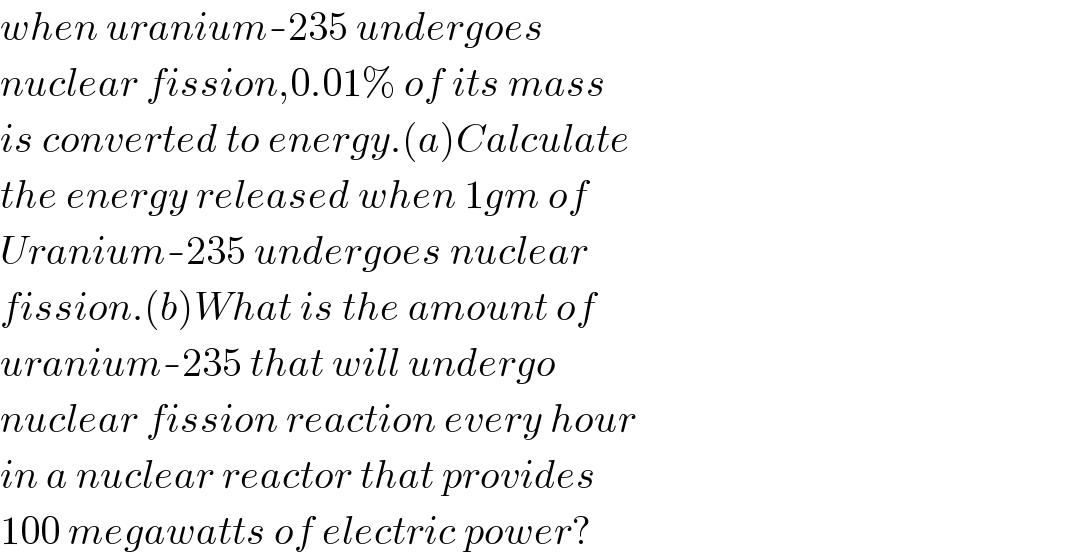
when uranium-235 undergoes
nuclear fission,0.01% of its mass
is converted to energy.(a)Calculate
the energy released when 1gm of
Uranium-235 undergoes nuclear
fission.(b)What is the amount of
uranium-235 that will undergo
nuclear fission reaction every hour
in a nuclear reactor that provides
100 megawatts of electric power?
1
ans
1
cmts
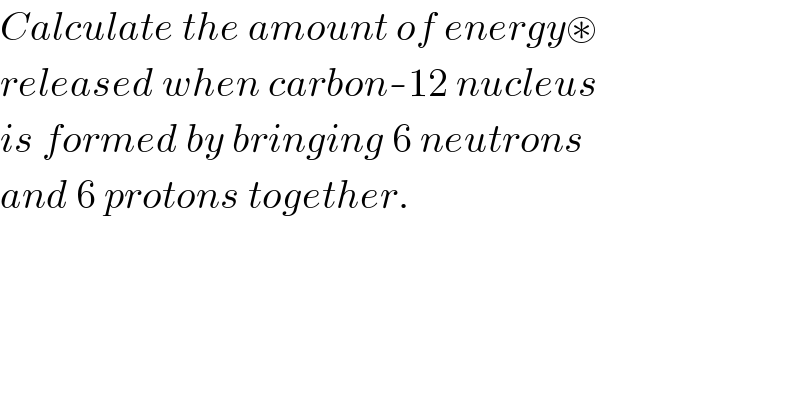
Calculate the amount of energy⊛
released when carbon-12 nucleus
is formed by bringing 6 neutrons
and 6 protons together.
1
ans
0
cmts
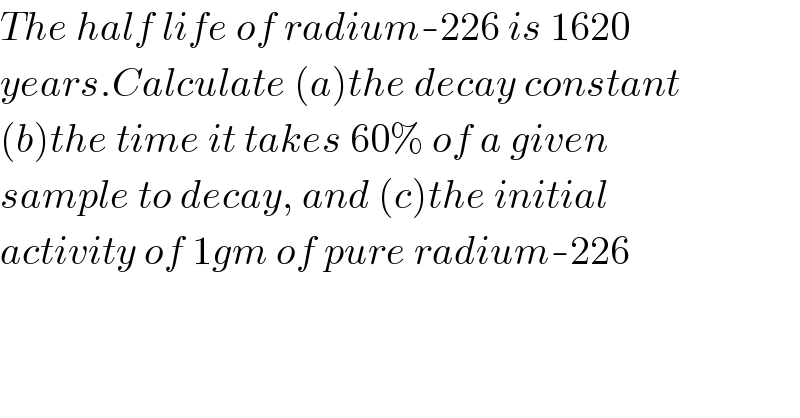
The half life of radium-226 is 1620
years.Calculate (a)the decay constant
(b)the time it takes 60% of a given
sample to decay, and (c)the initial
activity of 1gm of pure radium-226