0
ans
0
cmts
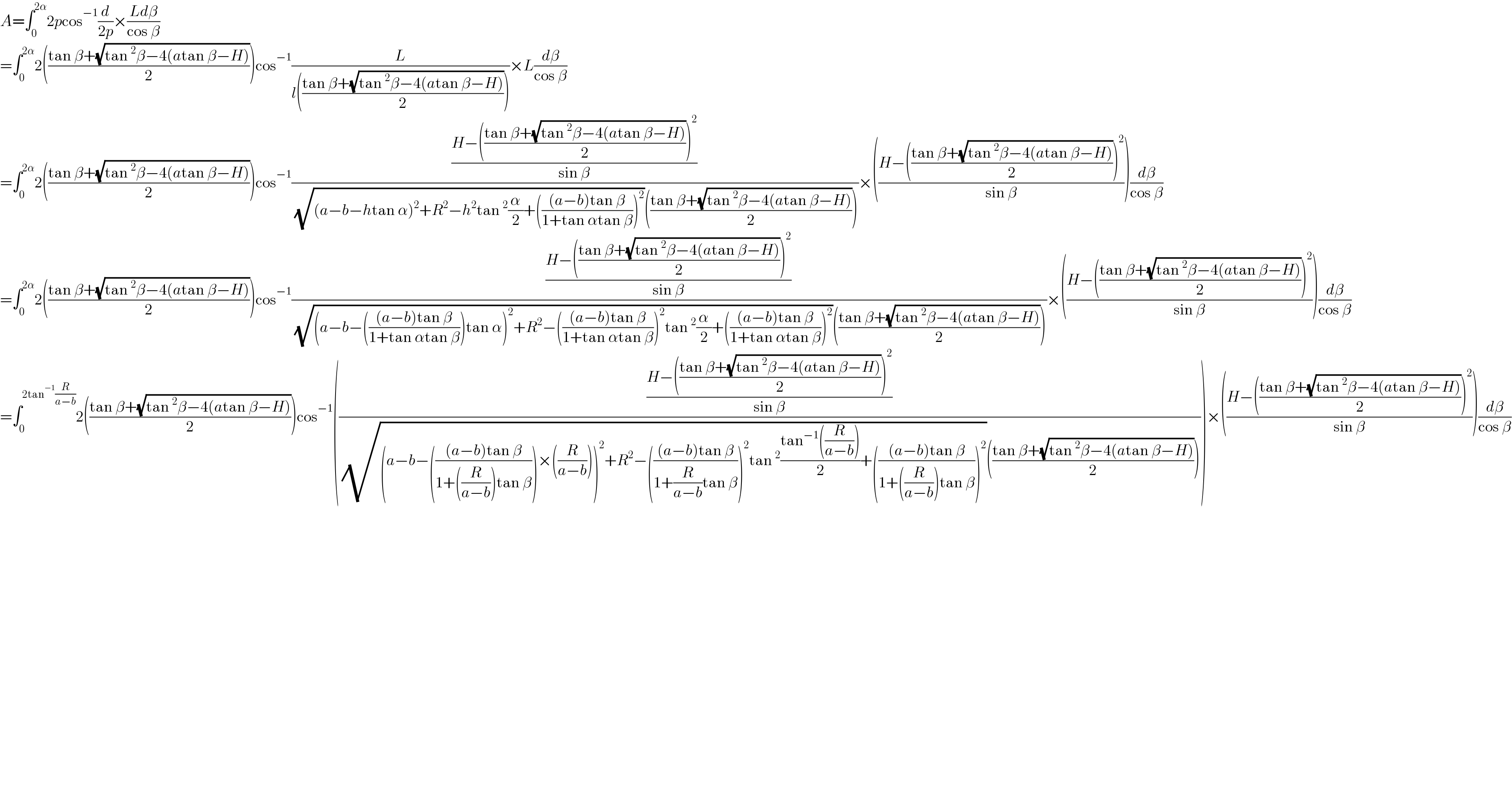
A=∫_0 ^(2α) 2pcos^(−1) (d/(2p))×((Ldβ)/(cos β))
=∫_0 ^(2α) 2(((tan β+(√(tan^2 β−4(atan β−H))))/2))cos^(−1) (L/(l(((tan β+(√(tan^2 β−4(atan β−H))))/2))))×L(dβ/(cos β))
=∫_0 ^(2α) 2(((tan β+(√(tan^2 β−4(atan β−H))))/2))cos^(−1) (((H−(((tan β+(√(tan^2 β−4(atan β−H))))/2))^2 )/(sin β))/( (√((a−b−htan α)^2 +R^2 −h^2 tan^2 (α/2)+((((a−b)tan β)/(1+tan αtan β)))^2 ))(((tan β+(√(tan^2 β−4(atan β−H))))/2))))×(((H−(((tan β+(√(tan^2 β−4(atan β−H))))/2))^2 )/(sin β)))(dβ/(cos β))
=∫_0 ^(2α) 2(((tan β+(√(tan^2 β−4(atan β−H))))/2))cos^(−1) (((H−(((tan β+(√(tan^2 β−4(atan β−H))))/2))^2 )/(sin β))/( (√((a−b−((((a−b)tan β)/(1+tan αtan β)))tan α)^2 +R^2 −((((a−b)tan β)/(1+tan αtan β)))^2 tan^2 (α/2)+((((a−b)tan β)/(1+tan αtan β)))^2 ))(((tan β+(√(tan^2 β−4(atan β−H))))/2))))×(((H−(((tan β+(√(tan^2 β−4(atan β−H))))/2))^2 )/(sin β)))(dβ/(cos β))
=∫_0 ^(2tan^(−1) (R/(a−b))) 2(((tan β+(√(tan^2 β−4(atan β−H))))/2))cos^(−1) ((((H−(((tan β+(√(tan^2 β−4(atan β−H))))/2))^2 )/(sin β))/( (√((a−b−((((a−b)tan β)/(1+((R/(a−b)))tan β)))×((R/(a−b))))^2 +R^2 −((((a−b)tan β)/(1+(R/(a−b))tan β)))^2 tan^2 ((tan^(−1) ((R/(a−b))))/2)+((((a−b)tan β)/(1+((R/(a−b)))tan β)))^2 ))(((tan β+(√(tan^2 β−4(atan β−H))))/2)))))×(((H−(((tan β+(√(tan^2 β−4(atan β−H))))/2))^2 )/(sin β)))(dβ/(cos β))
0
ans
4
cmts
Question 229519
1
ans
0
cmts
Question 229505
1
ans
5
cmts
Question 229496
1
ans
0
cmts
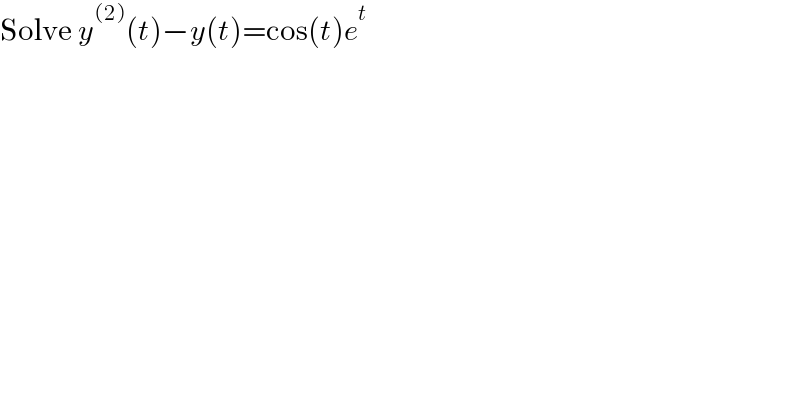
Solve y^((2)) (t)−y(t)=cos(t)e^t
0
ans
0
cmts
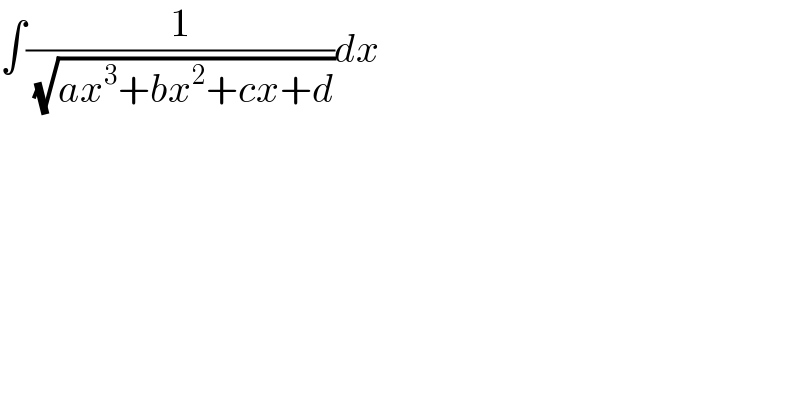
∫(1/( (√(ax^3 +bx^2 +cx+d))))dx
1
ans
2
cmts
App has been updated to resolve
notification issues faced by new users
on latest android version

0
ans
3
cmts
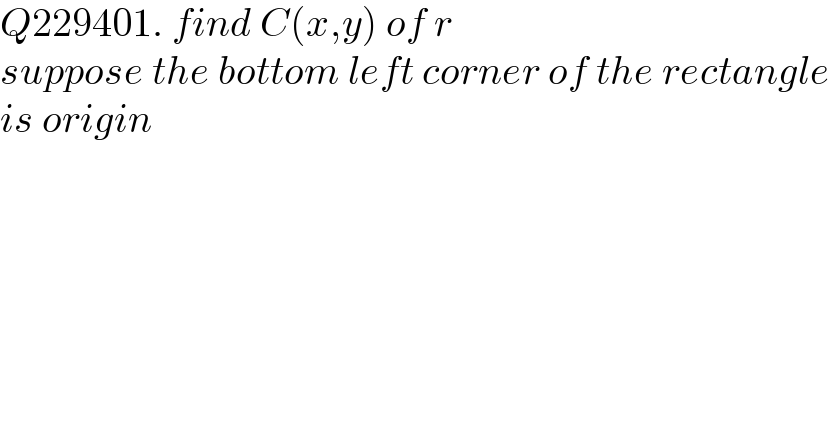
Q229401. find C(x,y) of r
suppose the bottom left corner of the rectangle
is origin
3
ans
3
cmts
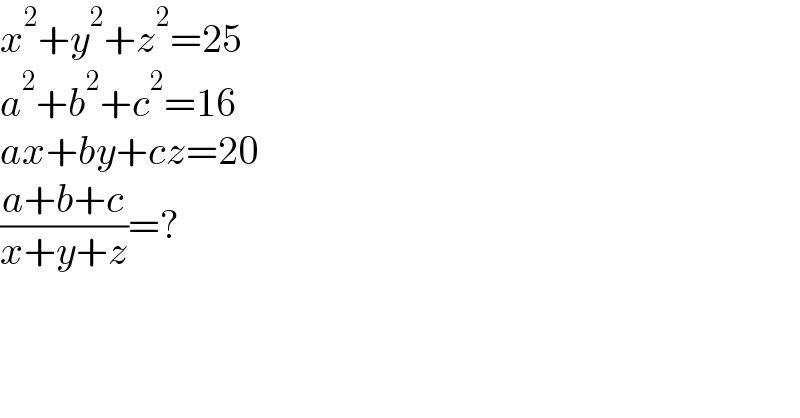
x^2 +y^2 +z^2 =25
a^2 +b^2 +c^2 =16
ax+by+cz=20
((a+b+c)/(x+y+z))=?
1
ans
1
cmts
An ellipse with semi-axes a and b lies on an inclined plane and can roll down it without slipping. What is the maximum angle of inclination of the plane at which the ellipse can remain in a stable equilibrium?

0
ans
1
cmts
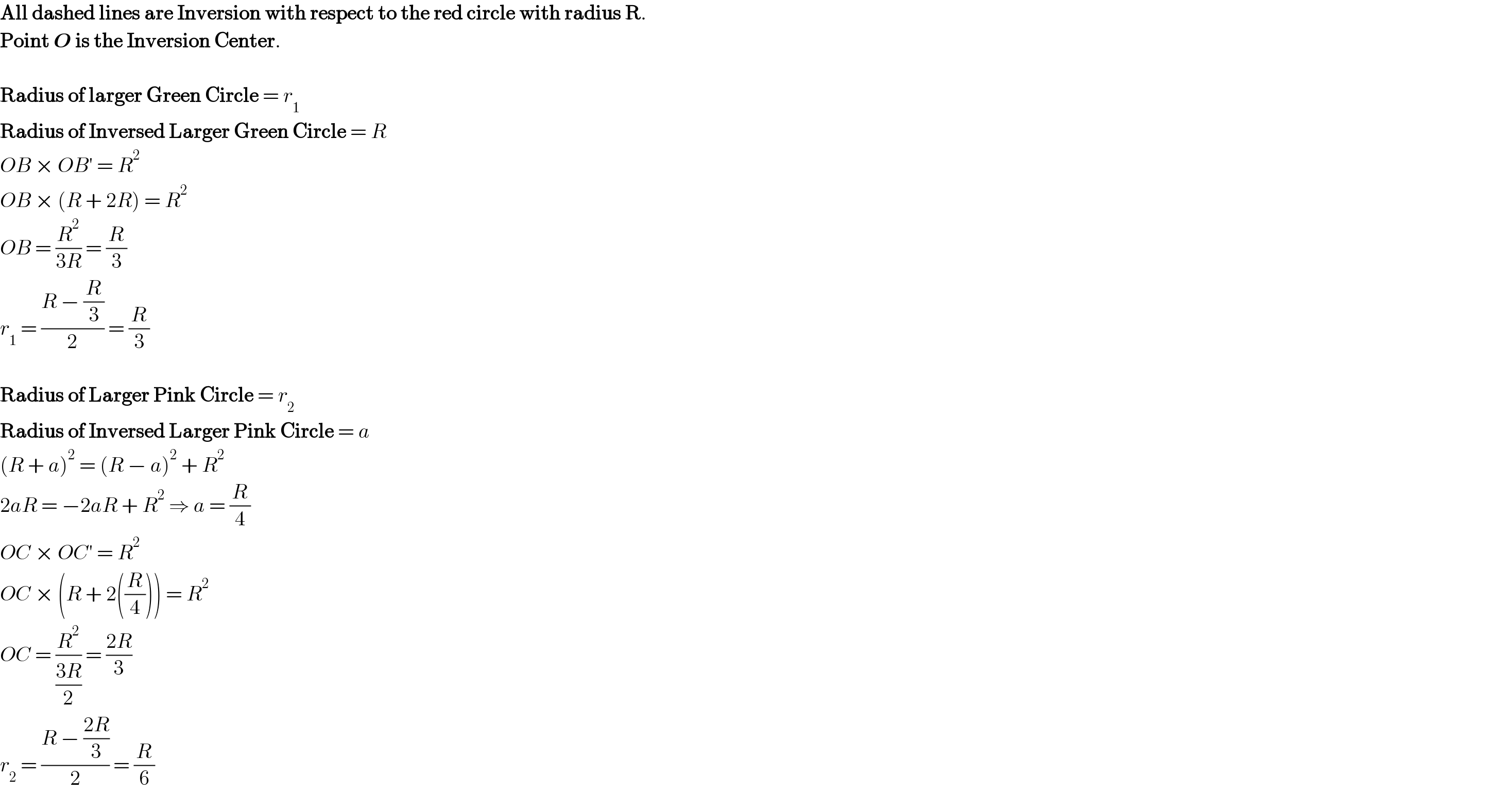
All dashed lines are Inversion with respect to the red circle with radius R.
Point O is the Inversion Center.
Radius of larger Green Circle = r_1
Radius of Inversed Larger Green Circle = R
OB × OB′ = R^2
OB × (R + 2R) = R^2
OB = (R^2 /(3R)) = (R/3)
r_1 = ((R − (R/3))/2) = (R/3)
Radius of Larger Pink Circle = r_2
Radius of Inversed Larger Pink Circle = a
(R + a)^2 = (R − a)^2 + R^2
2aR = −2aR + R^2 ⇒ a = (R/4)
OC × OC′ = R^2
OC × (R + 2((R/4))) = R^2
OC = (R^2 /((3R)/2)) = ((2R)/3)
r_2 = ((R − ((2R)/3))/2) = (R/6)
0
ans
0
cmts
Question 229221
2
ans
1
cmts
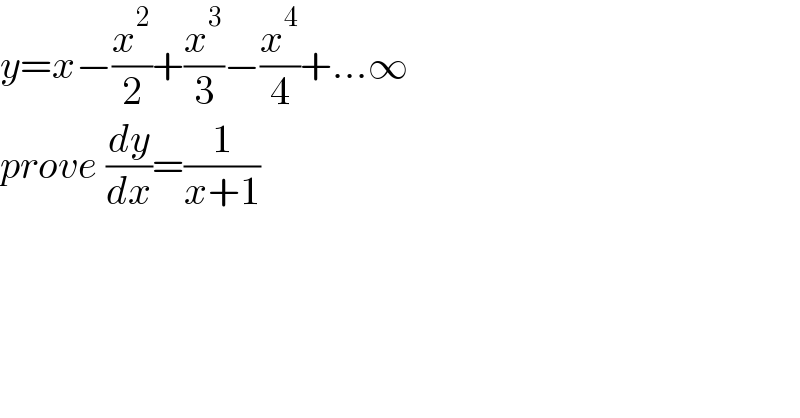
y=x−(x^2 /2)+(x^3 /3)−(x^4 /4)+...∞
prove (dy/dx)=(1/(x+1))
2
ans
1
cmts
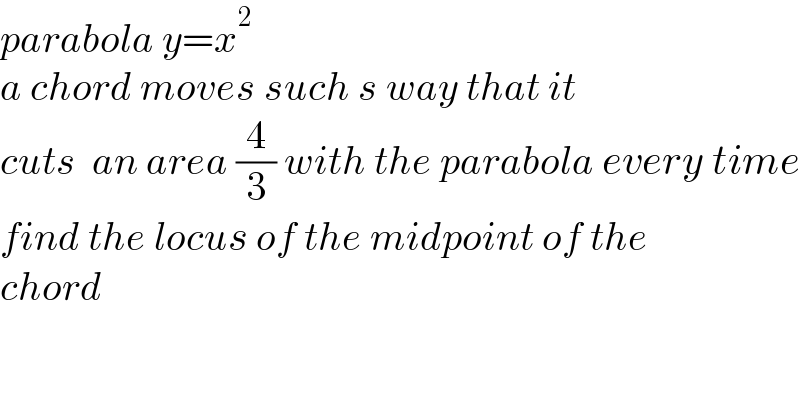
parabola y=x^2
a chord moves such s way that it
cuts an area (4/3) with the parabola every time
find the locus of the midpoint of the
chord
1
ans
0
cmts
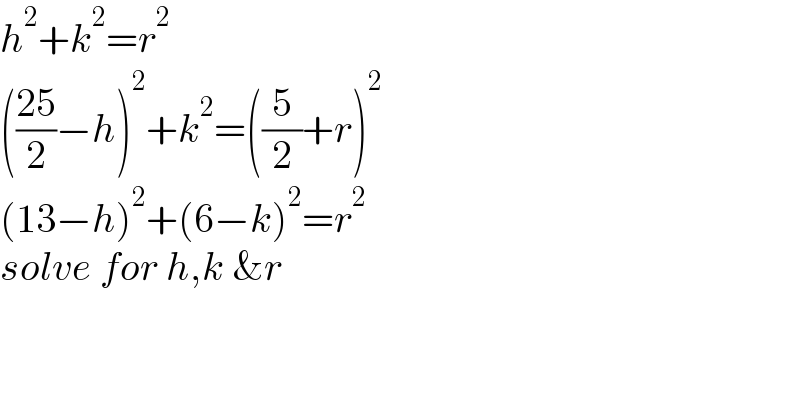
h^2 +k^2 =r^2
(((25)/2)−h)^2 +k^2 =((5/2)+r)^2
(13−h)^2 +(6−k)^2 =r^2
solve for h,k &r
1
ans
7
cmts
If you need to post hyperlinks please
add a plain text message and paste
link there. Code should
automatically create a clickable link

2
ans
0
cmts
Question 229085
0
ans
12
cmts
Question 229070
0
ans
1
cmts
Question 229012
0
ans
4
cmts
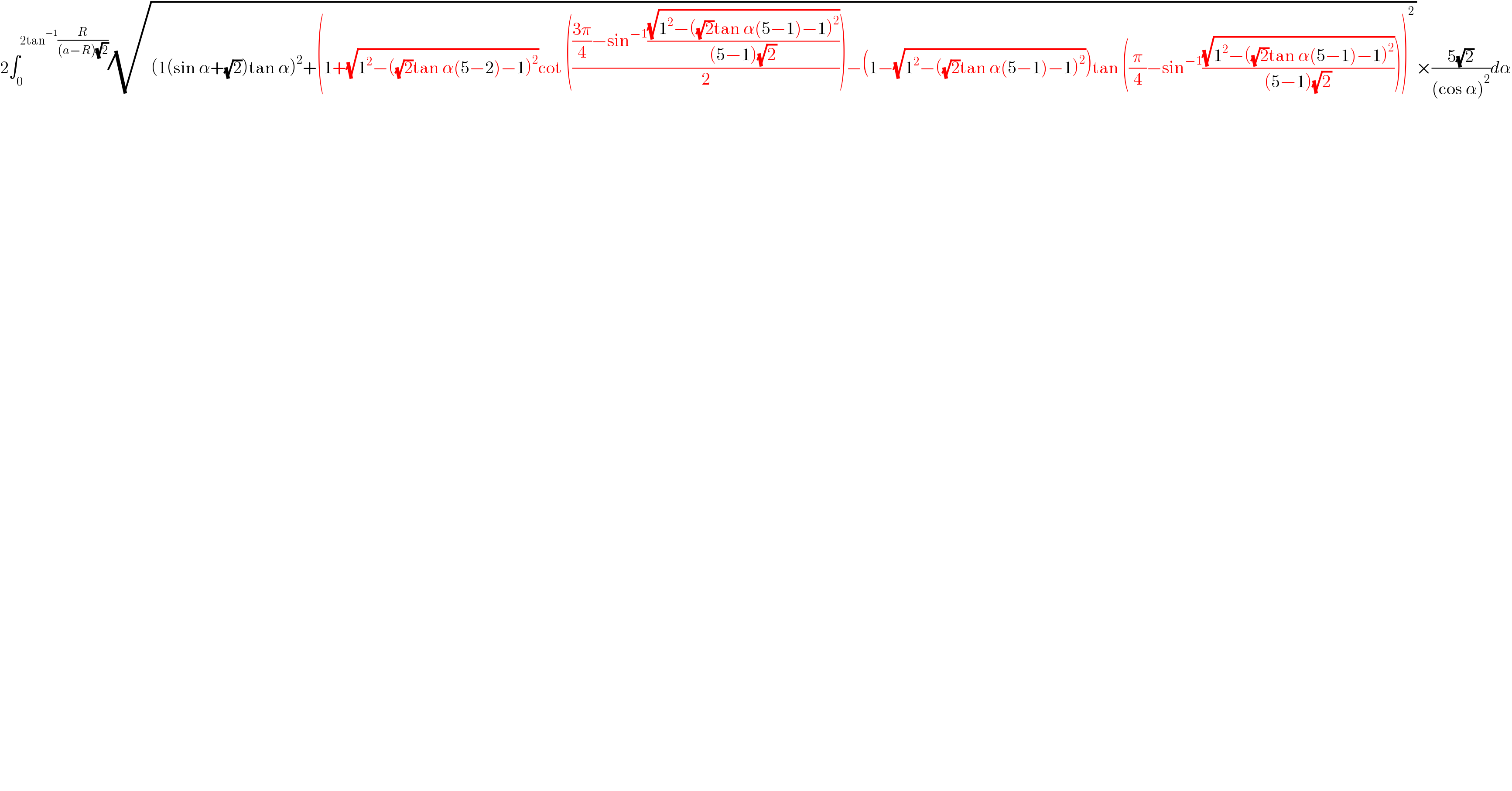
2∫_0 ^(2tan^(−1) (R/((a−R)(√2)))) (√((1(sin α+(√2))tan α)^2 +(1+(√(1^2 −((√2)tan α(5−2)−1)^2 ))cot (((((3π)/4)−sin^(−1) ((√(1^2 −((√2)tan α(5−1)−1)^2 ))/((5−1)(√2))))/2))−(1−(√(1^2 −((√2)tan α(5−1)−1)^2 )))tan ((π/4)−sin^(−1) ((√(1^2 −((√2)tan α(5−1)−1)^2 ))/((5−1)(√2)))))^2 ))×((5(√2))/((cos α)^2 ))dα
1
ans
0
cmts
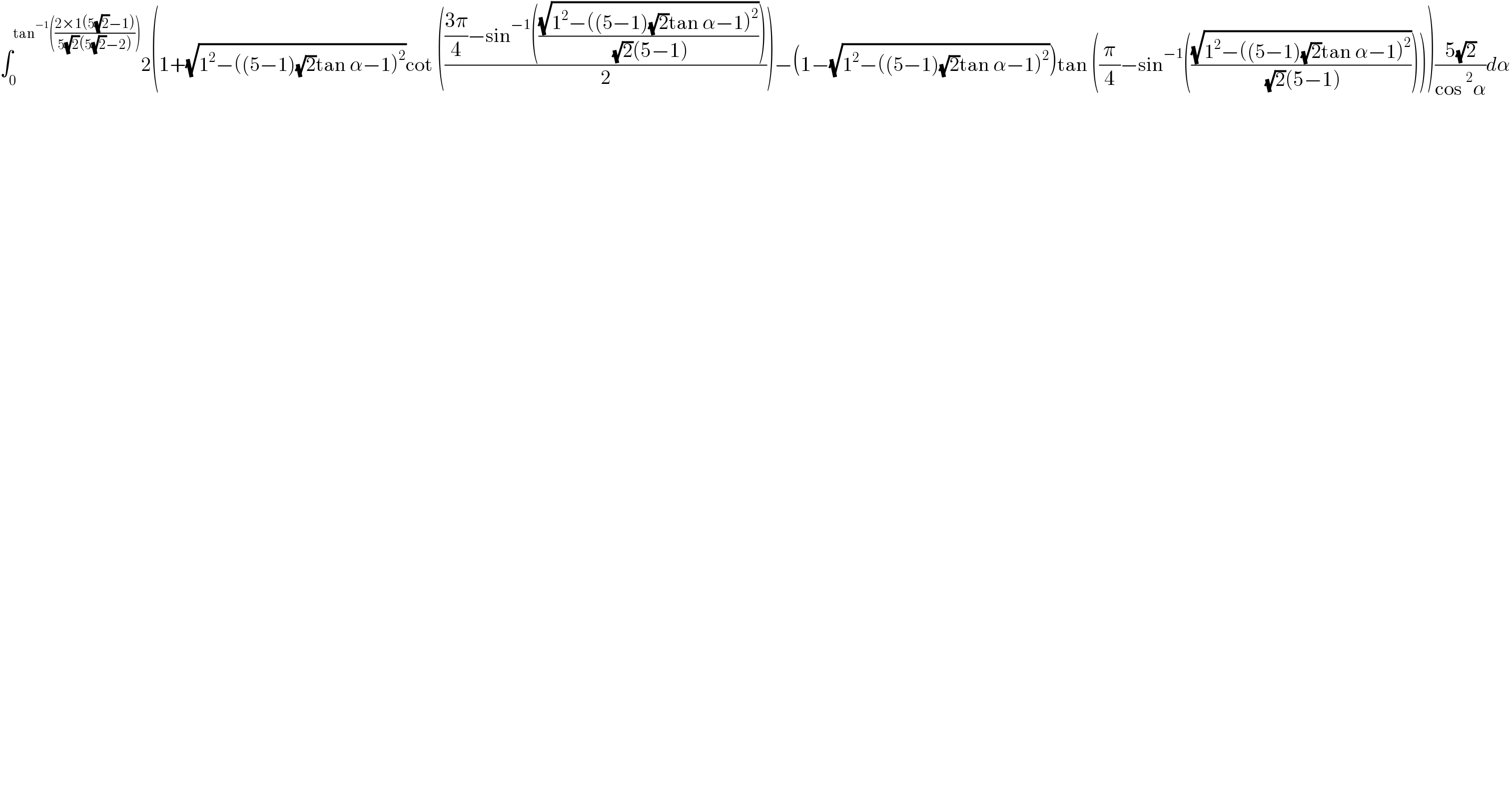
∫_0 ^(tan^(−1) (((2×1(5(√2)−1))/( 5(√2)(5(√2)−2))))) 2(1+(√(1^2 −((5−1)(√2)tan α−1)^2 ))cot (((((3π)/4)−sin^(−1) (((√(1^2 −((5−1)(√2)tan α−1)^2 ))/( (√2)(5−1)))))/2))−(1−(√(1^2 −((5−1)(√2)tan α−1)^2 )))tan ((π/4)−sin^(−1) (((√(1^2 −((5−1)(√2)tan α−1)^2 ))/( (√2)(5−1))))))((5(√2))/(cos^2 α))dα
1
ans
1
cmts
Question 228907
0
ans
0
cmts
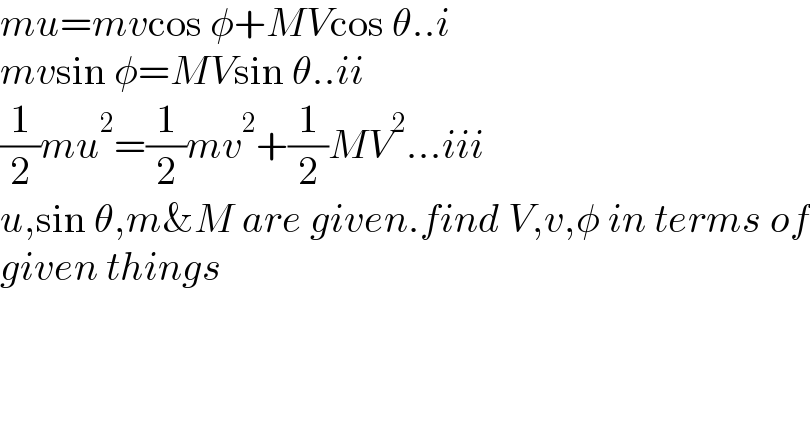
mu=mvcos φ+MVcos θ..i
mvsin φ=MVsin θ..ii
(1/2)mu^2 =(1/2)mv^2 +(1/2)MV^2 ...iii
u,sin θ,m&M are given.find V,v,φ in terms of
given things
2
ans
1
cmts
Question 228898
1
ans
1
cmts
Question 228896
3
ans
2
cmts
Question 228855
1
ans
5
cmts
Question 228845
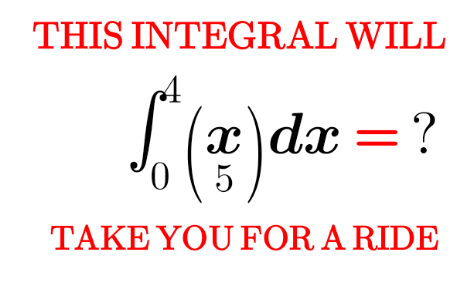
2
ans
1
cmts
Question 228788
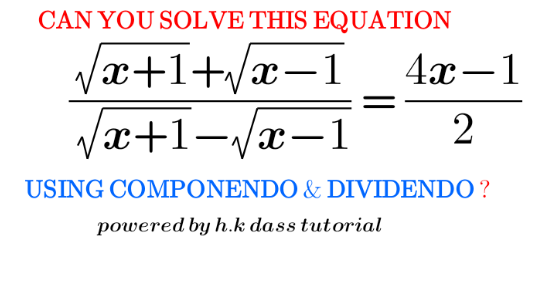
1
ans
0
cmts
Question 228768
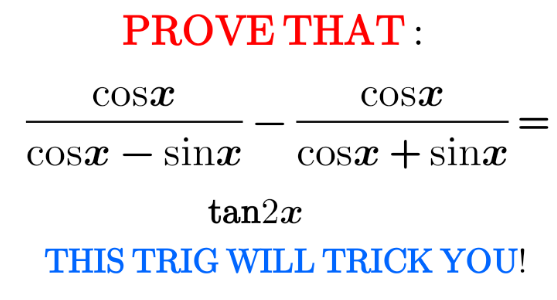
0
ans
0
cmts
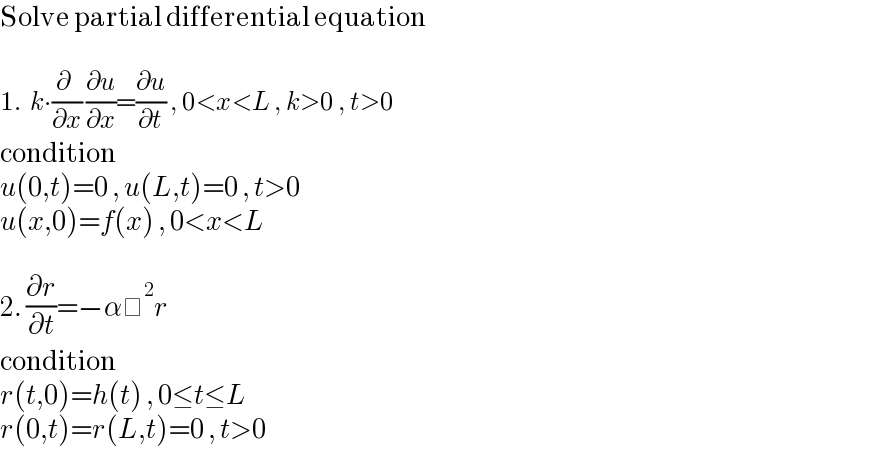
Solve partial differential equation
1. k∙((∂ )/∂x) (∂u/∂x)=(∂u/∂t) , 0<x<L , k>0 , t>0
condition
u(0,t)=0 , u(L,t)=0 , t>0
u(x,0)=f(x) , 0<x<L
2. (∂r/∂t)=−α∇^2 r
condition
r(t,0)=h(t) , 0≤t≤L
r(0,t)=r(L,t)=0 , t>0
2
ans
0
cmts
Question 228697
2
ans
0
cmts
Question 228687
3
ans
0
cmts
Question 228684
0
ans
0
cmts
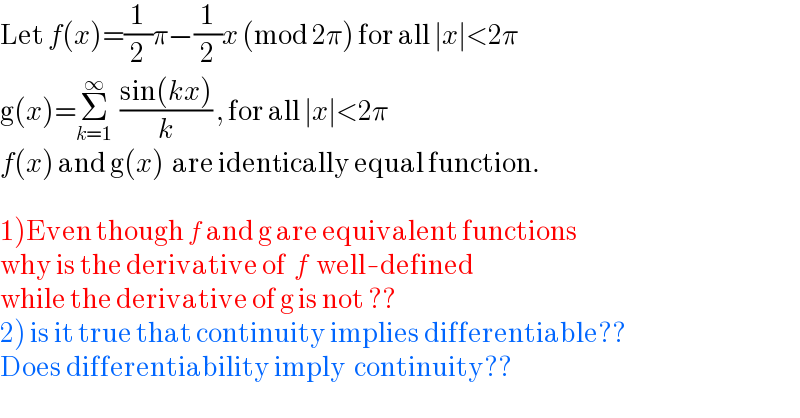
Let f(x)=(1/2)π−(1/2)x (mod 2π) for all ∣x∣<2π
g(x)=Σ_(k=1) ^∞ ((sin(kx))/k) , for all ∣x∣<2π
f(x) and g(x) are identically equal function.
1)Even though f and g are equivalent functions
why is the derivative of f well-defined
while the derivative of g is not ??
2) is it true that continuity implies differentiable??
Does differentiability imply continuity??
2
ans
3
cmts
Question 228659
3
ans
0
cmts
Question 228632
1
ans
8
cmts
Question 228618
2
ans
0
cmts
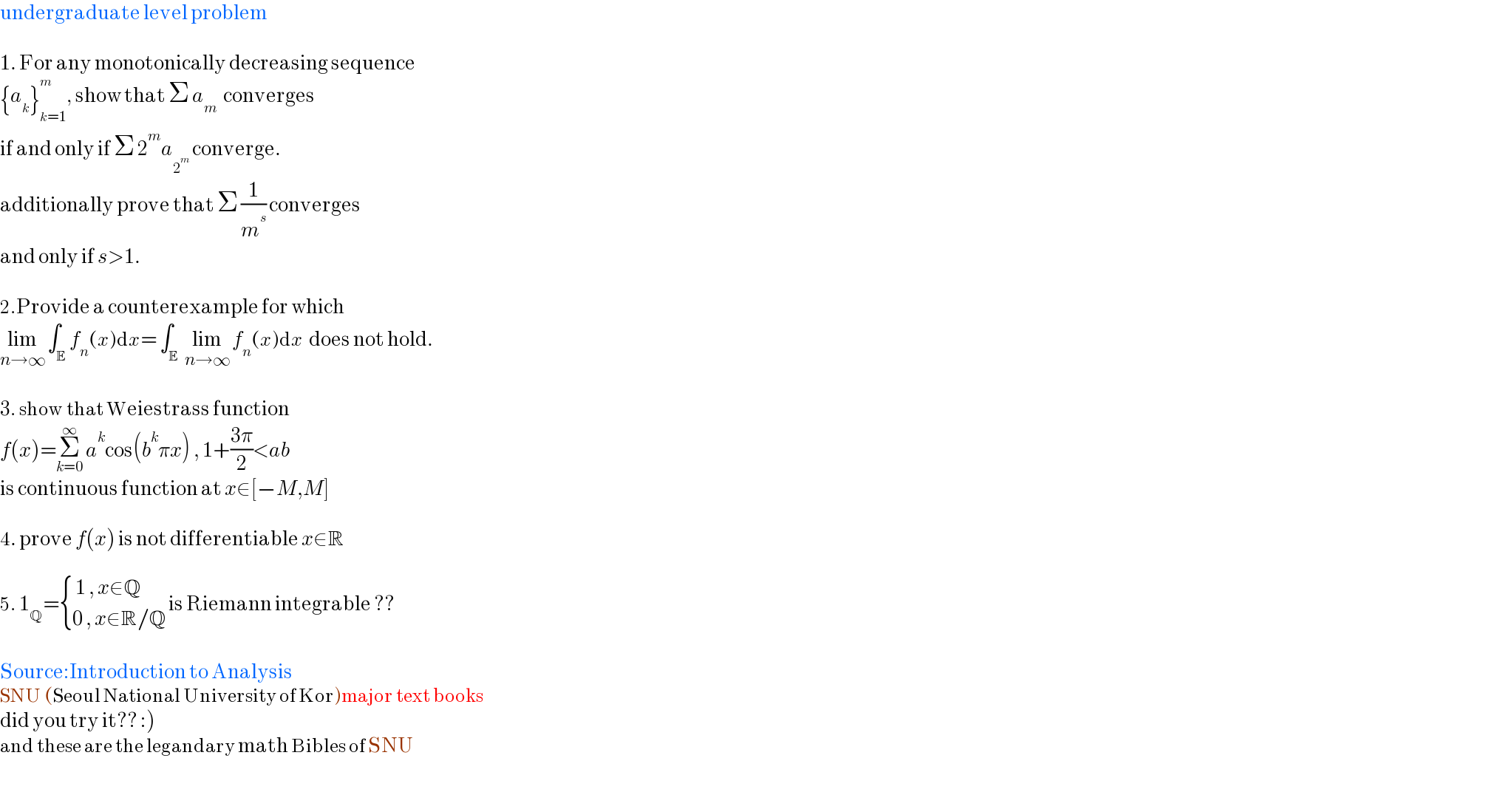
undergraduate level problem
1. For any monotonically decreasing sequence
{a_k }_(k=1) ^m , show that Σ a_m converges
if and only if Σ 2^m a_2^m converge.
additionally prove that Σ (1/m^s ) converges
and only if s>1.
2.Provide a counterexample for which
lim_(n→∞) ∫_E f_n (x)dx= ∫_E lim_(n→∞) f_n (x)dx does not hold.
3. show that Weiestrass function
f(x)=Σ_(k=0) ^∞ a^k cos(b^k πx) , 1+((3π)/2)<ab
is continuous function at x∈[−M,M]
4. prove f(x) is not differentiable x∈R
5. 1_Q = { (( 1 , x∈Q)),((0 , x∈R/Q)) :} is Riemann integrable ??
Source:Introduction to Analysis
SNU (Seoul National University of Kor)major text books
did you try it?? :)
and these are the legandary math Bibles of SNU
0
ans
6
cmts
Q226485
1
ans
2
cmts
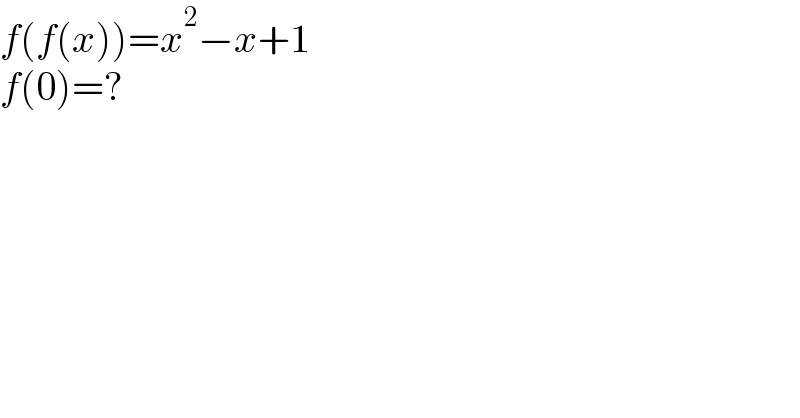
f(f(x))=x^2 −x+1
f(0)=?
0
ans
0
cmts
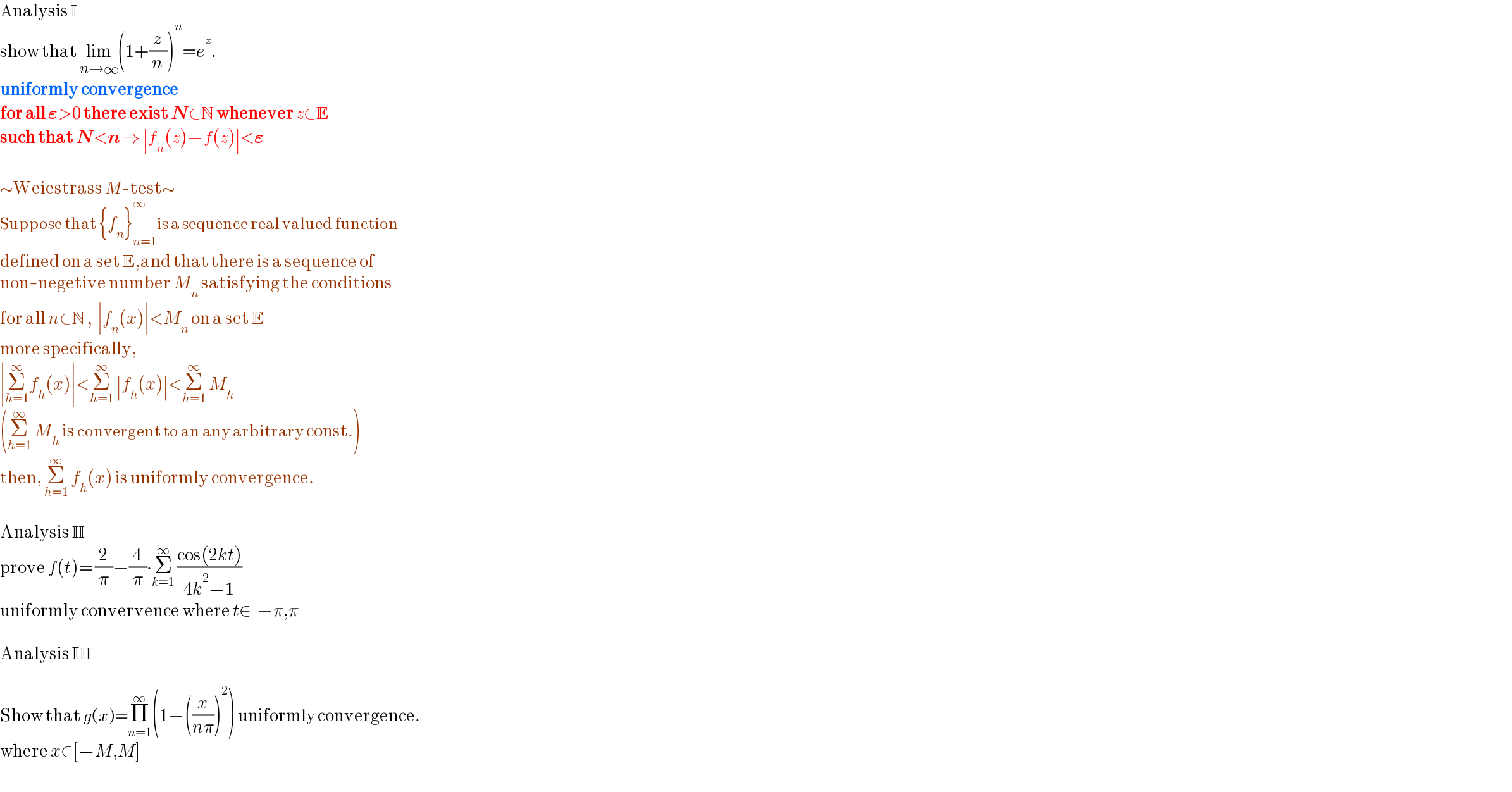
Analysis I
show that lim_(n→∞) (1+(z/n))^n =e^z .
uniformly convergence
for all 𝛜>0 there exist N∈N whenever z∈E
such that N<n ⇒ ∣f_n (z)−f(z)∣<𝛜
∼Weiestrass M-test∼
Suppose that {f_n ^ }_(n=1) ^∞ is a sequence real valued function
defined on a set E,and that there is a sequence of
non-negetive number M_n satisfying the conditions
for all n∈N , ∣f_n ^ (x)∣<M_n on a set E
more specifically,
∣Σ_(h=1) ^∞ f_h (x)∣<Σ_(h=1) ^∞ ∣f_h (x)∣<Σ_(h=1) ^∞ M_h
(Σ_(h=1) ^∞ M_h is convergent to an any arbitrary const.)
then, Σ_(h=1) ^∞ f_h (x) is uniformly convergence.
Analysis II
prove f(t)= (2/π)−(4/π)∙Σ_(k=1) ^∞ ((cos(2kt))/(4k^2 −1))
uniformly convervence where t∈[−π,π]
Analysis III
Show that g(x)=Π^∞ _(n=1) (1−((x/(nπ)))^2 ) uniformly convergence.
where x∈[−M,M]
0
ans
0
cmts
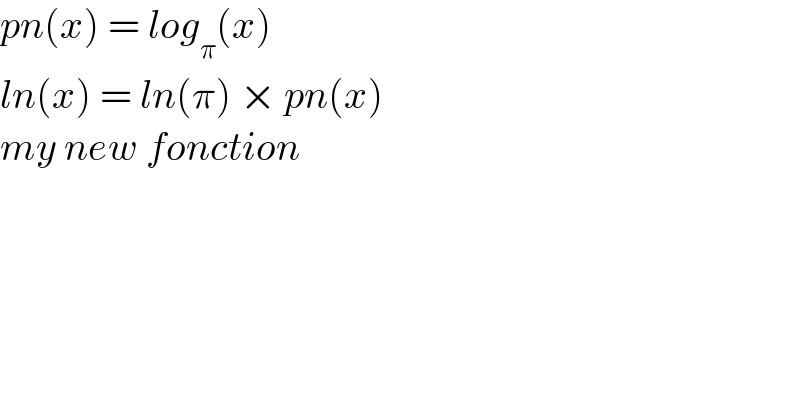
pn(x) = log_π (x)
ln(x) = ln(π) × pn(x)
my new fonction
0
ans
2
cmts
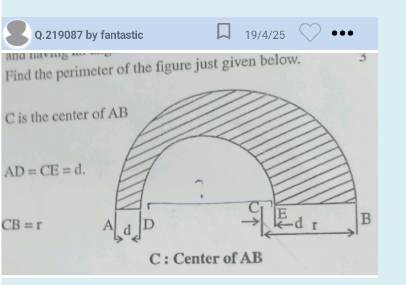
Question 228511
1
ans
1
cmts
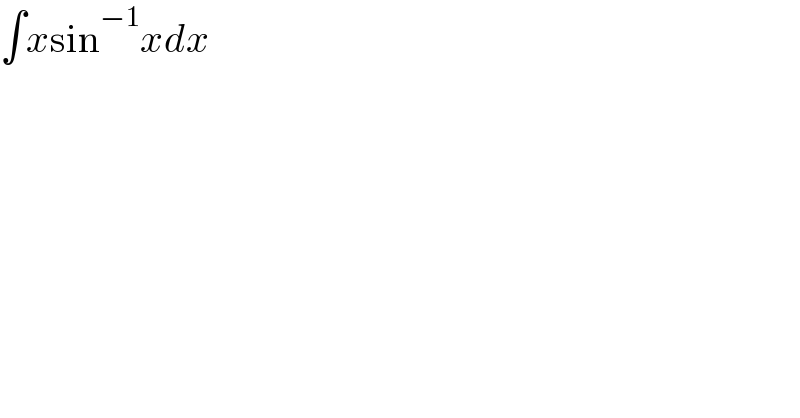
∫xsin^(−1) xdx
1
ans
0
cmts
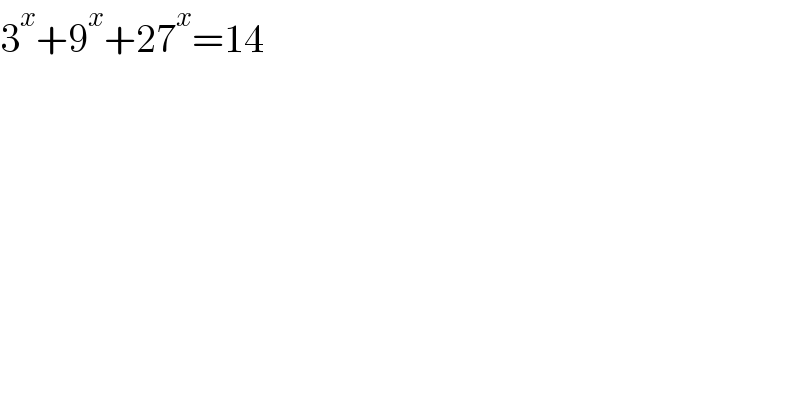
3^x +9^x +27^x =14
1
ans
0
cmts
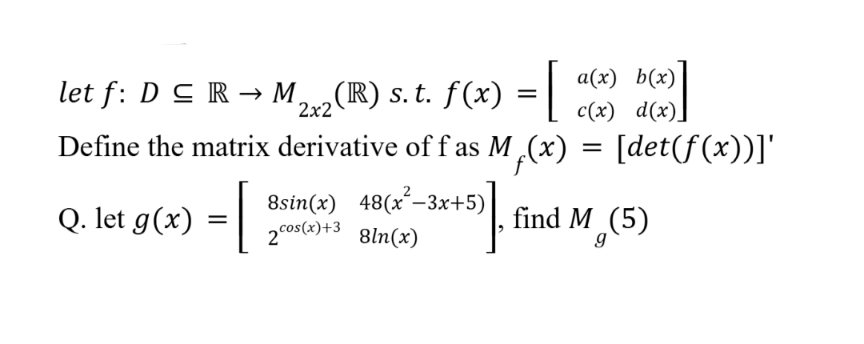
Question 228430
0
ans
0
cmts
Question 228347
2
ans
0
cmts
Question 228339
1
ans
0
cmts
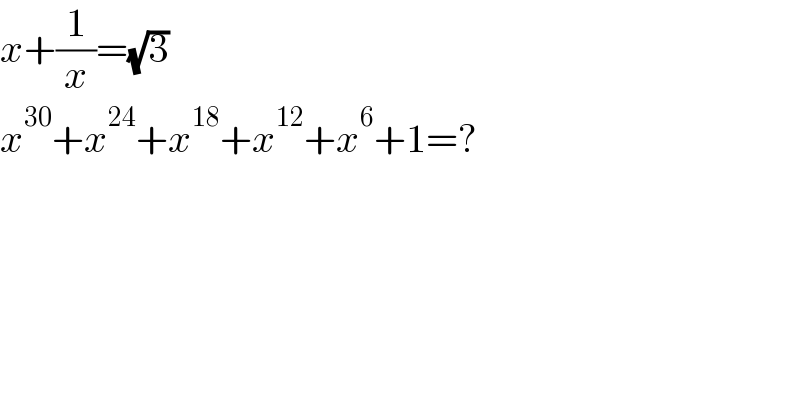
x+(1/x)=(√3)
x^(30) +x^(24) +x^(18) +x^(12) +x^6 +1=?
1
ans
0
cmts
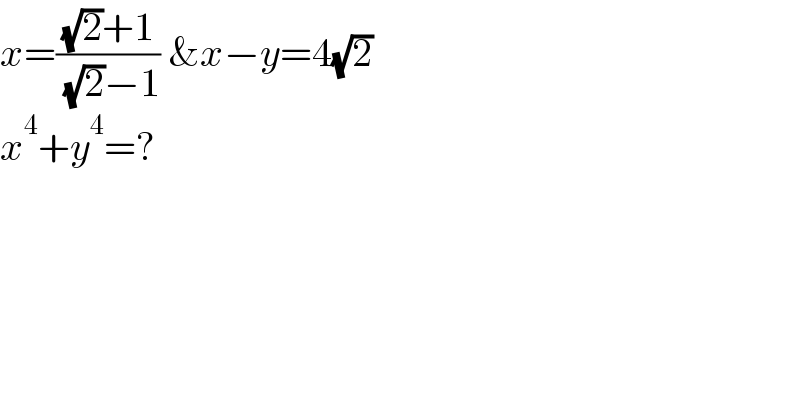
x=(((√2)+1)/( (√2)−1)) &x−y=4(√2)
x^4 +y^4 =?