Question and Answers Forum

All Questions   Topic List

GeometryQuestion and Answers: Page 99

Question Number 45427    Answers: 0   Comments: 4

Question Number 45381    Answers: 0   Comments: 1
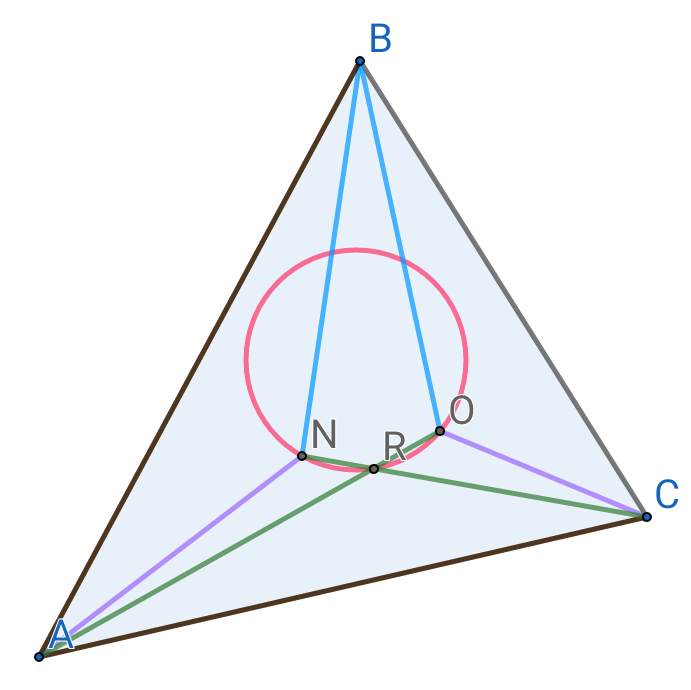
Question Number 45366    Answers: 2   Comments: 2

Question Number 45187    Answers: 1   Comments: 6

Question Number 45122    Answers: 0   Comments: 1
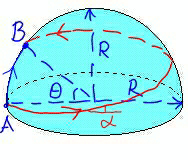
Question Number 44950    Answers: 1   Comments: 4
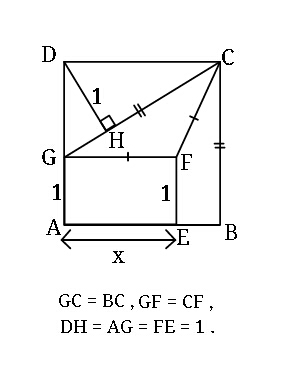
Question Number 44929    Answers: 2   Comments: 1

Question Number 44636    Answers: 1   Comments: 0

Question Number 44621    Answers: 2   Comments: 0

Question Number 44548    Answers: 0   Comments: 0

(a) The area of a sector of a circle of radius 12cm is 132cm^2 . If the sector is folded such that its straight edges coincide to form a cone. Find the radius of the base of the cone [ Take π = ((22)/7) ] . (b) A circle of centre O has radius 5cm. A chord PQ of the circle is 6cm long. caclculate: (i) The distance of the chord from the centre O (ii) The angle POQ

$$\left(\mathrm{a}\right) \\ $$$$\mathrm{The}\:\mathrm{area}\:\mathrm{of}\:\mathrm{a}\:\mathrm{sector}\:\mathrm{of}\:\mathrm{a}\:\mathrm{circle}\:\mathrm{of}\:\mathrm{radius}\:\:\mathrm{12cm}\:\mathrm{is}\:\:\mathrm{132cm}^{\mathrm{2}} \:.\:\:\mathrm{If}\:\mathrm{the}\:\mathrm{sector} \\ $$$$\mathrm{is}\:\mathrm{folded}\:\mathrm{such}\:\mathrm{that}\:\mathrm{its}\:\mathrm{straight}\:\mathrm{edges}\:\mathrm{coincide}\:\mathrm{to}\:\mathrm{form}\:\mathrm{a}\:\mathrm{cone}.\:\mathrm{Find}\:\mathrm{the}\: \\ $$$$\mathrm{radius}\:\mathrm{of}\:\mathrm{the}\:\mathrm{base}\:\mathrm{of}\:\mathrm{the}\:\mathrm{cone}\:\:\:\:\left[\:\:\mathrm{Take}\:\:\:\:\pi\:\:=\:\:\frac{\mathrm{22}}{\mathrm{7}}\:\right]\:. \\ $$$$ \\ $$$$\left(\mathrm{b}\right)\:\:\: \\ $$$$\mathrm{A}\:\mathrm{circle}\:\mathrm{of}\:\mathrm{centre}\:\mathrm{O}\:\mathrm{has}\:\mathrm{radius}\:\mathrm{5cm}.\:\:\mathrm{A}\:\mathrm{chord}\:\mathrm{PQ}\:\mathrm{of}\:\mathrm{the}\:\mathrm{circle}\:\mathrm{is}\:\mathrm{6cm}\:\mathrm{long}. \\ $$$$\mathrm{caclculate}: \\ $$$$\:\:\:\:\left(\mathrm{i}\right)\:\:\:\mathrm{The}\:\mathrm{distance}\:\mathrm{of}\:\mathrm{the}\:\mathrm{chord}\:\mathrm{from}\:\mathrm{the}\:\mathrm{centre}\:\mathrm{O} \\ $$$$\:\:\:\left(\mathrm{ii}\right)\:\:\mathrm{The}\:\mathrm{angle}\:\mathrm{POQ} \\ $$

Question Number 44497    Answers: 0   Comments: 8
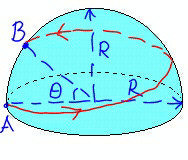
Question Number 44479    Answers: 1   Comments: 5

Question Number 44430    Answers: 0   Comments: 0

Question Number 44395    Answers: 1   Comments: 3

Question Number 44365    Answers: 2   Comments: 1

Question Number 44336    Answers: 0   Comments: 0
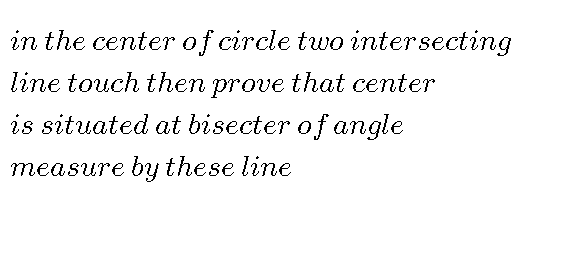
Question Number 44103    Answers: 1   Comments: 1

Question Number 44017    Answers: 1   Comments: 3
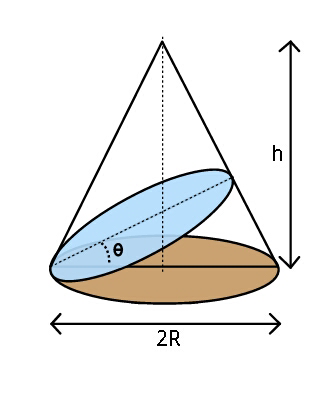
Question Number 43980    Answers: 1   Comments: 0

Question Number 43944    Answers: 1   Comments: 0

If the points (−3, 5) , (4, −2) and (6, 2) are the vertices of a triangle. (i) Find the equation of the perpendicular bisector of the sides (ii) Find the coordinate of the circumcenter. (The circumcenter of a triangle is the point of intersection of the perpendicular bisector of the side (iii) Find the radius of the circumcircle.

$$\mathrm{If}\:\mathrm{the}\:\mathrm{points}\:\left(−\mathrm{3},\:\mathrm{5}\right)\:,\:\left(\mathrm{4},\:−\mathrm{2}\right)\:\mathrm{and}\:\left(\mathrm{6},\:\mathrm{2}\right)\:\mathrm{are}\:\mathrm{the}\:\mathrm{vertices}\:\mathrm{of}\:\mathrm{a}\:\mathrm{triangle}. \\ $$$$\left(\mathrm{i}\right)\:\mathrm{Find}\:\mathrm{the}\:\mathrm{equation}\:\mathrm{of}\:\mathrm{the}\:\mathrm{perpendicular}\:\mathrm{bisector}\:\mathrm{of}\:\mathrm{the}\:\mathrm{sides} \\ $$$$\left(\mathrm{ii}\right)\:\mathrm{Find}\:\mathrm{the}\:\mathrm{coordinate}\:\mathrm{of}\:\mathrm{the}\:\mathrm{circumcenter}.\:\left(\mathrm{The}\:\mathrm{circumcenter}\:\mathrm{of}\:\mathrm{a}\right. \\ $$$$\mathrm{triangle}\:\mathrm{is}\:\mathrm{the}\:\mathrm{point}\:\mathrm{of}\:\mathrm{intersection}\:\mathrm{of}\:\mathrm{the}\:\mathrm{perpendicular}\:\mathrm{bisector}\:\mathrm{of} \\ $$$$\mathrm{the}\:\mathrm{side} \\ $$$$\left(\mathrm{iii}\right)\:\mathrm{Find}\:\mathrm{the}\:\mathrm{radius}\:\mathrm{of}\:\mathrm{the}\:\mathrm{circumcircle}. \\ $$

Question Number 43834    Answers: 0   Comments: 3

Question Number 43825    Answers: 2   Comments: 0

Question Number 43621    Answers: 1   Comments: 2
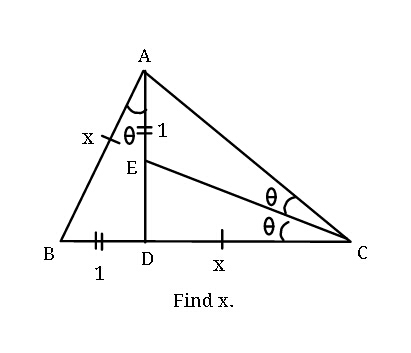
Question Number 43465    Answers: 2   Comments: 1

Question Number 43461    Answers: 0   Comments: 1

found something (others have found before) which I thought might be of interest, especially for Sir Tanmay Chaudhury: take any polynome of degree 4 with 2 real inflection points y=ax^4 +bx^3 +cx^2 +dx+e y′′=12ax^2 +6bx+2c=0 has got 2 real solutions x_1 and x_2 the line connecting the inflection points intersects the curve in 2 more points P and Q, their x−values are p and q let p<x_1 <x_2 <q ⇒ ((x_2 −x_1 )/(x_1 −p))=((x_2 −x_1 )/(q−x_2 ))=(1/2)+((√5)/2) which is the Golden Ratio

$$\mathrm{found}\:\mathrm{something}\:\left(\mathrm{others}\:\mathrm{have}\:\mathrm{found}\:\mathrm{before}\right) \\ $$$$\mathrm{which}\:\mathrm{I}\:\mathrm{thought}\:\mathrm{might}\:\mathrm{be}\:\mathrm{of}\:\mathrm{interest}, \\ $$$$\mathrm{especially}\:\mathrm{for}\:\mathrm{Sir}\:\mathrm{Tanmay}\:\mathrm{Chaudhury}: \\ $$$$\mathrm{take}\:\mathrm{any}\:\mathrm{polynome}\:\mathrm{of}\:\mathrm{degree}\:\mathrm{4}\:\mathrm{with}\:\mathrm{2}\:\mathrm{real} \\ $$$$\mathrm{inflection}\:\mathrm{points} \\ $$$${y}={ax}^{\mathrm{4}} +{bx}^{\mathrm{3}} +{cx}^{\mathrm{2}} +{dx}+{e} \\ $$$${y}''=\mathrm{12}{ax}^{\mathrm{2}} +\mathrm{6}{bx}+\mathrm{2}{c}=\mathrm{0}\:\mathrm{has}\:\mathrm{got}\:\mathrm{2}\:\mathrm{real}\:\mathrm{solutions} \\ $$$${x}_{\mathrm{1}} \:\mathrm{and}\:{x}_{\mathrm{2}} \\ $$$$\mathrm{the}\:\mathrm{line}\:\mathrm{connecting}\:\mathrm{the}\:\mathrm{inflection}\:\mathrm{points} \\ $$$$\mathrm{intersects}\:\mathrm{the}\:\mathrm{curve}\:\mathrm{in}\:\mathrm{2}\:\mathrm{more}\:\mathrm{points} \\ $$$${P}\:\mathrm{and}\:{Q},\:\mathrm{their}\:{x}−\mathrm{values}\:\mathrm{are}\:{p}\:\mathrm{and}\:{q} \\ $$$$\mathrm{let}\:{p}<{x}_{\mathrm{1}} <{x}_{\mathrm{2}} <{q} \\ $$$$\Rightarrow\:\frac{{x}_{\mathrm{2}} −{x}_{\mathrm{1}} }{{x}_{\mathrm{1}} −{p}}=\frac{{x}_{\mathrm{2}} −{x}_{\mathrm{1}} }{{q}−{x}_{\mathrm{2}} }=\frac{\mathrm{1}}{\mathrm{2}}+\frac{\sqrt{\mathrm{5}}}{\mathrm{2}}\:\mathrm{which}\:\mathrm{is}\:\mathrm{the}\:\mathrm{Golden}\:\mathrm{Ratio} \\ $$

Question Number 43360    Answers: 0   Comments: 9

  Pg 94      Pg 95      Pg 96      Pg 97      Pg 98      Pg 99      Pg 100      Pg 101      Pg 102      Pg 103   

Terms of Service

Privacy Policy

Contact: info@tinkutara.com