Question and Answers Forum

All Questions   Topic List

AllQuestion and Answers: Page 538

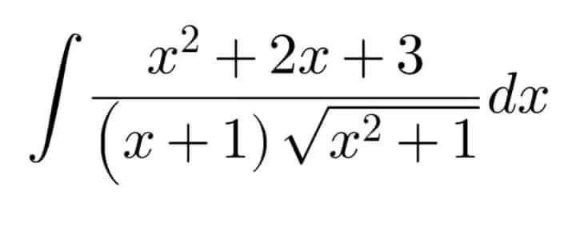
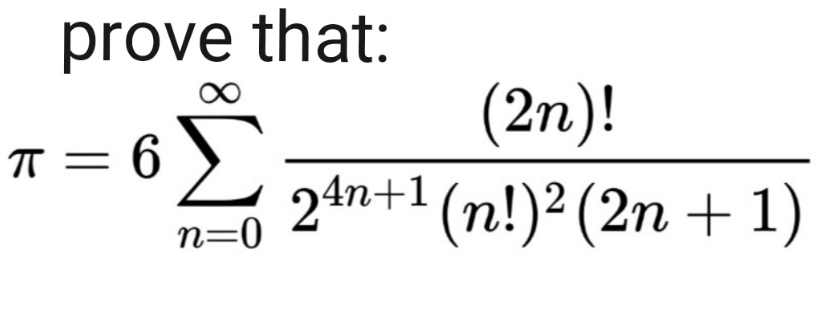
Question Number 165234    Answers: 0   Comments: 1

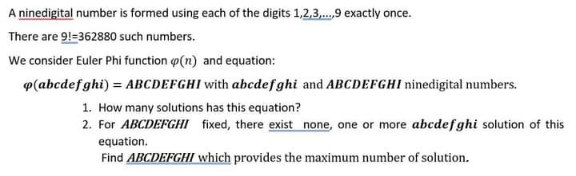
Question Number 165253    Answers: 3   Comments: 0

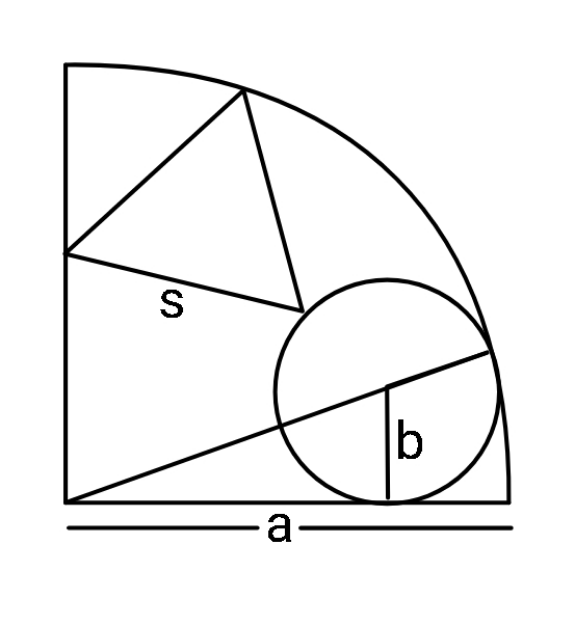
Question Number 165232    Answers: 1   Comments: 1

Question Number 165250    Answers: 0   Comments: 1

Question Number 165229    Answers: 0   Comments: 1

Σ_(i=1) ^(n=∞) lim_(x→0) ((xyn^x )/(nx_1 ))xz∫((xn^n x)/(nx^n y))dn (√(c^n +n_1 )) ∫((xn^(n!) )/(n^n xn^x ))dn

$$\underset{{i}=\mathrm{1}} {\overset{{n}=\infty} {\sum}}\underset{{x}\rightarrow\mathrm{0}} {\mathrm{lim}}\frac{{xyn}^{{x}} }{{nx}_{\mathrm{1}} }{xz}\int\frac{{xn}^{{n}} {x}}{{nx}^{{n}} {y}}{dn} \\ $$$$\sqrt{{c}^{{n}} +{n}_{\mathrm{1}} } \\ $$$$\int\frac{{xn}^{{n}!} }{{n}^{{n}} {xn}^{{x}} }{dn} \\ $$

Question Number 165226    Answers: 1   Comments: 0

make x the subject of the formula; a^x +bx+c=0

$${make}\:{x}\:{the}\:{subject}\:{of}\:{the}\:{formula}; \\ $$$${a}^{{x}} +{bx}+{c}=\mathrm{0} \\ $$

Question Number 165217    Answers: 2   Comments: 5

Question Number 165218    Answers: 1   Comments: 1

Question by M.N July Φ = ∫_0 ^( 1) ((ln(1 + x^4 + x^8 ))/x)dx Φ =^(x=x^(1/2) ) (1/2)∫_0 ^( 1) ((ln(1+x^2 +x^4 ))/x)dx Φ = (1/2)∫_0 ^( 1) ((ln(((1−x^2 )/(1−x^6 ))))/x)dx = (1/2)∫_0 ^( 1) ((ln(1−x^2 ))/x)dx − (1/2)∫_0 ^( 1) ((ln(1−x^6 ))/x)dx Φ = (1/2)(A − B) A =^(x=x^(1/2) ) (1/2)∫_0 ^( 1) ((ln(1−x))/x)dx = (1/2)Li_2 (1) B =^(x=x^(1/6) ) (1/6)∫_0 ^( 1) ((x^((1/6)−1) ln(1−x))/x^(1/6) )dx B = (1/6)∫_0 ^( 1) ((ln(1−x))/x)dx = (1/6)Li_2 (1) Φ = (1/2)((1/2)Li_2 (1)−(1/6)Li_2 (1)) = (1/6)Li_2 (1) 𝚽 = ((𝛇(2))/3) ▲▲▲

$$\mathrm{Question}\:\mathrm{by}\:\boldsymbol{\mathrm{M}}.\boldsymbol{\mathrm{N}}\:\boldsymbol{\mathrm{July}} \\ $$$$\Phi\:=\:\int_{\mathrm{0}} ^{\:\mathrm{1}} \frac{\mathrm{ln}\left(\mathrm{1}\:+\:\mathrm{x}^{\mathrm{4}} \:+\:\mathrm{x}^{\mathrm{8}} \right)}{\mathrm{x}}\mathrm{dx} \\ $$$$\Phi\:\overset{\mathrm{x}=\mathrm{x}^{\frac{\mathrm{1}}{\mathrm{2}}} } {=}\frac{\mathrm{1}}{\mathrm{2}}\int_{\mathrm{0}} ^{\:\mathrm{1}} \frac{\mathrm{ln}\left(\mathrm{1}+\mathrm{x}^{\mathrm{2}} +\mathrm{x}^{\mathrm{4}} \right)}{\mathrm{x}}\mathrm{dx} \\ $$$$\Phi\:=\:\frac{\mathrm{1}}{\mathrm{2}}\int_{\mathrm{0}} ^{\:\mathrm{1}} \frac{\mathrm{ln}\left(\frac{\mathrm{1}−\mathrm{x}^{\mathrm{2}} }{\mathrm{1}−\mathrm{x}^{\mathrm{6}} }\right)}{\mathrm{x}}\mathrm{dx}\:=\:\frac{\mathrm{1}}{\mathrm{2}}\int_{\mathrm{0}} ^{\:\mathrm{1}} \frac{\mathrm{ln}\left(\mathrm{1}−\mathrm{x}^{\mathrm{2}} \right)}{\mathrm{x}}\mathrm{dx}\:−\:\frac{\mathrm{1}}{\mathrm{2}}\int_{\mathrm{0}} ^{\:\mathrm{1}} \frac{\mathrm{ln}\left(\mathrm{1}−\mathrm{x}^{\mathrm{6}} \right)}{\mathrm{x}}\mathrm{dx} \\ $$$$\Phi\:=\:\frac{\mathrm{1}}{\mathrm{2}}\left(\mathrm{A}\:−\:\mathrm{B}\right) \\ $$$$\mathrm{A}\:\overset{\mathrm{x}=\mathrm{x}^{\frac{\mathrm{1}}{\mathrm{2}}} } {=}\frac{\mathrm{1}}{\mathrm{2}}\int_{\mathrm{0}} ^{\:\mathrm{1}} \frac{\mathrm{ln}\left(\mathrm{1}−\mathrm{x}\right)}{\mathrm{x}}\mathrm{dx}\:=\:\frac{\mathrm{1}}{\mathrm{2}}\boldsymbol{\mathrm{Li}}_{\mathrm{2}} \left(\mathrm{1}\right) \\ $$$$\mathrm{B}\:\overset{\mathrm{x}=\mathrm{x}^{\frac{\mathrm{1}}{\mathrm{6}}} } {=}\frac{\mathrm{1}}{\mathrm{6}}\int_{\mathrm{0}} ^{\:\mathrm{1}} \frac{\mathrm{x}^{\frac{\mathrm{1}}{\mathrm{6}}−\mathrm{1}} \mathrm{ln}\left(\mathrm{1}−\mathrm{x}\right)}{\mathrm{x}^{\frac{\mathrm{1}}{\mathrm{6}}} }\mathrm{dx} \\ $$$$\mathrm{B}\:=\:\frac{\mathrm{1}}{\mathrm{6}}\int_{\mathrm{0}} ^{\:\mathrm{1}} \frac{\mathrm{ln}\left(\mathrm{1}−\mathrm{x}\right)}{\mathrm{x}}\mathrm{dx}\:=\:\frac{\mathrm{1}}{\mathrm{6}}\boldsymbol{\mathrm{Li}}_{\mathrm{2}} \left(\mathrm{1}\right)\: \\ $$$$\Phi\:=\:\frac{\mathrm{1}}{\mathrm{2}}\left(\frac{\mathrm{1}}{\mathrm{2}}\boldsymbol{\mathrm{Li}}_{\mathrm{2}} \left(\mathrm{1}\right)−\frac{\mathrm{1}}{\mathrm{6}}\boldsymbol{\mathrm{Li}}_{\mathrm{2}} \left(\mathrm{1}\right)\right)\:=\:\frac{\mathrm{1}}{\mathrm{6}}\boldsymbol{\mathrm{Li}}_{\mathrm{2}} \left(\mathrm{1}\right) \\ $$$$\boldsymbol{\Phi}\:=\:\frac{\boldsymbol{\zeta}\left(\mathrm{2}\right)}{\mathrm{3}}\:\blacktriangle\blacktriangle\blacktriangle \\ $$

Question Number 165215    Answers: 1   Comments: 0

Find: Σ_(n=1) ^∞ tan^(−1) ((1/n^2 ))

$$\mathrm{Find}:\:\:\:\underset{\boldsymbol{\mathrm{n}}=\mathrm{1}} {\overset{\infty} {\sum}}\:\mathrm{tan}^{−\mathrm{1}} \:\left(\frac{\mathrm{1}}{\mathrm{n}^{\mathrm{2}} }\right) \\ $$

Question Number 165210    Answers: 0   Comments: 1

Σ_(n=4) ^∞ 2 × ((3/4))^(n+3)

$$\underset{\boldsymbol{{n}}=\mathrm{4}} {\overset{\infty} {\sum}}\:\mathrm{2}\:×\:\left(\frac{\mathrm{3}}{\mathrm{4}}\right)^{\boldsymbol{{n}}+\mathrm{3}} \\ $$

Question Number 165209    Answers: 0   Comments: 0

Find: Σ_(n=1) ^k ((n^2 sin^2 ((nπ)/2))/(n^4 π^4 + n^2 π^2 a + b)) = ?

$$\mathrm{Find}:\:\:\:\underset{\boldsymbol{\mathrm{n}}=\mathrm{1}} {\overset{\boldsymbol{\mathrm{k}}} {\sum}}\:\frac{\mathrm{n}^{\mathrm{2}} \:\mathrm{sin}^{\mathrm{2}} \:\frac{\mathrm{n}\pi}{\mathrm{2}}}{\mathrm{n}^{\mathrm{4}} \:\pi^{\mathrm{4}} \:+\:\mathrm{n}^{\mathrm{2}} \:\pi^{\mathrm{2}} \:\mathrm{a}\:+\:\mathrm{b}}\:=\:? \\ $$

Question Number 165208    Answers: 1   Comments: 0

lim_(x→1_(y→2) ) x^2 +y^2 =?

$$\underset{{x}\rightarrow\underset{\mathrm{y}\rightarrow\mathrm{2}} {\mathrm{1}}} {\mathrm{lim}}\:\mathrm{x}^{\mathrm{2}} +\mathrm{y}^{\mathrm{2}} =? \\ $$

Question Number 165194    Answers: 2   Comments: 0

∫_0 ^( 2π) ln ( 1+ cos (x)).cos (nx )dx=?

$$ \\ $$$$\:\:\:\:\int_{\mathrm{0}} ^{\:\mathrm{2}\pi} {ln}\:\left(\:\mathrm{1}+\:{cos}\:\left({x}\right)\right).{cos}\:\left({nx}\:\right){dx}=? \\ $$

Question Number 165183    Answers: 0   Comments: 1

Question Number 165178    Answers: 2   Comments: 0

x∈R ⇒ ∣ log _2 ((x/2))∣^3 +∣log _2 (2x)∣^3 =28

$$\:\:{x}\in{R}\:\Rightarrow\:\mid\:\mathrm{log}\:_{\mathrm{2}} \left(\frac{{x}}{\mathrm{2}}\right)\mid^{\mathrm{3}} +\mid\mathrm{log}\:_{\mathrm{2}} \left(\mathrm{2}{x}\right)\mid^{\mathrm{3}} =\mathrm{28} \\ $$

Question Number 165170    Answers: 2   Comments: 3

Question Number 165168    Answers: 1   Comments: 0

Question Number 165164    Answers: 1   Comments: 0

Question Number 165162    Answers: 0   Comments: 0

f(x)=2x^2 +5x. Montrer que f est lipschitzienne sur R.

$${f}\left({x}\right)=\mathrm{2}{x}^{\mathrm{2}} +\mathrm{5}{x}. \\ $$$${Montrer}\:{que}\:{f}\:{est}\:{lipschitzienne} \\ $$$${sur}\:\mathbb{R}. \\ $$

Question Number 165161    Answers: 0   Comments: 0

f(x)=2x^2 +5x. Montrez que f est uniformement continue sur R.

$${f}\left({x}\right)=\mathrm{2}{x}^{\mathrm{2}} +\mathrm{5}{x}. \\ $$$${Montrez}\:{que}\:{f}\:{est}\:{uniformement}\:{continue}\: \\ $$$${sur}\:\mathbb{R}. \\ $$

Question Number 165160    Answers: 1   Comments: 0

f(x+f(x))=3f(x) and f(−1)=7 faind f(27)=?

$${f}\left({x}+{f}\left({x}\right)\right)=\mathrm{3}{f}\left({x}\right)\:\:\:{and}\:{f}\left(−\mathrm{1}\right)=\mathrm{7} \\ $$$${faind}\:\:{f}\left(\mathrm{27}\right)=? \\ $$

Question Number 165150    Answers: 1   Comments: 1

Question Number 165142    Answers: 0   Comments: 2

Question Number 165136    Answers: 3   Comments: 0

Question Number 165271    Answers: 1   Comments: 0

Let , f : [ 0 , 1 ] → R is a continuous function , prove that : lim_( n→ ∞) ∫_0 ^( 1) (( n f(x))/(1+ n^2 x^( 2) )) dx = (π/2) f (0 ) −−− proof −−− S_( n) = [∫_(0 ) ^( (1/( (√n)))) (( n. f(x))/(1 + n^( 2) x^( 2) )) dx =Ω_( n) ]+[ ∫_(1/( (√n))) ^( 1) ((n.f (x))/(1 + n^( 2) x^( 2) )) dx = Φ_( n) ] Ω_( n) =_(∃ t_( n) ∈ ( 0 , (1/( (√n) )) )) ^(MeanValueTheorem( first)) f (t_( n) )∫_(0 ) ^( (1/( (√n)))) (( n)/(1 + n^( 2) x^( 2) ))dx = f ( t_( n) ) ( tan^( −1) ( (√n) )) lim_( n→∞) (Ω_( n) ) = (π/2) f (lim_( n→∞) ( t_( n) ) ) = (π/2) f (0 ) Φ_( n) = ∫_(1/( (√n))) ^( 1) (( n. f(x) )/(1 + n^( 2) x^( 2) )) dx ⇒_(∃ M >0) ^(f is bounded) ∣ Φ_( n) ∣ ≤ M.∫_(1/( (√n))) ^( 1) (n/(1+ n^( 2) x^( 2) )) dx ⇒ ∣ Φ_( n) ∣ ≤ M . ( tan^( −1) ( n )− tan^( −1) ( (√n) )) lim_( n→ ∞) ∣ Φ_( n) ∣ = 0 ⇒ lim_( n→∞) Φ_( n) =0 ∴ lim_( n→ ∞) ( S_( n) ) = (π/2) f (0 ) ■ m.n

$$ \\ $$$$\:\:\:\:\:\mathrm{L}{et}\:,\:\:\:{f}\::\:\left[\:\mathrm{0}\:,\:\mathrm{1}\:\right]\:\rightarrow\:\mathbb{R}\:\:{is}\:{a}\:{continuous}\: \\ $$$$\:\:\:\:{function}\:,\:{prove}\:{that}\::\:\:\: \\ $$$$\:\:\:\:\:\:\:\:{lim}_{\:{n}\rightarrow\:\infty} \:\int_{\mathrm{0}} ^{\:\mathrm{1}} \frac{\:{n}\:{f}\left({x}\right)}{\mathrm{1}+\:{n}^{\mathrm{2}} \:{x}^{\:\mathrm{2}} }\:{dx}\:=\:\frac{\pi}{\mathrm{2}}\:{f}\:\left(\mathrm{0}\:\right) \\ $$$$\:\:\:\:\:−−−\:{proof}\:−−− \\ $$$$\:\:\:\:\:\:\:\:\:\mathrm{S}_{\:{n}} \:=\:\left[\int_{\mathrm{0}\:} ^{\:\frac{\mathrm{1}}{\:\sqrt{{n}}}} \:\frac{\:{n}.\:{f}\left({x}\right)}{\mathrm{1}\:+\:{n}^{\:\mathrm{2}} {x}^{\:\mathrm{2}} }\:{dx}\:=\Omega_{\:{n}} \right]+\left[\:\int_{\frac{\mathrm{1}}{\:\sqrt{{n}}}} ^{\:\mathrm{1}} \:\frac{{n}.{f}\:\left({x}\right)}{\mathrm{1}\:+\:{n}^{\:\mathrm{2}} {x}^{\:\mathrm{2}} }\:{dx}\:=\:\Phi_{\:{n}} \:\right] \\ $$$$\:\:\:\:\:\:\Omega_{\:{n}} \:\underset{\exists\:{t}_{\:{n}} \in\:\left(\:\mathrm{0}\:,\:\frac{\mathrm{1}}{\:\sqrt{{n}}\:}\:\right)} {\overset{\mathrm{M}{ean}\mathrm{V}{alue}\mathrm{T}{heorem}\left(\:{first}\right)} {=}}\:\:{f}\:\left({t}_{\:{n}} \:\right)\int_{\mathrm{0}\:} ^{\:\frac{\mathrm{1}}{\:\sqrt{{n}}}} \:\frac{\:{n}}{\mathrm{1}\:+\:{n}^{\:\mathrm{2}} {x}^{\:\mathrm{2}} }{dx} \\ $$$$\:\:\:\:\:\:\:\:\:\:\:\:\:=\:\:{f}\:\left(\:{t}_{\:{n}} \right)\:\left(\:{tan}^{\:−\mathrm{1}} \left(\:\sqrt{{n}}\:\right)\right) \\ $$$$\:\:\:\:\:\:\:\:\:{lim}_{\:{n}\rightarrow\infty} \:\left(\Omega_{\:{n}} \:\right)\:\:=\:\frac{\pi}{\mathrm{2}}\:{f}\:\left({lim}_{\:{n}\rightarrow\infty} \left(\:{t}_{\:{n}} \right)\:\right)\:=\:\frac{\pi}{\mathrm{2}}\:{f}\:\left(\mathrm{0}\:\right)\: \\ $$$$\:\:\:\:\:\:\:\:\Phi_{\:{n}} =\:\int_{\frac{\mathrm{1}}{\:\sqrt{{n}}}} ^{\:\mathrm{1}} \frac{\:{n}.\:{f}\left({x}\right)\:}{\mathrm{1}\:+\:{n}^{\:\mathrm{2}} {x}^{\:\mathrm{2}} }\:{dx}\:\:\underset{\exists\:\mathrm{M}\:>\mathrm{0}} {\overset{{f}\:\:{is}\:{bounded}} {\Rightarrow}}\:\mid\:\Phi_{\:{n}} \:\mid\:\leqslant\:\mathrm{M}.\int_{\frac{\mathrm{1}}{\:\sqrt{{n}}}} ^{\:\mathrm{1}} \frac{{n}}{\mathrm{1}+\:{n}^{\:\mathrm{2}} {x}^{\:\mathrm{2}} }\:{dx} \\ $$$$\:\:\:\:\:\:\:\:\:\Rightarrow\:\:\mid\:\Phi_{\:{n}} \mid\:\leqslant\:\mathrm{M}\:.\:\left(\:{tan}^{\:−\mathrm{1}} \left(\:{n}\:\right)−\:{tan}^{\:−\mathrm{1}} \left(\:\sqrt{{n}}\:\right)\right) \\ $$$$\:\:\:\:\:\:\:\:\:{lim}_{\:{n}\rightarrow\:\infty} \:\mid\:\Phi_{\:{n}} \mid\:=\:\mathrm{0}\:\:\Rightarrow\:{lim}_{\:{n}\rightarrow\infty} \:\Phi_{\:{n}} \:=\mathrm{0} \\ $$$$\:\:\:\:\:\:\:\:\:\:\therefore\:\:\:\:{lim}_{\:{n}\rightarrow\:\infty} \:\left(\:\:\mathrm{S}_{\:{n}} \:\right)\:=\:\frac{\pi}{\mathrm{2}}\:{f}\:\left(\mathrm{0}\:\right)\:\:\:\:\blacksquare\:{m}.{n} \\ $$$$\:\:\:\:\: \\ $$

Question Number 165270    Answers: 2   Comments: 0

  Pg 533      Pg 534      Pg 535      Pg 536      Pg 537      Pg 538      Pg 539      Pg 540      Pg 541      Pg 542   

Terms of Service

Privacy Policy

Contact: info@tinkutara.com