Question and Answers Forum

All Questions   Topic List

AllQuestion and Answers: Page 1956

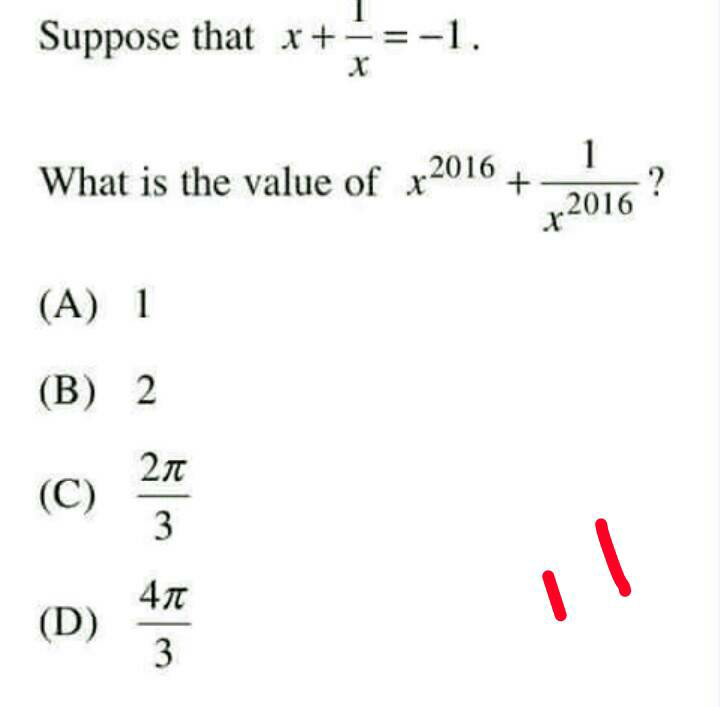
Question Number 12875    Answers: 0   Comments: 3

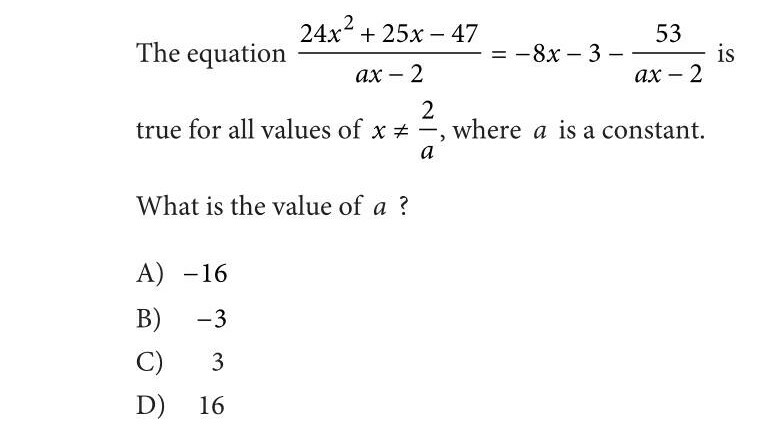
Question Number 12874    Answers: 1   Comments: 0

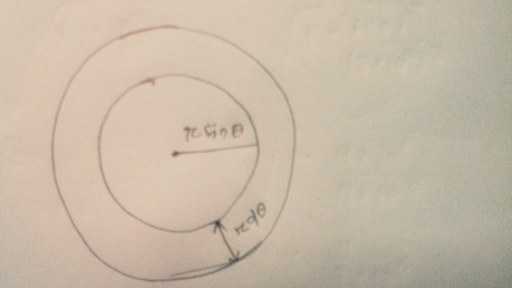
Question Number 12873    Answers: 0   Comments: 0

How many flouride ion are there in 1.46 mole of aluminium flouride Alf_3

$$\mathrm{How}\:\mathrm{many}\:\mathrm{flouride}\:\mathrm{ion}\:\mathrm{are}\:\mathrm{there}\:\mathrm{in}\:\mathrm{1}.\mathrm{46}\:\mathrm{mole}\:\mathrm{of}\:\mathrm{aluminium}\:\mathrm{flouride}\:\mathrm{Alf}_{\mathrm{3}} \\ $$

Question Number 12861    Answers: 2   Comments: 0

change0.356^− into p/q form

$${change}\mathrm{0}.\mathrm{35}\overset{−} {\mathrm{6}}\:{into}\:{p}/{q}\:{form} \\ $$$$ \\ $$

Question Number 12859    Answers: 0   Comments: 0

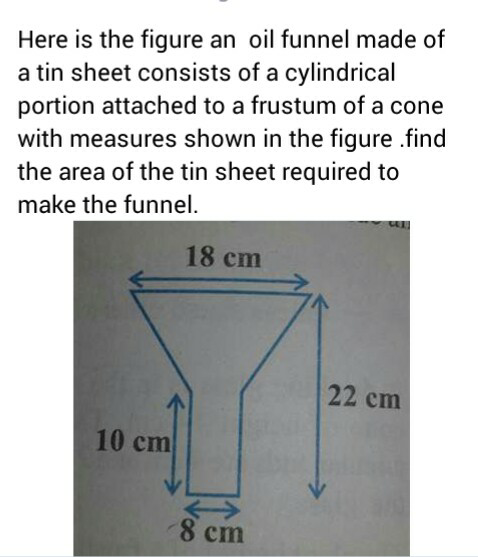
Question Number 12855    Answers: 1   Comments: 0

f(x)=[1−(x−3)^4 ]^(1/7) find f^(−1) (x).

$${f}\left({x}\right)=\left[\mathrm{1}−\left({x}−\mathrm{3}\right)^{\mathrm{4}} \right]^{\mathrm{1}/\mathrm{7}} \\ $$$${find}\:{f}^{−\mathrm{1}} \left({x}\right). \\ $$

Question Number 12846    Answers: 2   Comments: 1

Question Number 12843    Answers: 0   Comments: 0

Let R be a cummutative ring with 1. and a,b member of R. Suppose a is invertible and b is nilpotent. Show that a + b is invertible.

$$\mathrm{Let}\:\mathrm{R}\:\mathrm{be}\:\mathrm{a}\:\mathrm{cummutative}\:\mathrm{ring}\:\mathrm{with}\:\mathrm{1}.\:\mathrm{and}\:\mathrm{a},\mathrm{b}\:\:\mathrm{member}\:\mathrm{of}\:\mathrm{R}.\:\mathrm{Suppose}\:\mathrm{a}\:\mathrm{is} \\ $$$$\mathrm{invertible}\:\mathrm{and}\:\mathrm{b}\:\mathrm{is}\:\mathrm{nilpotent}.\:\mathrm{Show}\:\mathrm{that}\:\mathrm{a}\:+\:\mathrm{b}\:\mathrm{is}\:\mathrm{invertible}. \\ $$

Question Number 12841    Answers: 2   Comments: 0

The number of terms in the expansion of (1+5 (√2) x)^9 + (1−5 (√2) x)^9 is

$$\mathrm{The}\:\mathrm{number}\:\mathrm{of}\:\mathrm{terms}\:\mathrm{in}\:\mathrm{the}\:\mathrm{expansion}\:\mathrm{of} \\ $$$$\left(\mathrm{1}+\mathrm{5}\:\sqrt{\mathrm{2}}\:{x}\right)^{\mathrm{9}} \:+\:\left(\mathrm{1}−\mathrm{5}\:\sqrt{\mathrm{2}}\:{x}\right)^{\mathrm{9}} \:\mathrm{is} \\ $$

Question Number 12881    Answers: 1   Comments: 0

((lim)/(x→0))((√(1−cos x))/x) is equals to.

$$\frac{{lim}}{{x}\rightarrow\mathrm{0}}\frac{\sqrt{\mathrm{1}−\mathrm{cos}\:{x}}}{{x}} \\ $$$${is}\:{equals}\:{to}. \\ $$

Question Number 12830    Answers: 1   Comments: 0

the LCM and HCF of 30 and a certain number are 150 and 5 respectively. find the number please help

$$\mathrm{the}\:\mathrm{LCM}\:\mathrm{and}\:\mathrm{HCF}\:\mathrm{of}\:\mathrm{30}\:\mathrm{and}\:\mathrm{a}\: \\ $$$$\mathrm{certain}\:\mathrm{number}\:\mathrm{are}\:\mathrm{150}\:\mathrm{and}\:\mathrm{5}\: \\ $$$$\mathrm{respectively}.\:\mathrm{find}\:\mathrm{the}\:\mathrm{number} \\ $$$$ \\ $$$$ \\ $$$$\mathrm{please}\:\mathrm{help} \\ $$

Question Number 12829    Answers: 2   Comments: 0

Question Number 12828    Answers: 1   Comments: 0

The value of the infinite product (√3) ∙ (9)^(1/4) ∙ ((27))^(1/8) ∙ ((81))^(1/(16)) ...to ∞ is equal to ____.

$$\mathrm{The}\:\mathrm{value}\:\mathrm{of}\:\mathrm{the}\:\mathrm{infinite}\:\mathrm{product} \\ $$$$\sqrt{\mathrm{3}}\:\centerdot\:\sqrt[{\mathrm{4}}]{\mathrm{9}}\:\centerdot\:\sqrt[{\mathrm{8}}]{\mathrm{27}}\:\centerdot\:\sqrt[{\mathrm{16}}]{\mathrm{81}}\:...\mathrm{to}\:\infty\:\:\mathrm{is}\:\mathrm{equal}\:\mathrm{to}\:\_\_\_\_. \\ $$

Question Number 12827    Answers: 2   Comments: 0

Sum of three numbers in GP be 14. If one is added to first and second and 1 is subtracted from the third, the new numbers are in AP. The smallest of them is

$$\mathrm{Sum}\:\mathrm{of}\:\mathrm{three}\:\mathrm{numbers}\:\mathrm{in}\:\mathrm{GP}\:\mathrm{be}\:\mathrm{14}.\:\mathrm{If}\:\mathrm{one}\:\mathrm{is} \\ $$$$\mathrm{added}\:\mathrm{to}\:\mathrm{first}\:\mathrm{and}\:\mathrm{second}\:\mathrm{and}\:\mathrm{1}\:\mathrm{is}\:\mathrm{subtracted} \\ $$$$\mathrm{from}\:\mathrm{the}\:\mathrm{third},\:\mathrm{the}\:\mathrm{new}\:\mathrm{numbers}\:\mathrm{are}\:\mathrm{in}\:\mathrm{AP}. \\ $$$$\mathrm{The}\:\mathrm{smallest}\:\mathrm{of}\:\mathrm{them}\:\mathrm{is} \\ $$

Question Number 12826    Answers: 0   Comments: 0

prove that 1: 0<∫_0 ^(π/4) x(√(tan x)) dx< (π^2 /(32)) 2: (1/2)<∫_(π/4) ^(π/2) ((sin x)/x) dx <((√2)/2) 3: 0<∫_(100π) ^(200π) ((cos x)/x) dx <(1/(100π))

$$\mathrm{prove}\:\mathrm{that} \\ $$$$\mathrm{1}:\:\:\mathrm{0}<\int_{\mathrm{0}} ^{\frac{\pi}{\mathrm{4}}} \:\mathrm{x}\sqrt{\mathrm{tan}\:\mathrm{x}}\:\mathrm{dx}<\:\frac{\pi^{\mathrm{2}} }{\mathrm{32}} \\ $$$$\mathrm{2}:\:\frac{\mathrm{1}}{\mathrm{2}}<\int_{\frac{\pi}{\mathrm{4}}} ^{\frac{\pi}{\mathrm{2}}} \:\frac{\mathrm{sin}\:\mathrm{x}}{\mathrm{x}}\:\mathrm{dx}\:<\frac{\sqrt{\mathrm{2}}}{\mathrm{2}} \\ $$$$\mathrm{3}:\:\mathrm{0}<\int_{\mathrm{100}\pi} ^{\mathrm{200}\pi} \:\frac{\mathrm{cos}\:\mathrm{x}}{\mathrm{x}}\:\mathrm{dx}\:<\frac{\mathrm{1}}{\mathrm{100}\pi} \\ $$

Question Number 12822    Answers: 1   Comments: 0

prove by contradiction 9+13(√(3 )) is irrational

$${prove}\:{by}\:{contradiction}\:\mathrm{9}+\mathrm{13}\sqrt{\mathrm{3}\:} \\ $$$${is}\:{irrational} \\ $$

Question Number 12814    Answers: 1   Comments: 2

Question Number 12812    Answers: 1   Comments: 0

Question Number 12804    Answers: 1   Comments: 3

Question Number 12801    Answers: 1   Comments: 0

Question Number 12797    Answers: 1   Comments: 2

1 + x + x^2 + ... x^(49) = (1/2)(x^(49) − (1/x)) Find the value of x

$$\mathrm{1}\:+\:\mathrm{x}\:+\:\mathrm{x}^{\mathrm{2}} \:+\:...\:\mathrm{x}^{\mathrm{49}} \:=\:\frac{\mathrm{1}}{\mathrm{2}}\left(\mathrm{x}^{\mathrm{49}} \:−\:\frac{\mathrm{1}}{\mathrm{x}}\right) \\ $$$$\mathrm{Find}\:\mathrm{the}\:\mathrm{value}\:\mathrm{of}\:\mathrm{x} \\ $$

Question Number 12796    Answers: 1   Comments: 0

The sum of two positive numbers is 20. find the numbers (i) If their product is maximum (ii) If the sum of their square is maximum (iii) If the product of the square of one and the cube of the other is maximum

$$\mathrm{The}\:\mathrm{sum}\:\mathrm{of}\:\mathrm{two}\:\mathrm{positive}\:\:\mathrm{numbers}\:\mathrm{is}\:\mathrm{20}.\:\mathrm{find}\:\mathrm{the}\:\mathrm{numbers} \\ $$$$\left(\mathrm{i}\right)\:\:\mathrm{If}\:\mathrm{their}\:\mathrm{product}\:\mathrm{is}\:\mathrm{maximum} \\ $$$$\left(\mathrm{ii}\right)\:\:\mathrm{If}\:\mathrm{the}\:\mathrm{sum}\:\mathrm{of}\:\mathrm{their}\:\mathrm{square}\:\mathrm{is}\:\mathrm{maximum} \\ $$$$\left(\mathrm{iii}\right)\:\mathrm{If}\:\mathrm{the}\:\mathrm{product}\:\mathrm{of}\:\mathrm{the}\:\mathrm{square}\:\mathrm{of}\:\mathrm{one}\:\mathrm{and}\:\mathrm{the}\:\mathrm{cube}\:\mathrm{of}\:\mathrm{the}\:\mathrm{other}\:\mathrm{is}\:\mathrm{maximum} \\ $$

Question Number 12794    Answers: 0   Comments: 0

Let R be a cummutative ring with 1, and a,b∈R. suppose a is ivertible and b is nilpotent. Show that a + b is ivertible.

$$\mathrm{Let}\:\mathrm{R}\:\mathrm{be}\:\mathrm{a}\:\mathrm{cummutative}\:\mathrm{ring}\:\mathrm{with}\:\mathrm{1},\:\mathrm{and}\:\:\mathrm{a},\mathrm{b}\in\mathrm{R}.\:\mathrm{suppose}\:\mathrm{a}\:\mathrm{is}\:\mathrm{ivertible}\:\mathrm{and} \\ $$$$\mathrm{b}\:\mathrm{is}\:\mathrm{nilpotent}.\:\mathrm{Show}\:\mathrm{that}\:\:\mathrm{a}\:+\:\mathrm{b}\:\:\mathrm{is}\:\mathrm{ivertible}. \\ $$

Question Number 12773    Answers: 1   Comments: 0

Question Number 12768    Answers: 1   Comments: 0

∫ ((sec x)/(tan^2 x)) dx

$$\int\:\frac{\mathrm{sec}\:{x}}{\mathrm{tan}^{\mathrm{2}} \:{x}}\:{dx} \\ $$

Question Number 12766    Answers: 1   Comments: 0

∫ (dx/(1 + tan x))

$$\int\:\frac{{dx}}{\mathrm{1}\:+\:\mathrm{tan}\:{x}} \\ $$

  Pg 1951      Pg 1952      Pg 1953      Pg 1954      Pg 1955      Pg 1956      Pg 1957      Pg 1958      Pg 1959      Pg 1960   

Terms of Service

Privacy Policy

Contact: info@tinkutara.com