Question and Answers Forum

All Questions   Topic List

AllQuestion and Answers: Page 1427

Question Number 68327    Answers: 1   Comments: 0

y=(1−2x^(−7) )^3

$${y}=\left(\mathrm{1}−\mathrm{2}{x}^{−\mathrm{7}} \right)^{\mathrm{3}} \\ $$

Question Number 68316    Answers: 0   Comments: 1

∫(4sin 3x+(e^(4x) /4))

$$\int\left(\mathrm{4sin}\:\mathrm{3}{x}+\frac{{e}^{\mathrm{4}{x}} }{\mathrm{4}}\right) \\ $$

Question Number 68315    Answers: 0   Comments: 1

∫(((x^(−3) +2x−4)/x))

$$\int\left(\frac{{x}^{−\mathrm{3}} +\mathrm{2}{x}−\mathrm{4}}{{x}}\right) \\ $$

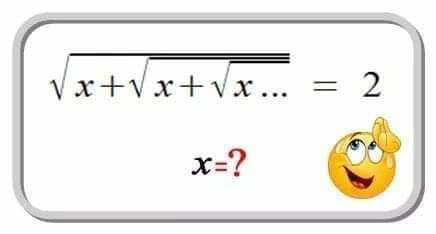
Question Number 68309    Answers: 1   Comments: 3

Question Number 68313    Answers: 0   Comments: 1

∫(1−(6/x)+(2/x^2 )+(√x))

$$\int\left(\mathrm{1}−\frac{\mathrm{6}}{{x}}+\frac{\mathrm{2}}{{x}^{\mathrm{2}} }+\sqrt{{x}}\right) \\ $$

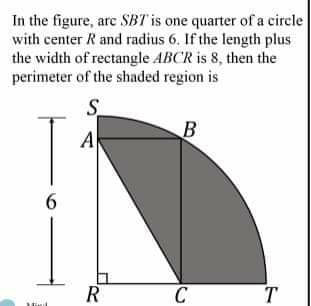
Question Number 68305    Answers: 1   Comments: 3

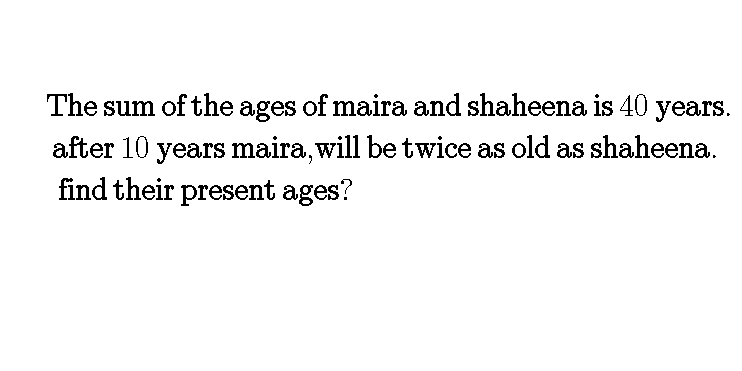
Question Number 68303    Answers: 0   Comments: 0

Question Number 68308    Answers: 1   Comments: 0

solve y′′′=y′′y′

$${solve}\:{y}'''={y}''{y}' \\ $$

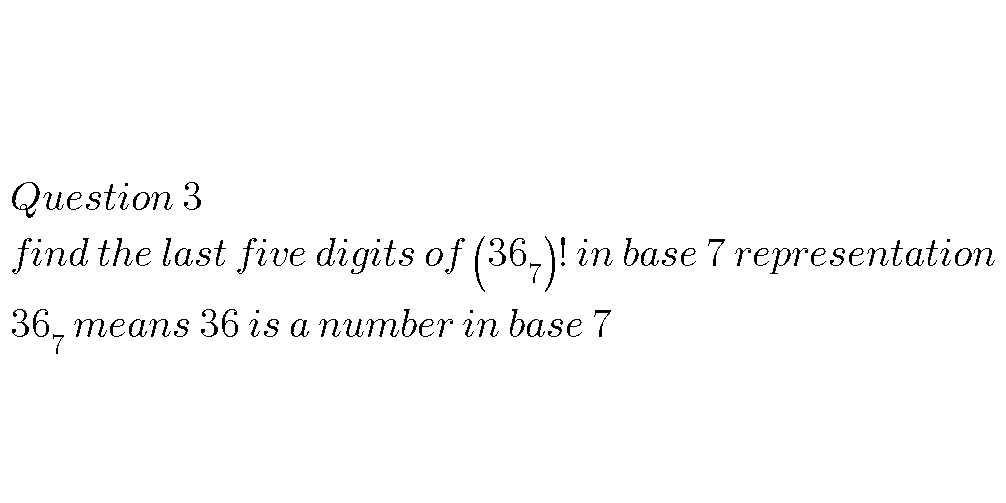
Question Number 68294    Answers: 0   Comments: 0

Question Number 68285    Answers: 1   Comments: 2

two students ngum ebon gave their ages as 124_4 and 33_x respectively.if both of them are of thesame ages .find in what base ebon gave her age

$${two}\:{students}\:{ngum}\:{ebon}\:{gave}\:{their}\:{ages}\:{as}\:\mathrm{124}_{\mathrm{4}} {and}\:\mathrm{33}_{{x}} {respectively}.{if}\:{both}\:{of}\:{them}\:{are}\:{of}\:{thesame}\:{ages}\:.{find}\:{in}\:{what}\:{base}\:{ebon}\:{gave}\:{her}\:{age} \\ $$

Question Number 68280    Answers: 1   Comments: 1

given that 432_n −413_n =11_(10) .find the value of n

$${given}\:{that}\:\mathrm{432}_{{n}} −\mathrm{413}_{{n}} =\mathrm{11}_{\mathrm{10}} .{find}\:{the}\:{value}\:{of}\:{n} \\ $$

Question Number 68289    Answers: 1   Comments: 0

A circle is divided into two equal parts By An arc with center on the circle. Determine (a) The length of the arc (b)The ratio in which the arc divides the diameter meeting the center of the arc.

$$\mathrm{A}\:\mathrm{circle}\:\mathrm{is}\:\mathrm{divided}\:\mathrm{into}\:\mathrm{two}\:\mathrm{equal}\:\mathrm{parts} \\ $$$$\:\:\:\:\:\:\:\:\:\:\:\:\:\:\:\:\:\:\:\:\:\:\:\:\:\:\:\:\:\:\:\:\:\:\:\mathrm{By} \\ $$$$\:\mathrm{An}\:\mathrm{arc}\:\mathrm{with}\:\mathrm{center}\:\mathrm{on}\:\mathrm{the}\:\mathrm{circle}. \\ $$$$\mathcal{D}{etermine} \\ $$$$\:\:\left({a}\right)\:{The}\:{length}\:{of}\:{the}\:{arc} \\ $$$$\:\:\left({b}\right){The}\:{ratio}\:{in}\:{which}\:{the}\:{arc} \\ $$$$\:\:\:\:\:\:\:\:{divides}\:{the}\:{diameter}\: \\ $$$$\:\:\:\:\:\:\:\:{meeting}\:{the}\:{center}\:{of}\:{the}\:{arc}. \\ $$

Question Number 68272    Answers: 1   Comments: 0

Question Number 68271    Answers: 0   Comments: 0

Find J=∫_0 ^1 ((W(−ulnu))/(ulnu)) du when W is the lambert function

$$\:\:{Find}\:\:{J}=\int_{\mathrm{0}} ^{\mathrm{1}} \:\:\:\frac{{W}\left(−{ulnu}\right)}{{ulnu}}\:{du}\:\:\:\:{when}\:\:{W}\:{is}\:{the}\:{lambert}\:{function} \\ $$

Question Number 68270    Answers: 1   Comments: 3

Prove that if Li_2 (x)=Σ_(n=1) (x^n /n^2 ) then ∀ x Li_2 (x)+Li_2 (1−x) = (π^2 /6) −ln(x)ln(1−x) ∀ x∉[0:1] Li_2 (x)+Li_2 ((1/x)) = −(π^2 /6) −[ln(−x)]^2 Find A=Σ_(n=1) ^∞ (ϕ^n /n^2 ) and B=Σ_(n=1) ^∞ (2^n /n^2 )

$$\:{Prove}\:{that}\:\:{if}\:\:{Li}_{\mathrm{2}} \left({x}\right)=\underset{{n}=\mathrm{1}} {\sum}\:\frac{{x}^{{n}} }{{n}^{\mathrm{2}} }\:\:\:{then} \\ $$$$\forall\:{x}\:\:{Li}_{\mathrm{2}} \left({x}\right)+{Li}_{\mathrm{2}} \left(\mathrm{1}−{x}\right)\:=\:\frac{\pi^{\mathrm{2}} }{\mathrm{6}}\:−{ln}\left({x}\right){ln}\left(\mathrm{1}−{x}\right)\:\: \\ $$$$\forall\:{x}\notin\left[\mathrm{0}:\mathrm{1}\right]\:{Li}_{\mathrm{2}} \left({x}\right)+{Li}_{\mathrm{2}} \left(\frac{\mathrm{1}}{{x}}\right)\:=\:−\frac{\pi^{\mathrm{2}} }{\mathrm{6}}\:−\left[{ln}\left(−{x}\right)\right]^{\mathrm{2}} \:\: \\ $$$${Find}\:\:{A}=\underset{{n}=\mathrm{1}} {\overset{\infty} {\sum}}\:\frac{\varphi^{{n}} }{{n}^{\mathrm{2}} }\:\:{and}\:\:{B}=\underset{{n}=\mathrm{1}} {\overset{\infty} {\sum}}\:\frac{\mathrm{2}^{{n}} }{{n}^{\mathrm{2}} }\:\: \\ $$

Question Number 68260    Answers: 0   Comments: 1

find f(x) if f((1/x))+f(1−x)=x

$${find}\:{f}\left({x}\right)\:{if}\: \\ $$$${f}\left(\frac{\mathrm{1}}{{x}}\right)+{f}\left(\mathrm{1}−{x}\right)={x} \\ $$

Question Number 68278    Answers: 0   Comments: 2

Question Number 68257    Answers: 0   Comments: 0

Prove that (6/(673)) Σ_(n=1) ^∞ (1/(n^2 (((2n)),(n) ))) = (π^2 /(2019))

$$\:\:{Prove}\:{that}\:\:\frac{\mathrm{6}}{\mathrm{673}}\:\underset{{n}=\mathrm{1}} {\overset{\infty} {\sum}}\:\frac{\mathrm{1}}{{n}^{\mathrm{2}} \begin{pmatrix}{\mathrm{2}{n}}\\{{n}}\end{pmatrix}}\:=\:\frac{\pi^{\mathrm{2}} }{\mathrm{2019}}\: \\ $$

Question Number 68244    Answers: 0   Comments: 1

find nature of the serie Σ_(n=1) ^∞ arctan(n+(1/n))

$${find}\:{nature}\:{of}\:{the}\:{serie}\:\sum_{{n}=\mathrm{1}} ^{\infty} \:{arctan}\left({n}+\frac{\mathrm{1}}{{n}}\right) \\ $$

Question Number 68243    Answers: 0   Comments: 3

let f(x) =arctan(ax +1) with a real 1) calculate f^((n)) (x) and f^((n)) (0) 2) developp f at integr serie 3) calculate ∫_(−∞) ^(+∞) ((f(x))/(x^2 +4))dx

$${let}\:{f}\left({x}\right)\:={arctan}\left({ax}\:+\mathrm{1}\right)\:\:{with}\:{a}\:{real} \\ $$$$\left.\mathrm{1}\right)\:{calculate}\:{f}^{\left({n}\right)} \left({x}\right)\:{and}\:{f}^{\left({n}\right)} \left(\mathrm{0}\right) \\ $$$$\left.\mathrm{2}\right)\:{developp}\:{f}\:{at}\:{integr}\:{serie} \\ $$$$\left.\mathrm{3}\right)\:{calculate}\:\int_{−\infty} ^{+\infty} \:\frac{{f}\left({x}\right)}{{x}^{\mathrm{2}} \:+\mathrm{4}}{dx} \\ $$

Question Number 68242    Answers: 0   Comments: 0

find lim_(x→0) ((cos(πx^x )+1)/x^2 )

$${find}\:{lim}_{{x}\rightarrow\mathrm{0}} \:\:\:\frac{{cos}\left(\pi{x}^{{x}} \right)+\mathrm{1}}{{x}^{\mathrm{2}} } \\ $$

Question Number 68241    Answers: 0   Comments: 1

calculate ∫∫_w (x^2 −2y^2 )(√(x^2 +3y^2 ))dxdy with w ={(x,y)∈R^2 / 0≤x≤1 and 1≤y≤2}

$${calculate}\:\int\int_{{w}} \:\:\:\left({x}^{\mathrm{2}} −\mathrm{2}{y}^{\mathrm{2}} \right)\sqrt{{x}^{\mathrm{2}} +\mathrm{3}{y}^{\mathrm{2}} }{dxdy} \\ $$$${with}\:{w}\:=\left\{\left({x},{y}\right)\in{R}^{\mathrm{2}} /\:\mathrm{0}\leqslant{x}\leqslant\mathrm{1}\:\:{and}\:\mathrm{1}\leqslant{y}\leqslant\mathrm{2}\right\} \\ $$

Question Number 68240    Answers: 0   Comments: 1

calculate ∫_0 ^∞ ((arctan(3x)−arctan(2x))/x)dx

$${calculate}\:\:\int_{\mathrm{0}} ^{\infty} \:\:\frac{{arctan}\left(\mathrm{3}{x}\right)−{arctan}\left(\mathrm{2}{x}\right)}{{x}}{dx} \\ $$

Question Number 68239    Answers: 0   Comments: 2

let f(x) =e^(−2x) ln(1+x^2 ) developp f at integr serie.

$${let}\:{f}\left({x}\right)\:={e}^{−\mathrm{2}{x}} {ln}\left(\mathrm{1}+{x}^{\mathrm{2}} \right) \\ $$$${developp}\:{f}\:{at}\:{integr}\:{serie}. \\ $$

Question Number 68238    Answers: 0   Comments: 2

let f(x)=(x^2 −3x)arctan(2x+1) 1) determine f^((n)) (x) and f^((n)) (0) 2)developp f at integr serie 3) calculate ∫_0 ^1 f(x)dx

$${let}\:\:{f}\left({x}\right)=\left({x}^{\mathrm{2}} −\mathrm{3}{x}\right){arctan}\left(\mathrm{2}{x}+\mathrm{1}\right) \\ $$$$\left.\mathrm{1}\right)\:{determine}\:{f}^{\left({n}\right)} \left({x}\right)\:\:{and}\:{f}^{\left({n}\right)} \left(\mathrm{0}\right) \\ $$$$\left.\mathrm{2}\right){developp}\:{f}\:{at}\:{integr}\:{serie} \\ $$$$\left.\mathrm{3}\right)\:{calculate}\:\int_{\mathrm{0}} ^{\mathrm{1}} {f}\left({x}\right){dx} \\ $$

Question Number 68237    Answers: 0   Comments: 1

1. find the equation of the line making an angle of 135^(° ) with O_(x ) and passing through thepoints?(−2,5) 2. find the slope of the line through the points (5,3)and (7,2). find (i) the perpendicular form (ii) find the intercept form of its equation. 3. Determine the gradient of the straight line graph passing through the co-ordinates: (i) (2,7) and (−3,4) (ii) (((1 )/4), ((-3)/4)) and (((-1)/2), (5/8)).

$$\mathrm{1}.\:{find}\:{the}\:{equation}\:{of}\:{the}\:{line}\:{making}\:{an}\:{angle}\:{of}\:\mathrm{135}^{°\:} {with}\:{O}_{{x}\:} \:{and}\:{passing}\:{through}\:{thepoints}?\left(−\mathrm{2},\mathrm{5}\right) \\ $$$$\mathrm{2}.\:{find}\:{the}\:{slope}\:{of}\:{the}\:{line}\:{through}\:{the}\:{points}\:\left(\mathrm{5},\mathrm{3}\right){and}\:\left(\mathrm{7},\mathrm{2}\right).\:{find}\:\left({i}\right)\:{the}\:{perpendicular}\:{form}\:\left({ii}\right)\:{find}\:{the}\:{intercept}\:{form}\:{of}\:{its}\:{equation}. \\ $$$$\mathrm{3}.\:{Determine}\:{the}\:{gradient}\:{of}\:{the}\:{straight}\:{line}\:{graph}\:{passing}\:{through}\:{the}\:{co}-{ordinates}: \\ $$$$\left({i}\right)\:\left(\mathrm{2},\mathrm{7}\right)\:{and}\:\left(−\mathrm{3},\mathrm{4}\right) \\ $$$$\left({ii}\right)\:\left(\frac{\mathrm{1}\:}{\mathrm{4}},\:\frac{-\mathrm{3}}{\mathrm{4}}\right)\:{and}\:\left(\frac{-\mathrm{1}}{\mathrm{2}},\:\frac{\mathrm{5}}{\mathrm{8}}\right). \\ $$

  Pg 1422      Pg 1423      Pg 1424      Pg 1425      Pg 1426      Pg 1427      Pg 1428      Pg 1429      Pg 1430      Pg 1431   

Terms of Service

Privacy Policy

Contact: info@tinkutara.com